 |
 |

·
I Inherited a Stamp Collection...
·
How is a postage stamp made?
·
Earliest Postmark Associated with
Franking
·
Postage Stamps and the Cold War
·
'Specimen' and 'Cancelled' Stamps
·
Stamps of French West Africa
·
Postage stamps and postal history of
Argentina
·
Philatelic fakes and forgeries
·
Z Grill
·
Perfin
·
Postage stamps and postal history of
Malaysia
·
Postage stamps and postal history of
Great Britain
·
Franking
·
Postage stamps and postal history of
Germany
·
Postage stamps and postal history of
Russia
·
Postage stamps and postal history of
China
·
Postage stamps and postal history of
Korea
·
Postage stamps and postal history of
the United States
·
Postage stamps and postal history of
Italy
·
Postage
stamps and postal history of India
·
First Stamp auction in London
·
Brief History of Stamp Auctions in
America
·
Auction
·
Robert A. Siegel – Philatelic Auctions
I
Inherited a Stamp Collection...
This article could have just as easily been titled, "I just found
some stamps in an old desk..." or "I found my old stamp collection up
in the attic from when I was a kid..." or some similar theme. This
is intended for someone who knows next to nothing about stamp collecting, has
come into possession of some stamps and wishes to know what they are worth.
As with all collectible items, stamps are worth what someone is willing
to pay for them. Learning what that might be will require doing your
homework. It is highly unlikely that you will instantly find someone who will
give you enough for your retirement, but by searching through the philatelic
world for the best place to sell your stamps, you could do very well.
The first step in educating yourself
should be to check your local public library for a Scott or Minkus (or other)
stamp catalog. Check the catalog out from the library, take it home, and
compare your stamps to the listings. Read the introductory paragraphs in
the catalog to see how stamps' values are determined and how you should judge
the stamps. Remember that stamp catalog values are for excellent examples
of each given stamp and that stamps with heavy cancels or tears or pieces
missing will bring much less, if anything at all. And remember that most
unused stamps released since 1940 aren't worth much more than face value if
you're trying to sell them; a lot of those you can use for postage. Also
be aware that a dealer will likely pay less than half catalog value, since he
has to make his profit margin and cover his expenses to stay in business
selling stamps.
After you've consulted a catalog, if you don't know any stamp collectors
to ask, check your local yellow pages for stamp dealers. Find three or
four if you can and ask them to take a look at your stamps. This process
will take time, and you will have to go to their locations to get them to look
at your stamps. Or if a stamp show is held in your area, go to the show
and ask dealers there. In the stamp business, as in any collectibles
area, you need to find the right dealer for the material you have. The
"right" dealer will know to whom he can resell your material. As
you "do your homework" by asking several dealers about value, you
will begin to get an idea of the true worth of your stamps. You will have
to use your own judgement to evaluate the honesty of those you ask, but you
will find that most are honest, even if they're not knowledgeable.
If your stamps turn out to be fairly valuable (hundreds or
thousands of dollars), it might be worth your while to offer the material at
auction. As with finding a dealer, you'd need to do your homework on
auction houses to find the best place to offer your stamps. The point of
all this is that the more time you spend "doing your homework," the
better price realization you are likely to get for your stamps. You may
find that after only a short search for information you will learn that what
you have isn't worth much. That is the most likely outcome.
However, if the collection was put together by a knowledgeable collector,
it may well have "goodies" that have appreciated tremendously over
the decades. There's only one way for you to find out if that's true: Do
your homework!! After doing your homework, you may find yourself
fascinated to the point you will not only be the owner of an old collection but
a builder of a new and better collection!
How is a postage stamp
made?
Background
The postage stamp is a relatively modern
invention, first proposed in 1837 when Sir Rowland Hill, an English teacher and
tax reformer, published a seminal pamphlet entitled Post Office Reform: Its
Importance and Practicability. Among other reforms, Hill's treatise advocated
that the English cease basing postal rates on the distance a letter traveled
and collecting fees upon delivery. Instead, he argued, they should assess fees
based on weight and require prepayment in the form of stamps. Hill's ideas were
accepted almost immediately, and the first English adhesive stamp, which
featured a portrait of Queen
Most early stamps were of a single color-the
United States, for example, did not produce multicolored stamps until 1869, and
they did not become common until the 1920s. The penny black and other early
stamps needed to be separated with a scissors; perforated stamps did not appear
until
Initially, stamps were manufactured by the same
businesses that provided a country with currency, or by a country's mint. Yet
it soon became apparent that printing stamps is unlike minting money in that
the different paper types call for different printing pressures. Consequently,
printing stamps became a discrete activity, though one still sometimes carried
out by companies that made currency. In ensuing years, methods of producing
stamps mirrored the development of modern printing processes. Today, stamp
making processes utilize much of the finest printing technology available.
In the
Once the committee decides that a particular
stamp will be produced, it commissions an artist to design it or modify a
submitted design. It then decides, primarily on the basis of workload, whether
the stamp should be produced by the Bureau of Engraving and Printing or by
outside contractors, who have been used much more extensively since the late
1980s. It's possible for a common stamp in great demand (such as an everyday
first class mail stamp) to be made by the Bureau of Engraving and Printing and
by several contractors. Currently, perhaps ten to fifteen American firms are
capable of manufacturing stamps that meet Post Office standards.
Specifications for the stamp, such as color,
size, design, and even the printing process itself are then drawn up in
consultation with the original artist or designer. If the stamp is to be
contracted out, a "request for proposal" appears in the Commerce
Business Daily, a
In addition to requirements for the picture or
design on a stamp, other requirements, all of which can be met at a printing
plant, are sometimes added to a stamp's specification. The most common one is
phosphor tagging, in which an invisible mark that can be read only by a special
machine is placed on a stamp. The tagging facilitates the automated sorting of
mail.
Other requirements might be for such things as
printing the stamp on chalked paper to prevent reuse of a stamp by cleaning or
washing off a cancellation. When a canceled stamp printed on chalked paper is wetted, the picture will blur as the
cancellation mark is wiped off, cuing postal workers to the fact that the stamp
is no longer valid.
Raw Materials
Although stamps were originally printed on
sheets of paper that were fed into presses individually, the paper now used
comes on a roll. The two kinds of paper most commonly used to print stamps are
laid and wove paper, the former with ribbed lines and the latter without. While
other nations use both types, the
The Manufacturing Process
At the printing plant, the process begins with
the delivery of paper for stamps, with the glue already applied to the back.
Two printing processes are most often used in making stamps, the intaglio
process (which includes the gravure process), and the offset process. It is not
unusual, however, for a particular stamp's specifications to call for the use
of both methods.
Intaglio, perhaps the oldest means of producing
stamps, is also the most time-consuming. However, because this method creates
stamps with more distinct images, the process has not been pushed aside by
newer, faster, and less expensive methods. Intaglio involves engraving,
scratching, or etching an image onto a printing plate, which in turn transfers
that image onto paper. In one well-known intaglio process, called gravure, the
image is first transferred onto the plate photographically, and then etched
into the plate. This section, however, will focus on an engraving process.
Creating
the master die
* The
engraving method of intaglio begins with the creation of a "master
die" in which the design of the stamp is engraved, in reverse. The design
is in the lowered portion of the die-the raised portion of the die will not be
reproduced in the final product. This is an exacting hand process, in which the
engraver is carefully cutting a mirror image of the original drawing for the
stamp. It might be several weeks before the engraver is satisfied that he or
she has created the perfect duplicate.
* After the die has been
completed, it is heated to harden the engraved image. In the next step, the
hardened intaglio is transferred to a transfer roll, which consists of soft
steel wrapped around a rod-shaped carrier, or mandrel, and which resembles a
shortened rolling pin. The transfer roll is machine-pressed against the master
die, and rocked back and forth until the master die has created a relief
impression on the transfer roll. At this point, the relief is a positive
impression (no longer in reverse). The process is repeated until the desired
number of reliefs has been created on the transfer roll.
Preparing the printing plate
* Like the master die,
the transfer roll is hardened by heating. It is then pressed against a printing
plate, leaving another relief, again in reverse, on the printing plate. If
there are several reliefs on a transfer roll, all can be passed to the printing
plate. Several printing plates can be made from the same transfer roll if the
decision is made to use more than one machine to produce a particular stamp.
The impression on the plate is in the form of grooves rather than a raised
image.
* Once the plate is
ready for use, it is fastened into the printing press and coated with ink.
Inking is done automatically by several processes including spraying ink
through small jets or moving an ink-covered roller across a plate. The plate is
then wiped by a blade called the doctor blade, leaving ink only in the grooves.
* The plate then presses
against the paper, leaving a positive impression of the reverse image that was
originally copied onto the master die.
* If more than one color
is involved, separate colors are handled by a process known as selective
inking. A particular color of ink is applied by a piece of hard rubber that
comes in contact with only the section of the stamp that is to receive that
color. After the ink is applied in one area, another piece of rubber, with
another color for another area, is used to ink another portion of the plate.
Offset
lithography
* The offset method of
printing is less expensive than intaglio and can also produce very fine
results, and it is a common choice for many stamps. In this method, a picture
or design is first made photochemically on an aluminum plate. Once attached to
the printing press, the plate is alternately bathed in ink and water: the
photochemical image gets ink, while the non-image parts are dampened with
water, which acts as a repellent to the ink and ensures that only the image
will be transferred to the paper. Next, the plate presses against a rubber
"blanket," which carries a reverse image of the final picture. In turn,
the rubber blanket contacts the paper, producing the final positive image.
Perforation
* Perforations can be
made either during the printing process by an adjacent machine or, less
commonly, by a separate machine afterwards. In the first method, the sheet of paper
is passed through a machine which uses little pins to punch the perforation
holes through the paper in a horizontal and vertical grid. After pushing
through the paper, the pins meet a matching metal indentation on the other
side. After being perforated, the stamps move out of the press. In the other
method of producing perforations, called rouletting, a wheel similar to a pizza
cutter but with pins is rolled across one side of the stamped paper after it
has been removed from the printing press, laying down a row of holes. Though
originally a hand-operation, this method of perforation is now automated.
Quality Control
Stamps are inspected at every stage of the
printing process, by the people who are running the stamps and by inspectors
whose only responsibility is to observe the process and remove errors before
the stamps proceed to the next step.
Printing machines are hugely complex, and errors
in the printing process are a fact of life. Misfed paper, clogged inking
apparatus, variations in pressure, changes in ink quality, incorrectly adjusted
mechanisms, and a host of other problems can be minimized but not always
eliminated. Even changes in the humidity of the pressroom can affect the press
and the paper enough to produce less-than-perfect results.
Several of the most spectacular errors of the
past occurred because presses were manually fed; in other words, individual
sheets of paper were inserted into the press by hand. If a sheet of paper
required an impression from a second press (to add a second color), and the
sheet was turned accidentally, the resulting stamps featured misplaced blotches
of color. This type of error does not occur today because presses are roll-fed:
rather than being fed into a press sheet by sheet, paper is fed in from a continuous
roll.
Most errors are detected, and the flawed stamps
destroyed, under tight security controls in the printing plant. Enough errors
slip through, however, to make the collecting of "error stamps" an
interesting specialty for some stamp collectors.
The Future
One twentieth-century innovation that has
significantly diminished the use of stamps is the postage meter. Developed in
Where to Learn More
about Stamps
Books
Lewis, Brenda Ralph. Stamps! A Young Collector's
Guide. Lodestar Books, 1991.
Olcheski, Bill. Beginning Stamp Collecting.
Henry Z.Walck, 1991.
Scott 1993 Standard Postage Stamp Catalogue.
Vol. 1: Basic Stamp Information, pp. 20A-26A. Scott Publishing Co., 1992.
Periodicals
Healey, Barth. "Tactical Technology Fights
Counterfeiters." New York Times. May 16, 1993, p. N22.
Patota, Anne. "Coil Stamp Provides Test for
Pre-Phosphored Paper." Stamps. May 16, 1987, p. 458.
Schiff, Jacques C., Jr. "Much to Learn
about Printing." Stamps. July 4, 1992, p. 10.
"Computer Enhances National Guard
Color." Stamps. November 8, 1986, p. 418.
"Postage
Stamp Design: Creating Art Works the Size of Your Thumb." Stamps.
November 5, 1988, p. 217.
Art Encyclopedia:
Postage Stamp
Small piece of pre-gummed paper that, when
affixed to an item of mail, indicates that postage costs have been prepaid. The
postage stamp originated in Britain in 1840 as part of the reform of the postal
system instigated by Sir Rowland Hill (1795-1879), who is also credited with
the design of the first stamp, the Penny Black, which was first sold in London
on 1 May 1840 (it was not officially valid until 6 May, although examples of
premature use are known). This design government stamp affixed to mail to
indicate payment of postage. The term includes stamps printed or embossed on
postcards and envelopes as well as the adhesive labels. The use of adhesive
postage stamps was advocated by Sir Rowland Hill; it was adopted in
Mideast & N. Africa Encyclopedia: Postage Stamps
The Islamic states of the Middle East had operated
elaborate postal messenger systems since the seventh century, but it was
Early Middle Eastern stamps, like Islamic coins before them, observed
conservative Islamic tradition by rarely portraying human figures. Arabesque
designs, calligraphy, or a crescent and star served as symbols instead. In
1876,
Rulers appeared variously in traditional dress,
in Western coat and tie, or in military uniform.
The first stamps of the Ottoman Empire,
European colonial stamps presented romanticized
and orientalist colonial picturesque themes - pre-Islamic ruins, old mosques,
colorful landscapes, and folk scenes. European officials first selected the
pyramids and sphinx as symbols for Egyptian stamps, but many Egyptians came to
identify, at least partially, with these pre-Islamic symbols.
Revolutions drastically changed stamp designs.
"The people" - symbolic soldiers, peasants, workers, professionals,
and women in both traditional and Western dress - celebrate liberation,
modernization, and the drive for economic development. Stamps advertise such
things as petroleum pipelines, factories, and broadcasting stations. Socialist
countries commemorated land reform, the spread of health-care, and five-year
plans. In addition to such symbols of material and social progress,
The stamps of
During the 1950s and 1960s, pan-Arab themes
tended to overshadow symbols of local territorial patriotism. Beginning in the
1970s, Islamic themes became popular - mosques, Qurʾans, hegira
dates, and crescents - on stamps honoring the prophet Muhammad's birthday, the
Islamic New Year, and the hajj. Islamic themes stand out above all on the
stamps of the Islamic Republic of Iran since the 1979 revolution, depicting
deceased Shiʿite holy men, martyrs killed in the jihad (holy
struggle) against
Wikipedia: postage stamp
A postage stamp is evidence of pre-paying a fee
for postal services. Usually a small paper rectangle or square that is attached
to an envelope, the postage stamp signifies that the person sending the letter
or package may have either fully, or perhaps partly, pre-paid for delivery.
Postage stamps are the most popular way of paying for retail mail; alternatives
include prepaid-postage envelopes and Postage meters.
History
Postage stamps were first introduced in the
United Kingdom of Great Britain and
Other countries followed suit by introducing
their own postage stamps; the Canton of Zürich in
Following the introduction of the postage stamp
in the
Postage stamp design
Stamps have been issued in other shapes besides
the usual square or rectangle, including circular, triangular and pentagonal.
Types of stamps
*
Airmail - for payment of airmail service. While the word or words
"airmail" or equivalent is usually printed on the stamp, Scott (the
dominant U.S. cataloguing firm) has recognised as airmail stamps some U.S.
stamps issued in denominations good for then-current international airmail
rates, and showing the silhouette of an airplane. The other three major
catalogs do not give any special status to airmail stamps.
* ATM, stamps dispensed
by automatic teller machines (ATMs) whose sheets are paper currency sized and
of similar thickness.
* carrier's stamp
* certified mail stamp
* coil stamps - tear-off
stamps issued individually in a vending machine, or purchased in a roll that
often comprise 100 stamps
* commemorative stamp -
a limited run of stamp designed to commemorate a particular event
* Computer vended
postage - advanced secure postage that uses Information-Based Indicia (IBI)
technology. IBI uses a 2-dimensional bar code (either Datamatrix or PDF417) to
encode the Originating Address, Date of Mailing, Postage Amount, and a Digital
signature to verify the stamp's authenticity.
* Customised stamp - a
stamp the picture or image in which can in some way be chosen by the purchaser,
either by sending in a photograph or by use of the computer. Some of these are
not truly stamps but are technically meter labels.
* Definitive - stamps
issued mainly for the everyday payment of postage. They often have less
appealing designs than commemoratives. The same design may be used for many
years. Definitive stamps are often the same basic size. The use of the same
design over an extended period of time often leads to many unintended
varieties. This makes them far more interesting to philatelists than
commemoratives.
* express mail stamp /
special delivery stamp
* late fee stamp -
issued to show payment of a fee to allow inclusion of a letter or package in
the outgoing dispatch although it has been turned in after the cut-off time
* Local post stamps -
used on mail in a local post; a postal service that operates only within a
limited geographical area, typically a city or a single transportation route.
Some local posts have been operated by governments, while others, known as
private local posts, have been for-profit companies.
* military stamp - stamps
issued specifically for the use of members of a country's armed forces, usually
using a special postal system
* official mail stamp -
issued for use solely by the government or a government agency or bureau
* occupation stamp - a
stamp issued for use by either an occupying army or by the occupying army or
authorities for use by the civilian population
* perforated stamps -
while this term can be used to refer to the perforations around the edge of a
stamp (used to divide the sheet into individual stamps) it is also a technical
term for stamps that have additionally been perforated across the middle with
letters or a distinctive pattern or monogram known as perfins. These modified
stamps are usually purchased by large corporations to guard against theft by
their employees.
* personalised - allow
user to add his own personalised picture or photograph
* Postage due - a stamp
applied showing that the full amount of required postage has not been paid and
indicating the amount of shortage and penalties the recipient will have to pay.
(Collectors and philatelists debate whether these should be called stamps, some
saying that as they do not pre-pay postage they should be called
"labels".) The United States Post Office Department issued "parcel
post postage due" stamps.
* Postal tax - a stamp
indicating that a tax (above the regular postage rate) required for sending
letters has been paid. This stamp is often mandatory on all mail issued on a
particular day or for a few days only.
* Self-adhesive stamp -
stamps not requiring licking or moisture to be applied to the back to stick.
Self-sticking.
* semi-postal / charity
stamp - a stamp issued with an additional charge above the amount needed to pay
postage, where the extra charge is used for charitable purposes such as the Red
Cross. The usage of semi-postal stamps is entirely at the option of the
purchaser. Countries (such as Belgium and Switzerland) that make extensive use
of this form of charitable fund-raising design such stamps in a way that makes
them more desirable for collectors.
* Test stamp - a label
not valid for postage, used by postal authorities on sample mail to test
various sorting and cancelling machines or machines that can detect the absence
or presence of a stamp on an envelope. May also be known as "dummy"
or "training" stamps.
* War tax stamp - A
variation on the postal tax stamp intended to defray the costs of war.
* Water-activated stamp
- for many years "water-activated" stamps were the only kind so this
term only entered into use with the advent of self-adhesive stamps. The
adhesive or gum on the back of the stamp must be moistened (usually it is done
by licking, thus the stamps are also known as "lick and stick") to
affix it to the envelope or package.
Dispensing
Since their inception there have been numerous
innovative developments in how stamps are dispensed and sold. Usually, they can
be purchased over the counter or from vending machines at post-offices or
selected retail outlets, as "books" or loose stamps. They are
traditionally made as a perforated sheet which is gummed on the reverse, so
that the purchaser may tear off each stamp, moisten it (frequently by licking),
and apply it to the envelope, but self-adhesive stamps are now commonplace.
IBI "stamps"
In the
Prior to IBI being introduced, postage vault
devices were used on personal computers to allow postage stamps to be printed
from one's computer. The postage vault device is a tamper resistant postal
security device to disable postage equipment when tampered with. The postage vault
can be also identified as the means to store (and keep track of) monetary funds
in the postage vault. You can think of this as prepaying for the right to print
postage from your personal computer. The Internet is used to reset or replenish
funds in the postage vault.
In March 2001, the United States Postal Service
authorized Neopost Online and Northrop Grumman Corporation to test an
innovative purchasing stamp system. This self-service stamp vending system
allows the consumer to peruse through a variety of denominations and
quantities, select the desired purchase and swipe his/her credit card to submit
a purchase order. The stamp vending system then authorizes the purchase order,
prints the stamp sheet(s) and finally dispenses them to the consumer. The ability
to peruse, request, authorize, print, and dispense a stamp purchase using the
Internet makes these the world's first browser-based stamps. This is the first
instance where IBI was utilized on adhesive labels. The product from this
self-service stamp vending system is aptly named by collectors as Neopost
web-enabled stamps. These stamps were available from March 2001 through August
2003 and were denominated (fixed value) stamps.
In 2002 the United States Postal Service
authorized Stamps.com to issue NetStamps. The NetStamps utilizes IBI technology
and can be printed from personal computers with postal vaults. In 2004 the
United States Postal Service introduced the Automated Postal Centers (APC).
This kiosk provided non-denominated ($0.01 to $99.99) stamps. The intent of the
APC is to reduce labor required to service consumers at the postal counters.
Recently, personal pictures have been paired with IBI technology to provide a
personalized stamp for the consumer. These stamps are custom made and require a
period of time (days) to produce.
The push towards using IBI technology aids the
United States Postal Service in finding new venues to sell stamps. It also
reduces the burden of maintaining the mechanical machines to sell stamps. The
United States Postal Service still relies on co-signing stamps to retailers and
banks (via automatic teller machines (ATMs). They must be the same size and
thickness as currency in order to be dispensed by the ATM.
Similarly, Royal Mail in the
First day covers
On the first day of issue a set of stamps can be
purchased attached to an envelope that has been postmarked with a special
commemorative postmark. Known as a "First Day Cover", it can also be
assembled from the component parts by stamp collectors, who are the most
frequent users. These envelopes usually bear a commemorative cachet of the
subject for which the stamp was created.
Souvenir or miniature sheets
Postage stamps are sometimes issued in souvenir
sheets or miniature sheet containing just one or a small number of stamps.
Souvenir sheets typically include additional artwork or information printed on
the selvage (border surrounding the stamps). Sometimes the stamps make up part
of a greater picture. Some countries, and some issues, are produced as
individual stamps as well as in the sheet format.
Collecting
Stamp collecting is a popular hobby, and stamps
are often produced as collectibles. Some countries are known for producing
stamps intended for collectors rather than postal use. This practice produces a
significant portion of the countries' government revenues. This has been
condoned by the collecting community for places such as
The combination of hundreds of countries, each
producing scores of different stamps each year has resulted in a total of some
400,000 different types in existence as of
Earliest
Postmark Associated with Franking
The earliest postmark associated with the franking
privilege was a two line, unframed stamp inscribed AFFRANCHI/PAR ETAT (franked
be State), struck in black or red on official correspondence from
In
Special Sunday postmarks were used in
Early Stamps of Mexico
Adhesive stamps were adopted by
An empire, under French auspices, was proclaimed
in April 1864 and the Austrian Archduke Maximilian was made emperor. The first
stamps of the empire bore the eagle and serpent emblem but in 1866 -
After the withdrawal of the French the republicans
overthrew the erstwhile empire. Stamps of the first republican series were
reintroduced overprinted '
In 1879, Senor de
In
A lengthy series of ordinary and airmail stamps
was released in December 1934 to celebrate the inauguration of President
Cardenas. Although primarily commemorative, this series was retained for
definitive use.
Errors Caused in Stamps
Printing
In plate errors, it needs to be considered that
printing plates, cylinders and clichés have to withstand high pressure and
wear. When the material is worn, tears or bubbles may appear or a piece
actually break away. Every such change will be immediately reflected in one or
more stamps. Much depends on how quickly the error is detected and remedied.
When printing plates were originally grouped
from individual clichés, and some fault occurred in one of the clichés, it was
sufficient to replace the damaged cliché. As long as the cliché was produced
from the original die everything was in order. Sometimes, a cliché was inserted
upside down and a tete-beche reproduction resulted. There were also cases when
a cliché was replaced by mistake, with a cliché of another stamp similar in
appearance or of another value. This resulted in most interesting errors of
colour and se-tenant stamps of different value.
With retouching, printing plates which are in
one piece and in printing cylinders, it is impossible to change the damaged cliché.
If a fault appears, the printers aim to correct it through retouching. With the
help of a scorper, they re-engrave the blocked spots in order to try to remove
the damaged areas. Even the smallest intervention of this nature changes, to
some extent, the design of that particular stamp. In 1920,
Double impressions occur if a worker handling a
printing press mistakenly puts a sheet through the press twice; each stamp
shows two impressions quite distinctly. This error is seldom seen as faulty
sheets are usually discovered by checkers and then eliminated and destroyed.
Inverted printing. When stamps are printed in
two or more colours, another printing error sometimes occurs: the worker, when
putting a sheet of stamps into the press for a second time to print another
colour, turns it by 180 degrees, and the second colour becomes inverted. In
1918, the first air-mail stamps of the
Mistakes on Stamps
Although a damaged stamp loses much of its value
unless it is extremely rare, a stamp with a mistake in its design or printing
usually gains, depending on how many were printed with the mistake. Some
philatelists specialise in collecting stamps with mistakes, though apart from
some common ones, they are expensive to acquire.
The 10pf green German stamp commemorating the
death of the composer, Schumann, has music by Schubert in the background and
the one and a half penny red of
Stamps are carefully checked during printing and
any that are found to have errors are meant to be destroyed. Some printer's
errors, however, manage to make it to the public arena. Older printing machines
could only print one colour at a time, which meant that the paper had to be
taken out and fed through the machine several times during the course of
printing. In a
Perforation errors are also evident in some
stamps. The 4d blue and white Postage Due stamp of
Postage
Stamps and the Cold War
Stamps were the principal weapon in a cold war
between
Argentina, which had laid claims to the islands,
retaliated by issuing a one peso stamp in 1936, which showed a map of South
America, with Argentinian territory (including the Falkland Islands) shaded. At
first, this stamp also showed the boundaries of the other South American
countries. This was superseded by one omitting the boundaries because of the
sensitivity of certain countries, particularly
The battle switched to the Antarctic in 1944
when
Again
Although territorial claims in the Antarctic
were suspended under the terms of the Antarctic Treaty of 1961, both sides
continued to snipe at each other philatelically. Many of the stamps of South
Georgia, British Antarctic Territory, the
Although the Cold War was definitely regarded as
a major concern between
'Specimen'
and 'Cancelled' Stamps
One of the obligations of countries which are members
of the Universal Postal Union is to inform all other members about new stamp
issues. For this purpose, samples of new stamps are sent to the other postal
administrations, free of charge. Some postal administrations overprinted these
sample stamps with the word specimen to make their use for the franking of mail
impossible. Texts and markings vary according to the country.
Stamps with the overprint 'specimen' were also
presented to important personalities and institutions, which is how some of
these varieties reached philatelists. Although they are not really postage
stamps, since they cannot be used for franking, specialists are very much
interested in them.
In
It happens that new stamps are issued at a time
when large supplies of the valid stamps are still available. In some countries,
the very earliest stamps issued are still valid. Elsewhere, old stamps have
been declared invalid for postage. There are serious reasons for such steps
including a change of regime, incorporation of the country by some other nation
or currency reform.
What happens to the remaining stamps? This
problem is solved in several ways. In some places, sales of stamps continue at
special counters to philatelists until the supply is exhausted. In other
countries, the remainders are burned under official supervision or taken to a
paper mill. It has happened that, for some reason - for instance during a war -
there has been a stamp shortage. In such cases, old supplies of stamps have
been brought out and used again, usually with an appropriate overprint.
Another way to make stamps invalid was for the
stamps withdrawn from circulation to be overprinted with the word cancelled or
with an overprint of black lines, or something similar, across the design which
made them useless for postage. Philatelic specialists remain interested in this
type of stamp as well.
Stamp Clubs
The first philatelic club was founded in
The oldest and most famous philatelic
organization in the world has its headquarters in
It was the philatelic societies who organized
contacts between stamp collectors and provided them with the necessary
conditions for their hobby. First of all, meetings of members were held. There
they could buy, sell or exchange stamps. The first approval booklets appeared and
the societies undertook their circulation. In many cases, societies sponsored
the publication of stamp magazines and assisted in the publication of stamp
albums and catalogues. Later, stamp exhibitions were held and the societies
appointed experts to assist their members. Philatelic clubs and organizations
became a permanent institution.
The place of philatelic clubs which were
dissolved or gave up their activities for various reasons was taken by new
ones, and today there is hardly a city in the civilized world where some
organization of stamp collectors does not exist. The need for closer contacts,
the exchange of stamps and also the exchange of knowledge and experience
brought philatelists closer together and led eventually to the formation of
larger bodies and national federations. In some countries, these federations
have a membership of hundreds of thousands. One of the great tasks of
philatelic clubs and societies is the education of the next generation of stamp
collectors.
Long ago, proposals were put forward to
establish a world wide organization of philatelists. These suggestions
materialized in 1926 when a conference of representatives of national
philatelic societies was held and The International Federation of Philately
(FIP) was founded. At present, FIP counts among its members over forty national
philatelic societies from countries in Europe,
Stamps
of French West Africa
Separate issues of stamps in the French colonies
of Dahomey, French Guinea, French Sudan, Ivory Coast, Mauritania, Niger,
Senegal and Upper Volta were superseded in 1944 by stamps inscribed 'Afrique
Occidentale Francais'. Hitherto stamps with this inscription or the
abbreviation AOF had been used in these territories, but distinctive designs
and the names of the colonies had been featured. A series for the Free French
was followed in 1947 by a series depicting the scenery and peoples of the
various regions. The 30c stamp shows a girl by the submersible bridge over the
The independent Islamic
The colony of
Stamps of Southern Arabia
British interest in Arabia began in 1939, when
the rock of
De
Waterlow and Sons used a slightly larger format
for the series of 1939 incorporating the royal portrait. Six different designs
were used, ranging from views of Mukalla and
In June 1953, the first definitive series
featuring Queen Elizabeth II was issued. The colours were deepened in shade in
1955 and the vignettes of the higher values were changed from the original
sepia to black. A gauge of perforations was introduced in 1956 and finally, the
watermark was changed in 1965 - 1965. All of these changes added up to one of
the most complex sets released in decades.
The move toward self-government was foreshadowed
in the revised constitution granted in 1959. To mark the occasion, two stamps
of the definitive series were overprinted, the 15c being entirely in Arabic and
the 1.25s in English. The stamps of
The Federation of South Arabia consisted of the
former
The Colour of a Stamp
Stamps are printed in numbers running into
millions and even hundreds of millions. It is impossible to print such large
numbers in one run. Even nowadays, with the most modern technology and
techniques, the printers do not always succeed in mixing exactly the same
colour when they start a new run of printing. From time to time, it becomes
necessary to clean the machines or the supply of ink runs out and a new supply
has to be used, coming, perhaps, from another factory. If such problems have to
be dealt with today, it is difficult to imagine how great the difficulties were
in the classical stamp period when printing techniques were much more primitive.
This is how the different colour shades, which
are of great interest to philatelic specialists, are produced. Often, for a new
printing, new plates were used or the old plate was repaired. This is the
origin of different types, as stamps are called which differ, as a result of
reprinting, from the original issue.
Philatelists use a colour guide as an accessory
to help them with the most difficult colour problems. Some of the common colour
guides list about 160 squares with colour shades. In many cases, there is a
hole in the centre of a colour to enable the philatelist to put the stamp in
question underneath and to compare colours with printed squares. The name of
the colour is printed underneath the square, usually in several languages,
using the names of colours found in the most significant world catalogues.
Philatelists will often be at a loss as they may
not be able to find the exact shade of their stamp in the colour guide. In such
a case, they have to use their own judgement and decide which colour is nearest
to the shade of their stamp. One can distinguish about 200 clear colour tones,
but when colours are mixed, the number of shades can exceed 15000. Obviously,
it is impossible to publish a colour guide listing such a vast number, or to
produce in print all the finest shades or even to give them a name.
There are three basic shades: yellow, red and
blue. If equal quantities of two of these colours are mixed, the results are
green, orange and violet. Shades are obtained according to the proportion of
the individual colour components. If all the basic colours are mixed, the
result is black.
For the stamp collector, it is of importance to
understand the system of listing colours in a catalogue. Whenever a combined
name for a colour is given, the last named colour always predominates. For
instance, yellowish-green means green with yellow added. On the other hand,
greenish-yellow means yellow with green added. In the first case, green is
predominant whereas in the second case, it is yellow.
Even the most comprehensive catalogues cannot go
into all the details of colours. Therefore everything will depend on the
collector: his experience, and most of all on the comparative material he has
for making the right decisions on colours and shades concerned. This is
frequently of great importance; there are many cheap and common stamps which
have some colour shades that are rare and very expensive.
Thematic Collections
of Stamps
Thematic collections are actually the youngest
form of philately, based on a wealth of stamps with different motifs, issued
all over the world. The first thematic collections were formed prior to the
Second World War, but the great development within this field occurred after
the war.
Thematic philately is still developing. It is
clear that it differs from other philately in one basic point. Whereas for the
philatelist forming a catalogue collection, the design and motif of the stamp
is of inferior importance, for the thematic collector it is the most important
element. The classical collector, particularly the specialist, is interested in
the technical details of the stamp, in its perforation, paper and details of
design. On the other hand, the thematic collector concentrates on the image on
the stamp. He is interested in the meaning and so acquires knowledge in a
variety of fields; he pursues variants of the factual and artistic expression
of certain motifs and notes objective connections. He considers how he can
apply the pictures to the basic theme and how he can illustrate the theme with
the help of philatelic material. All through this work, the theme and its
elaboration and the use and application of philatelic material are of equal
importance.
One level of thematic collecting is subject
collections and is distinguished by either the picture on the stamp - ships,
flowers, prehistoric animals - or the purpose of the issue - Red Cross, Olympic
Games, World Refugee Year. These collections are simply prepared without any
libretto or guide line and without any detailed explanatory text. Usually whole
sets of stamps are included. The simplest way or organizing such a collection
is to arrange the individual stamps and sets with similar images according to
the country of issue in alphabetical order, and within each country in
chronological order based upon the catalogue and date of issue. A more ambitious
way would be to organize the motifs on the basis of a specific key (flowers
could be categorized according to botanical species).
A more demanding level in this style of
philately is represented by thematic collections where a libretto is prepared,
the collection provided with explanatory texts, and the stamp sets split up and
distributed according to the requirements of the libretto. To form a good
thematic collection, the philatelist must acquire a great deal of knowledge in
the field of the selected theme. The collection as a whole must show the amount
of creative work invested in the preparation and study of the theme as well as
in the styling of the texts and the entire arrangement of the collection.
Profound philatelic knowledge is an absolute requirement.
Every really good thematic collection represents
a genuine, original achievement.
The Wide World of Stamps
It is necessary to identify the main attributes
a stamp must have to be considered a postage stamp. A postage stamp must be
issued by a postal administration of a State, or by the postal authorities of a
part of this State, or by other authorities who are entitled to do so. A
postage stamp must be issued officially and must prepay the cost of conveying
an item of mail from the place of posting to the addressee in any part of the
world by the regular services of any of the world's post offices.
Postage stamps do not have to be issued for the
whole territory of a State (viz. the cantonal stamps of Switzerland, the stamps
of the Canadian provinces), and do not have to be valid for the whole territory
of a State (for example, the Czechoslovak 'service' stamps issued after 1945
which were valid only on the territory of Slovakia).
The issuing office must have postal sovereignty
over the territory and also the means to transport mail. Therefore, stamps
issued by governments in exile cannot be considered to be postage stamps.
Although the overwhelming majority of postage stamps bear the name of the
issuing State or country, this is not absolutely necessary. British stamps, for
instance, have no text giving the name of the country; they just feature the
portrait of the King or the Queen. After all,
Postage stamps usually have a text giving the
franking value, but this is not absolutely necessary. Take for example the
Austrian newspaper stamps with the head of Mercury of 1851. There are no value
figures on the stamps; this was denoted by colour.
In addition to officially issued postage stamps
there are other stamps worth attention. In various places during different
periods, postal services were established which supplemented and enlarged the
postal network of the State. For these purposes and the executive authorities,
for instance the regional or local authorities or private companies and persons
charged to supply these postal services, issued their own stamps. Although in
these cases, there is no actual State postal service, such stamps are
interesting for collectors. It is important to decide whether such issues are
postage stamps, whether their issue really did serve a need, whether it was
necessary and whether they were really used as payment for the delivery of
mail. If these conditions are met, then such issues achieve the character of
stamps and become items of philatelic interest.
Such semi-official and private issues can be
found used on their own or on mail or in combination with official stamps in
places where such a local or private postal service was connected to the
official network of postal services. Such mixed frankings are of great interest
and very much sought after in the philatelic world.
Who
are the Stamp Experts?
Every large organization of philatelists has its
expert committee whose members are amateur or professional philatelists with
great knowledge who systematically study the stamps and philatelic material of
their sphere of interest or speciality. If someone aspires to become a
philatelic expert, he has first to prove his abilities and qualifications. This
is usually done by publishing specialized studies dealing with certain stamp
issues, lectures and practical work. Even so, a future expert is at first
usually accepted only as a candidate; and only after a specific period of time,
during which he has to prove his qualification, is he accorded the title of an
expert.
The field of philately has become so wide that
it is impossible for anyone to be a specialist and expert in everything so each
expert has his own special, and sometimes very limited, field. There are
experts for the whole field of classical philately, experts for British stamps,
experts for German or
Expert committees need not be large bodies, and
not all fields of philately are represented on them. That is why a close
co-operation has been established between the expert committees of the
individual national philatelic societies. Out of the lists of experts
registered, the judges for large international stamp exhibitions are chosen.
Members of the expert committees have the right
and obligation to examine stamps. When an expert finds that the stamp he is
scrutinising is genuine, he may apply his signature (handstamp) to the back of
the stamp. This is the practice on the Continent. In
When expert signatures are printed on the back
of a stamp, their position, according to international rules, is of great
significance. If an expert finds that a stamp is a forgery, it is his duty to
mark it as such. Everybody handing in stamps for scrutiny must expect that, if
they are forgeries, they will be marked to make it impossible to sell them as
genuine.
The signature of internationally recognised
experts in certain fields of philately is well known among specialists. Do not
accept any signature on the back as proof of genuineness. It has been found
that stamp forgers not only forged stamps and overprints but experts signatures
as well. Every philatelist has the ability to acquire deep, specialized
knowledge in his field of collecting which will bring him near the level of
philatelic expert. There is only one way to achieve this - devoted study of
specialized literature, following up everything published in that particular
field, study of historical sources and, most importantly, a serious study of
the stamps in question.
Postage
stamps and postal history of Argentina
From Wikipedia, the free encyclopedia
Argentine
postage stamps were first issued in 1862 by the National Postal Service, a
federal entity that dates from 1854, following the establishment of the
Republic in lieu of the former, failed Confederacy. A number of provinces and
territories, particularly in the then-remote far north and far south, continued
to issue their own postage brands and stamps for some time, afterwards; some of
these issues have since become collectors' items.
The Classical Period: 1856-1892
Early
provincial stamps
The
first period in the political history of Argentine postage stamps is the
so-called Classical one between the first stamps (1856) and the first
commemorative ones (1892). The earliest Argentine stamps were issued by the
separate provinces of
Corrientes
Louis
Stich, an expert on the
The first argentine stamp
The
first stamp of Argentina as a nation was a rather crude lithographed seal of
the Confederation (Scott #1 to 4) in 1858, followed in 1862 by the seal of the
Argentine Republic (Scott #5 to 7). From 1864 to the first commemorative in
The Popper locals
One
locally used postage stamp from this period bears mentioning because it shows
Argentina
Portraying
historical political and military figures like José de San Martín, Guillermo
Brown and (during the early 1950s) deceased First Lady Eva Perón, Argentine
postage issues remained little changed in their conservative, generally Art
Nouveau aspect for much of the twentieth century.
Between
October 1935 and the mid 1950s
In
1946, President Juan Perón nationalized the British-owned postal and telegraph
services (many of their quintessentially British red mail drop boxes can still
be seen in
Argentine
postage has, since the original facility's 1881 opening, been printed at the
National Mint. One of the largest in the world, it also prints stamps and
currency for a number of smaller Latin American nations, such as
Return to democracy
The
conclusion of
A
number of stamps were issued to celebrate the return to democracy after the
military government with the inaugural of President Raúl Alfonsín (in office
from 10 December 1983 to 9 July 1989). Culturally close to
Ceres Stamp Series (France
From Wikipedia, the free encyclopedia
The
Ceres series was the first postage stamp series of
Stamps of France
Second Republic
The
two first postal stamps issued in
The
issue on the first January 1849 marked the application of a postal reform
similar to the one in the United Kingdom of May 1840: to simplify the
nationwide postal rates between Metropolitan France, Corsica and French Algeria
and to encourage the payment by the sender through the use of postage stamps.
In
January 1849, the two first denominations were a 20 centimes black stamp and a
1 franc red. As the postal reform was extended to other rates (local, rural and
newspapers), new denominations were issued.
As
early as 1849, the first of these stamps that earned philatelic interests
afterwards existed. Because the black cancellations can be masked and the 20
centimes black stamp easily reused, the issue of the 40 centimes blue in
January was aborted and switched to orange. While the 20 centimes blue was
first printed in Spring 1849, it never replaced its black counterpart because
of a change of rates in July
After
the coup in December 1851, Prince-President Louis-Napoleon Bonaparte decided to
have his effigy on French stamps. The first denominations were issued
progressively from September 1852 and throughout the
A
poor imitation of the French stamps was used by the
Franco-Prussian War, 1870-1871
During
the Franco-Prussian War, after Republicans abolished the Empire of Napoleon III
on 4 September 1870, they faced the siege of
At
the same time, in
Third Republic
After
the war, the Ceres head was kept until 1875, again printed only in
In
July 1875, the postal administration gave the printing of its postage stamps to
the Banque de France to reduce the high cost and delays it accused Hulot. The
stamp design was changed too: a competition launched in August 1875 was won by
Jules-Auguste Sage with its Commerce and Peace uniting and reigning over the
world allegory. The new stamps were issued in 1876.
1937-1941
For
the philatelic exhibition of
The
next year, in 1938, began a new Ceres series with high values (1.75 to 3
francs), alongside the Sower series and the Peace series. The head was kept
into a new decorum. All these definitives retired in 1941 and replaced by
Philippe Petain's effigies, the Iris and Mercury series.
Liberation, 1945-1947
In
Since 1949, on commemorative stamps
The
Jacques-Jean Barre's Ceres effigy had appeared again on stamps commemorating
the philatelic and postal history of
*
1948: Stamp's Day stamp on stamp with effigy of Etienne Arago, director
of posts in 1849;
*
1949: a vertical stripe of two Ceres stamps and two Mariannes by Gandon (the
definitive series of the time) for the centenary of the first French postage
stamp;
*
1949: inside a large white minisheet, was printed in intaglio a vermilion
10 franc Ceres stamp for the CIPEX exhibition in
*
1999: for the 150th anniversary, a booklet of five black Ceres and one
red Ceres stamps on stamps;
*
1999: at the occasion of Philexfrance '
The
logo of the philatelic service of
In the French colonies
From
1849 to 1924, French Algeria used the same postage stamps and postal rates as
in Metropolitan France. The Ceres series from
In
1850 and
From
1871 to 1877, imperforated Ceres stamps were sent to the colonies to replaced
imperforated Napoléon III stamps. They served until the issue of imperforated Sage
stamps in 1876. One mean to recognize the colonial Ceres stamps was the
cancellation with a three letter code for each colony.
Ceres Stamp series (Portugal
From Wikipedia, the free encyclopedia
The
Ceres series of Portuguese postage stamps is a definitive series
depicting the Roman goddess Ceres that was issued between 1912 and
History and description
The
Ceres stamps were the first issued after the proclamation of the
Drawn
by Constantino de Sobral Fernandes and engraved by José Sérgio de Carvalho e
Silva, the design represents the goddess Ceres, standing and looking forward,
holding a billhook in one hand and a sheaf of grain in the other. The
inscriptions are "REPUBLICA PORTUGUESA" and "CORREIO" (for
The
series were issued between February 16, 1912
and 1931. During their period of issue, they went through several changes:
- 1918-1919 - overprint with new denominations
- 1929 - overprint "Revalidado"
- 1930 - re-engraving by Arnoldo Fragoso
The
1926 series was printed in lithography, engraved by Eufénio Carlo Alberto
Merondi and printed by the British firm De
The
Ceres stamps were declared obsolete September 30,
1945, having been superseded in 1943 by the Caravel series of
definitives.
In the colonies
Ceres
stamps were issued in the Portuguese colonies as well, in a key plate design
with the denominations and name of the colony printed in black.
However,
in the Azores and
Stamp catalog
From Wikipedia, the free encyclopedia
A
stamp catalog (or stamp catalogue) is a catalog of postage stamp
types. Although basically just a list of descriptions and prices, in practice
the catalog is an essential tool of philately and stamp collecting. Stamp
catalogs are part of philatelic literature.
History
The
first stamp catalog was published in
The
first catalogs in
Catalogs today
Originally
catalogs were just dealers' price lists, and in some cases, that is still one of
their functions. Over time, as philately developed, catalogs tended to
accumulate additional supporting details about the stamps, such as dates of
issue, color variations, and so forth. As their use by collectors became
widespread, the catalogs came to define what was and was not a legitimate
stamp, since many collectors would avoid stamps not described in their catalog.
In recent year, the Internet has become a common resource for stamps
information. Some catalogs have an on-line version while others are available
only on-line.
The
following printed catalogs have a worldwide coverage:
- Michel
- Minkus
- Scott
- Yvert et Tellier
These
are large undertakings, since there are thousands of new stamps to describe each
year, and the prices of all stamps may go up or down. (In the case of publisher
that are not dealers, the prices are estimated by collection of data from
dealers and auctions.)
In
addition, the catalog publishers usually put out specialized volumes with
additional details, generally by nationality; Michel has a specialized German
catalog, Scott a specialized US, and so forth.
Many
countries have their own "national catalogs", typically put out by a
leading publisher or dealer in that country. Postal administrations may
themselves put out catalogs, although they tend to be aimed at less-experienced
collectors, and rarely supply fully-detailed stamp data. Notable country catalogs include:
- Anfils (
- Brusden-White (
- Facit (all countries of
- Fischer (
- ISC catalog (
- Ma (
- Sakura (
- Sassone (
- Yang (Hongkong)
- Yvert et Tellier (France)
- Zumstein (
Building
on this idea, many specialized catalogs have been published, for instance to
list and value different kind of postmarks used in a particular country during
a single era.
It
is worth noting that older catalogs are widely used by collectors for several
reasons:
- Older catalogs may contain information not found
in current catalogs
- Stamps issued in recent years (1950-2005) have
less variations than older stamps. Older catalogs cover the older issues.
- Many collectors use a catalog for stamp
identification instead of valuation. Therefore, outdated prices are less
important.
Michel catalog
From Wikipedia, the free encyclopedia
The
Michel catalog (MICHEL-Briefmarken-Katalog) is the largest and
best-known stamp catalog in the German-speaking world. First published in 1910,
it has become an important reference work for philately, with information not
available in the English-language Scott catalog.
The
catalog started out as a price list for the dealer Hugo Michel of Apolda. By
1920 it was split into two volumes, for "
Unlike
Scott, Michel does not issue a complete set of catalogs every year, instead
updating only several of the volumes. Michel is also more detailed, with
quantities issued, sheet formats, and so forth. Also of significance to some
collectors is its coverage of countries and periods omitted by Scott for
editorial or political reasons. For instance, US embargoes against Cuba, Iraq
and North Korea, are reflected by Scott's failure to show market values for
those countries' stamp issues (as late as 2002, Scott did not supply any
information at all about North Korean stamps), and Michel is one of few sources
for that information.
Michel
also documents stamps issued apparently with little or no intent of being used
to pay postage and stamps issued by regions or areas with dubious political
status. Scott excludes many issues that were unlikely to be actually used to
pay postage.
Stanley
Stamp
catalogues
The
first Stanley Gibbons stamp catalogue was a penny price list issued in November
1865 and issued at monthly intervals for the next 14 years. The company
produces numerous catalogues which are largely defined by country, region or
specialism, many of which are reissued annually. The catalogues lists all known
adhesive postage stamp issues and include prices for used and unused stamps.
Prices
Unlike
other catalogues, Stanley Gibbons state that their catalogue still represents a
normal retail stamp dealers price list. In other words, if they had that exact
stamp in stock in the exact condition specified, the current catalogue price is
the price that they would sell it for. Of course, many items are unavailable or
out of stock. Gibbons also impose a minimum charge for the supply of any stamp of
£1, regardless of the value given in the catalogue and this represents a charge
for service.
This
contrasts with most other catalogues which are produced by firms that do not
sell stamps and therefore attempt to give a price based on an average of market
values in the country where the catalogue is published.
Catalogue
range
The
range includes the following catalogues:
- Stamps of the World. (A simplified catalogue on
which all the others are based.)
- Commonwealth & Empire Stamps. (A specialised
catalogue up to, currently, 1970. Known as Part 1.)
- Individual specialised catalogues for
Commonwealth countries. (e.g.
- Individual specialised catalogues for Foreign
(non-Commonwealth) countries. (e.g.
- Collect British Stamps and versions for the
- The Great Britain Concise catalogue.
(Intermediate level of detail.)
- The Great Britain Specialised catalogues (multi-volume).
(Highly specialised for the expert.)
All
are based on the same numbering system drawn from Stamps of the World, apart
from the British Specialised catalogues which have their own numbering system.
Scott catalogue
From Wikipedia, the free encyclopedia
The
Scott catalogue of postage stamps, published by Scott Publishing Co, a
subsidiary of Amos Press, is updated annually and lists all the stamps of the
entire world which its editors recognize as issued for postal purposes. It is
published in six large volumes (as of 2008) and is also produced in
non-printable CD and DVD editions. The numbering system used by Scott to
identify stamps is dominant among stamp collectors in the
The
first Scott catalogue was a 21-page pamphlet with the title Descriptive
Catalogue of American and Foreign Postage Stamps, Issued from 1840 to Date,
Splendidly Illustrated with Colored Engravings and Containing the Current Value
of each Variety. It was published in September 1868 by John Walter Scott,
an early stamp dealer in
In
subsequent years, the Scott company gave up dealing in stamps but continued to
publish the catalog, gradually providing more detail as the hobby evolved and
collectors became more sophisticated. In addition to the factual information
about the stamps, the catalog includes price information based on market
analysis and reported sales from the previous year. As of 2006, and despite
annual changes to save space, the catalog was more than 5,000 pages.
The
Scott numbering system assigns plain numbers for regular mail stamps, and uses
capital letter prefixes for special-purpose types, such as "B" for
semi-postals and "C" for airmail. The numbers are generally
consecutive; there are gaps among older stamps, where some numbered types were
later renumbered, and among newer stamps where Scott has left numbers
unassigned in the anticipation of additional stamps in a series. If more stamps
than expected appear, Scott will add a capital letter as suffix, or if the
change is very recent, it will renumber stamps. Minor variations, such as
shades or errors, get a lowercase letter; so the "C3a" above
indicates a variation (error in this case) on the third
Because
of its commercial importance the publishers of the Scott Catalogue claim
copyright on their numbering systems, and grant only limited licences for their
use by others. The inconsistency with which Scott enforced these licences
resulted in a lawsuit by Krause Publications (publishers of the Minkus
Catalogue) for copyright infringement. After Krause filed a defence the suit
was settled out of court, and Krause continued to reference the Scott numbers.
It has been speculated that Scott was not successful. Attempts by philatelists
to establish an alternative have not yet been successful.
Editors
of this, the dominant catalog in the
Similarly,
Scott does not list most stamps from countries embargoed by the
The
dominance of Scott is such that US collectors know many of the numbers by
heart, and dealers need only mention the number in their price lists. For
instance, United States no. "C3a" is instantly recognized as the
Inverted Jenny, a rare US airmail inverted error stamp.
The
contents of each volume (in current editions) are as follows :
- Volume 1:
- Volume 2: Countries C-F
- Volume 3: Countries G-I
- Volume 4: Countries J-O
- Volume 5: Countries P-Si
- Volume 6: Countries So-Z
|
|
Scott
Specialized Catalogue of United
States
Scott
Publishing Co also produces a related volume which more comprehensively lists
all United States Postage Stamps and Postal History. It is generally known as
the "Scott Specialized" and is regarded by many as the definitive
single volume reference to
Scott Classic Specialized
Catalogue: Stamps and Covers of the World
Scott
Classic Specialized Catalogue: Stamps and Covers of the World is limited to
stamps and covers that were produced between 1840-1940 or for the British
Common Wealth nations to 1952. It covers all postage stamp producing nations in
one volume for those years.
Products
Yvert
et Tellier's major product is a stamp catalog which is a reference for stamps
and countries that are most collected by French philatelists:
Continuing
the old association between Louis Yvert and Théodore Champion, the Ancienne
Maison Théodore Champion edits monthly and yearly a colour catalog of newly
issued stamps from all over the world. Usually, Yvert catalogs for non-European
countries were printed in black and white, but in 2008 they started with full
color prints.
It
is one of the international references as well, with Michel, Scott and Stanley
Gibbons. The Yvert catalogs list stamps issued by all countries in the world, but
for non-European countries, the volumes are organized in alphabetic order
whereas the German company Michel uses a geographical classification.
History
Genesis
and management successions
During
the 1890s in
In
1895, Yvert and Tellier started getting involved in philatelic books. In
November 1896 they published a worldwide catalog of stamps and a stamp album.
The success was immediate because of their logical and permanent numbering, in
contrast to most of their contemporaries, who changed the numbers in their
catalogues upon discovering forgotten stamps.
In
1900, Yvert et Tellier associated with
In
April 1913, Tellier sold his share of the company to Louis Yvert because of the
loss of his young grandson. Due to their friendship, Yvert decided that the
catalog would continue to be named Yvert et Tellier.
During
the 1920s and 1930s, Yvert prepared his two sons and his son-in-law to run the
firm. Henri ran the printing works, his brother Pierre directed L'Écho de la
timbrologie, and Jean Gervais took care of the publishing.
Pierre
Yvert's and Jean Gervais' two grandsons have run the company since the 1990s.
Recent
commercial history
Since
2001 the apparition of the Dallay catalog has had a major effect on the French
philatelist public by providing larger pictures of stamps and information not
found in the Yvert et Tellier catalogs, such as the name of the artiste and/or
engraver, first date of issue, use, etc. Yvert has been fighting on two fronts:
it has successfully defended the rights to its numbering system, and it
distributes a free CD-ROM with its French stamp catalog.
Nevertheless,
in March 2005, by urging of the French Conseil de la concurrence, Yvert
agreed to sell the use of the Yvert stamp numbers to other publishers.
In
June 2006 Yvert et Tellier published a new catalog of French stamps, a cheaper
pocketbook version containing just pictures and prices, as did Cérès, the
second main philatelic publishing company in
Philatelic literature
From Wikipedia, the free encyclopedia
Philatelic
literature
is written material relating to philately, primarily information about postage
stamps and postal history.
Background
to philatelic literature
Consider
a letter found pressed between the pages of an old book, sent from a relative
working in a remote part of the world. How did the letter get from there to
here? Was there a company mail boat that carried it, or was there a remote town
with its own post office? Was the sender in an independent country, or a colony
too small to issue its own stamps? Why did the recipient's country accept the
expense of carrying the letter the rest of the way, and if it didn't, how did
it arrange to get paid for delivering the letter? Come to think of it, how did
the letter cross the border? Philatelic and postal history research answer
these sorts of
questions, and the results are then published in a variety of books and
journals.
Main types of philatelic
literature
Philatelic
literature is generally divided into the following categories:
- Stamp catalogues
- Single country
catalogues
- Worldwide
catalogues
- Geographic area
catalogues (e.g.
- Time period
catalogues (e.g. Reign of King George V)
- Specialized
catalogues (e.g. postmarks, plate blocks, perfins, etc)
- Periodicals
- Journals
- Society newsletters
- Auction catalogues
- Books
- Bibliographies of philatelic literature
- Background material - Non philatelic material
useful to stamp collectors. For example, currency exchange rates, maps,
newspapers etc.
The stamp catalogue
Perhaps
the most basic sort of literature is the stamp catalogue. This is basically a
list of types of postage stamps along with their market values.
The
first stamp catalogue was published in
The
first catalogues in
Some
catalogues, like the Michel catalogue and various one-country catalogues, offer
a great deal of information going beyond the basic properties of each stamp
type.
The single country book
Another
common sort of book is the comprehensive "Stamps and Postal History"
of a single country. These go beyond the basic date, denomination, and market
price seen in the catalogues, explaining why particular stamps were issued, where
and how they used, and more generally how the country's postal system worked in
various periods.
The specialised study
The
next level of specialization is remarkable both for the level of minutiae and the
number of works that have been published. Specialists write monographs
summarizing everything that is known about a single type of stamp - the history
of its design, the printing process, when and where the stamp was sold to the
public, and all the ways it was used on mail. If the stamps is particularly
rare (the Inverted Jenny or the missionary stamps of
Other
kinds of specialized work include comprehensive studies of postal usage in
limited areas and times, perhaps mail in
The philatelic journal
In
addition to books, there are a great number of philatelic journals. The first
stamp magazine was the Monthly Intelligencer from
Some
popular philatelic periodicals are:
- The American Philatelist - worldwide topics with
a focus on
- Canadian Stamp News - worldwide topics with a
focus on
- Deutsche Briefmarken Zeitung (
- Gibbons Stamp Monthly (
- Linn's Stamp News (USA) - worldwide topics with
a focus on
Philatelic bibliography
The
scale and complexity of philatelic literature is such that it has its own
journal, the Philatelic Literature Review, published quarterly by the
American Philatelic Research Library.
There
are also a number of libraries devoted solely to philatelic literature. (see link below)
Further reading
- Birch, Brian. The Philatelic Bibliophile's
Companion, 3rd edition, Standish,
- Negus, James. Philatelic Literature.
Compilation Techniques and Reference Sources, James Bendon,
- Pearson, Patrick. Advanced Philatelic
Research, Arthur Barker,
Postage stamp
From Wikipedia,
the free encyclopedia
A
postage stamp is adhesive paper evidence of a fee paid for postal
services. Usually a small rectangle attached to an envelope, the stamp
signifies the person sending it has fully or partly paid for delivery. Postage
stamps are the most popular way of paying for retail mail; alternatives include
prepaid-postage envelopes and postage meters. The study of postage stamps is
philately. Stamp collecting is the hobby of collecting stamps.
History
Although
James Chalmers and Lovrenc Košir lay claim to the concept of the postage stamp,
postage stamps were first introduced in the United Kingdom of Great Britain and
Stamps
were not officially perforated until January 1854, except in the parliamentary session of
1851, when stamps perforated by Mr.
Archer were issued at the House of Commons. In 1853, the Government paid Mr.
Archer £4,000 for the patent.
Other
countries followed with their own stamps: the Canton of Zürich in
Following
the introduction of the stamp in the
Postage stamp design
Stamps
have been issued in shapes besides rectangle, including circular, triangular
and pentagonal.
First
day covers
On
the first day of issue a set of stamps can be purchased attached to an envelope
with a commemorative postmark. Known as a First Day Cover, it can also be
assembled from the component parts by stamp collectors, who are the most
frequent users. These envelopes usually bear a commemorative cachet of the
subject for which the stamp was created.
Souvenir or miniature sheets
Postage
stamps are sometimes issued in souvenir sheets or miniature sheets containing
one or a small number of stamps. Souvenir sheets typically include additional
artwork or information printed on the selvage, the border surrounding the
stamps. Sometimes the stamps make up a greater picture. Some countries, and
some issues, are produced as individual stamps as well as sheets.
Collecting
Stamp
collecting is a popular hobby. Collecting is not the same as philately, which
is the study of stamps. A philatelist often does, but need not, collect the
objects of study, nor is it necessary to closely study what one collects. Many
casual collectors enjoy accumulating stamps without worrying about the tiny
details. The creation of a large or comprehensive collection, however, may
require some philatelic knowledge.
Stamp
collectors are an important source of revenue for some small countries who
create limited runs of elaborate stamps designed mainly to be bought by stamp
collectors. The stamps produced by these countries far exceed the postal needs
of the countries.
The
hundreds of countries, each producing scores of different stamps each year,
resulted in 400,000 types of stamp by 2000. Annual world output averages about
10,000 types.
Philatelic
abuse
Some
countries produce stamps intended primarily for collectors rather than for
postal use.This contributes to the countries' revenues. This practice is
condoned by collectors for places such as
Some
collectors have taken to philatelic investment. Rare stamps are among the most
portable of tangible investments, and are easy to store.
Sheet of stamps
From Wikipedia, the free encyclopedia
A
sheet of stamps or press sheet is a unit of stamps as printed,
usually on large sheets of paper based on the size of the printing plate, that
are separated into panes that are sold at post offices. Where more than one
pane is on a printed sheet they are arranged in a table-like arrangement. The
spaces between the single stamps are all of the same size and provide space for
a cut or perforation.
Size
and format
Today,
a sheet of stamps is the most common way of arranging stamps on the impressed
paper. The number of stamps on a sheet and the format of the sheet depend on
the size and format of the individual stamps. Small stamps are usually printed
on sheets of a hundred stamps, although the Penny Black, as with other
pre-decimal sterling currency stamps, were printed in sheets of 240; larger
stamps are printed on sheets of fifty, twenty-five or twenty, as is done by the
USPS.
On
November 13, 1994, the Deutsche Post changed the format of its emissions to
sheets of ten stamps each, due to reasons of efficiency. The edges of these
sheets are specially designed, making them a novel field of collecting.
Printing sheet
In
fact, the term printing sheet refers only to a part of the actual printing
sheet. This is because stamps are mostly printed in four connected sheets,
to make best use of the stamp paper. At the post office counter, only the four
separated printing sheets are sold. Therefore the sheet of stamps is also
called a counter sheet or pane, though improperly called a sheet of stamps.
Gutters
The
empty fields connecting the single counter sheets are called gutters. Normally
they are separated in the middle after printing in order to obtain four counter
sheets. The half empty fields or gutters then form the edge of the sheet.
However from many issues, unseparated gutters with connected stamps of the
neighbouring sheets come on the market (stamp - empty field - stamp). These
gutters may be either empty or printed, if printed edges were intended.
The
philatelist makes a distinction between horizontal and vertical gutters.
A specific characteristic of the gutters is the heart of the printing
sheet, where all four panes are connected. Gutters and hearts are very popular
with collectors and reach high catalog prices, especially for classic issues.
Tête-bêche
Single
counter sheets do not always have to be separated by empty fields. Issues which
were not intended to have edges were naturally manufactured without empty
fields. To be able to distinguish between the single sheets better, the stamps
were printed rotated 180° to each other along the separation line. Philatelists
describe the two stamps which are upside down in relationship to each other as tête-bêche.
Some issues have tête-bêches as well as gutters.
Like
gutters, tête-bêches are very popular with collectors due to their rarity.
Stamp arrangement and
location
The
stamps are arranged on the sheet in a table with rows and columns. Due to this
arrangement, the location of each stamp can be precisely determined. The philatelist
counts the single stamps horizontally from left to right, but the post counts
them vertically from top to bottom. Accordingly, the third stamp in the sixth
row of a sheet of 10 x 10 would be the 53rd stamp of the sheet for the
collector, but the 26th stamp for the post.
The
first postage stamps of the
Sheet edge
The
term "sheet edge" refers to the empty fields connected to the stamps
and arranged around the sheet. These fields are often unprinted. However in
many cases, quite a bit of interesting information can be found on them, e.g.
printing dates or the like. The most important inscriptions printed on the
edges of the sheet are:
- number of the edition
- sheet inscription (advertisements, information
about the stamp issue, etc.)
- printing dates
- internal numbers
- registration marks
- plate numbers
- banding
- counter of the row value
Tête-bêche
From Wikipedia, the free encyclopedia
In
philately, tête-bêche (French for "head-to-tail", lit.
"head-to-head") is a joined pair of stamps in which one is
upside-down in relation to the other, produced intentionally or accidentally.
Like any pair of stamps, a pair of tête-bêches can be a vertical or a
horizontal pair. In the case of a pair of triangular stamps, they cannot help
but be linked "head-to-tail".Mechanical errors during the process of
production can result in tête-bêches, but in most cases tête-bêches
are produced for the purpose of collecting.
 During the
printing of stamps for booklets, the pages of stamps are usually printed in
During the
printing of stamps for booklets, the pages of stamps are usually printed in
multiples from a larger printing plate. This
can result in tête-bêche pairs. It is unusual
for these pairs to find their way into
the postal system, as they are cut into individual
booklet pages before binding into the distributed
booklet. A block of 24 5d Machin
stamps, which should have been guillotined
into four booklet pages, includes four
tête-bêche pairs. This
was sold in
British
Post Office and is exhibited by a member of the Royal Mail Stamp Advisory
Committee.
Coil stamp
From Wikipedia, the free encyclopedia
A
coil stamp is a type of postage stamp sold in strips one stamp wide. The
name derives from the usual handling of long strips, which is to coil them into
rolls, in a manner reminiscent of adhesive tape rolls. A large percentage of
modern stamps are sold in coil form, since they are more amenable to mechanized
handling in large quantities than either sheet stamps or booklet stamps.
Coil
stamps first appeared at the beginning of the 20th century. In the
Later
a rotary press was adopted, which eliminated the pasting stage. The cylindrical
plate used on a rotary press has a seam where ink tends to accumulate,
resulting in joint line pairs.
The
perforations of coil stamps are usually found along the right and left sides
("vertical perf"), but they have also been produced with perforations
along the top and bottom ("horizontal perf").
A
recent innovation enabled by self-adhesive technology is the linerless coil
stamp. While most self-adhesive stamps have backing paper, linerless coils
are like a roll of adhesive tape. Such rolls tend to be enormous, with
thousands of stamps, and tend to be used only by large mailing operations.
While
in most countries coil production is restricted to the workaday stamps used in
large quantities,
Postage stamp booklet
From Wikipedia, the free encyclopedia
A
postage stamp booklet is a set of one or more small panes of postage
stamps, usually totalling about 10–20 stamps, folded over and placed in a
cardboard cover. Smaller and easier to handle than a whole sheet of stamps, in
many countries booklets have become a favored way to purchase stamps.
Booklets
of telegraph stamps are known to have been issued by the California State
Telegraph Company in 1870, and by Western Union in 1871, and on 14 October 1884 an A.W. Cooke of
However,
Originally
booklets were produced manually, by separating sheets into smaller panes and
binding those. These are not distinguishable from the sheet stamps. Later, the
popularity of booklets meant that it was worthwhile to produce booklet panes
directly; printing onto large sheets, then cutting into booklet panes
each with a small number of stamps, and perforating between the stamps of each
pane. These kinds of stamps usually have 1, 2, or 3 straight edges, although
some booklet panes have been printed 3 stamps across, and the middle stamps
will have perforations all around.
Some
countries, such as
Postage stamp separation
From Wikipedia, the free encyclopedia
For
postage stamps, separation is the means by which individual stamps are
made easily detachable from each other.
Methods of separation include:
- perforation - cutting rows and
columns of small holes
- rouletting - small horizontal
and vertical cuts
- diecutting - cut paper to
shape using a metal die - used for self-adhesive stamps.
Early years
In
the early years, from 1840 to the 1850s, all stamps were imperforate, and
had to be cut from the sheet with scissors or knife. This was time-consuming
and error-prone (as mangled stamps of the era attest). Once reliable separation
equipment became available, nations switched rapidly. Imperforate stamps have
been issued occasionally since then, either because separation equipment was
temporarily unavailable (in newborn nations for instance), or to makers of
automatic stamp vending equipment (the
In
1848, Henry Archer patented a "stroke process" for the perforation
of stamps, and in
In
a few cases the size of the holes has been a factor. In the case of certain stamps
produced by
The
standard for describing perforation is the number of holes (or the
"teeth" or perfs of an individual stamp) in a 2-centimeter
span. The finest gauge ever used is 18 on stamps of the Malay States in the
early 1950s, and the coarsest is 2, seen on the 1891 stamps of
Stamps
that are perforated on one pair of opposite sides and imperforate on the other
have most often been produced in coils instead of sheets, but they can
sometimes come from booklet panes. Booklet panes can be associated with any
combination of one, two or three imperforate sides. Sheet edges can produce any
one imperforate side or two adjacent imperforate sides when the stamp comes
from the corner of the sheet.
Variations
include syncopated perforations which are uneven, either skipping a hole
or by making some holes larger. In the 1990s,
Rouletting uses small
cuts in the paper instead of holes. It was used by a number of countries, but
is rarely if ever seen on modern stamps. Varieties, often described by
philatelists in French terms, include straight cuts (percée en lignes,
and percée en lignes colorées with inked cutting bar), arc (percée en
arc), sawtooth and the serpentine roulettes (percée en pointe) used
by the early stamps of
A
few types of stamps have combined rouletting and perforation, for instance
Late 20th Century
The
first self-adhesive stamp was issued by
For
the stamp collector, perforations matter, not only as a way to distinguish
different stamps (a perf 10 may be rarer and more valuable than a perf 11 of
the same design), but also as part of the condition of stamps. Short or
"nibbed" perfs are undesirable and reduce value, as are bent or
creased perfs. Although the collector could count the number of holes using a
ruler, the usual practice is to use a perforation gauge, which has preprinted
patterns of holes in a selection of common perforations, requiring one merely
to line up the stamp's perforations with the closest match.
As
is inevitable for a mechanical process like perforation, many things can go
wrong. Blind perfs are common, occurring when a hole is not completely
punched out, as are offcenter perfs that cut into the design of the stamp,
sometimes very badly. Occasionally pairs or larger groups of stamps may be imperforate
between meaning that they are not separated on all sides. Although it is
very common to have different gauges of perforation horizontally and
vertically, in rare circumstances a stamp may have different perforations on
opposite sides; in the case of US stamps only a handful of these are known to
exist. The various types of perforation errors are collectively known as misperfs.
Revenue stamp
From Wikipedia, the free encyclopedia
A
revenue stamp, tax stamp or fiscal stamp is a type of
adhesive label used to collect taxes or fees on various items. Many countries
of the world have used them, for documents (often called stamp duty), tobacco
products, liquor, drugs, playing cards, hunting licenses and other kinds of
things.
While
revenue stamps often resemble postage stamps, they were not normally intended
for use on mail and therefore did not receive a postal cancellation. (Some
countries did issue stamps valid for both postage and revenue, but this
practice is rare now). Revenue stamps can display cancellation markings, three
types being by manuscript signature of the person canceling the stamp (usually
with date), by hand stamp identifying the canceling agent (also usually with
date), or by punch; otherwise, they may be simply affixed to a product in such
a way so as to be invalidated or destroyed upon its unpackaging.
Description
Revenue
stamps are securities, usually printed by the finance ministry of the
relevant country. In many countries, they are as detailed in their design as
banknotes; they are often made from the same type of paper as banknotes and
many contain holograms and other anti-counterfeit devices. The reason for these
measures is that excise duty is extremely expensive, in most EU countries
accounting for around half the market price of the product.
History
The
use of revenue stamps goes back further than that of postage stamps; the stamps
of the Stamp Act of the 18th century were revenues. Their use became widespread
in the 19th century, partly inspired by the success of the postage stamp, and
partly motivated by the desire to streamline government operations, the
presence of a revenue stamp being an indication that the item in question had
already paid the necessary fees. Revenue stamps have become less commonly seen
in the 21st century, with the rise of computerization and the ability to use
numbers to track payments accurately.
There
are a great many kinds of revenue stamps in the world, and it is likely that
some are still uncataloged. Both national and subnational entities have issued
them. While some use a single design for all forms of fee payment, others have
introduced distinct designs usable for only a single type of item. In certain
periods government have combined the uses of postage and revenue stamps,
calling them "postal fiscals" or inscribing them "Postage and
Revenue".
By Category
Court Fees
One
of the earliest uses of adhesive stamps to pay tax was the Court Fee system,
set up in the Indian feudal states as early as 1797, almost 50 years before the
first postal stamps.
Although
Tobacco
and Alcohol
In
many countries, excise duty is applied by the affixation of excise
stamps to the products being sold. In the case of tobacco and alcohol, the
producer buys a certain quantity of such stamps from the government and is then
obliged to affix one to every packet of cigarettes or bottle of spirits produced.
The
excise stamp is usually placed on the box/bottle in such a way as to be both
easily visible and easily destroyed upon the unpackaging of the product.
Gambling
Gambling
was for a time subject to stamp duty, whereby a revenue stamp had to be placed
on the ace of spades - which eventually led to the elaborate designs that
evolved on this card in most packs. Stamp duty was applied to playing cards,
ostensibly because cards were defined as being a type of document (as it was
originally only documents which were subject to stamp duty), however this could
also be seen as a type of excise duty on gambling, since it was not only cards
that were taxed by the Stamp Act of 1765, but also dice.
Philatelic fakes
and forgeries
From Wikipedia, the free encyclopedia
In
general, philatelic fakes and forgeries refers
to labels that look like postage stamps but are not. Most have been produced to
deceive or defraud. Learning to identify these can be a challenging branch of
philately.
To
a large extent the definitions below are consistent with those given in the
introduction to various recent editions of the Scott Standard Postage Stamp
Catalogue. "We use the term "forgery" to indicate
stamps produced to defraud collectors (properly known as forgeries) and to
defraud stamp-issuing governments (properly known as counterfeits). "Fake"
is used to indicate the alteration of a genuine stamp to make it appear as
something else. Fakes might refer to cancels, overprints, added or clipped
perforations, stamp design alterations, etc." Although some philatelists
stick to precise definitions of these terms, one should not assume that this is
the case with every writer.
Questions
are often raised about when a stamp is legitimately produced for postage. The following quotation may be helpful:
|
“ |
Stamps are legitimate if they are
recognized internationally in practice, even if they are not recognized
expressly, as by a treaty or international agreement. This is the same
principle of international law that applies to the recognition of nation-states.
A nation becomes a nation-state when the international community begins
treating it as such. For Karabagh which is not a member of the UPU but which
does get its mail delivered, this demonstrate that the stamps it issues are
neither propaganda labels nor part of a money-making scam. [ |
” |
History
of philatelic fakes and forgeries
The
first postage stamp was issued in
Classification
Stamp-like
objects, not all of which are really fakes and forgeries, are described below
for the sake of developing a better understanding of such claims.
Postal
forgeries or counterfeits
Those
who produce counterfeits appeal to a very different market than philatelists.
They depend on their stamps being produced in large quantities in order to be
able to recover their investment. The person who would use them must feel that
he can purchase them for a price that is significantly lower than what he would
pay at a legitimate post office. This makes the most common current stamp used
for everyday mailing a prime target for counterfeiting activity.
The
earliest forgeries are all postal, and the Penny Black was the first stamp to
be copied already in its first year in 1840.Partial forgery consists of
changing colors or changing the numericals of stamps to imitate a higher value
stamp. Other tricks consisted of methods to make the marker disappear
(chemically erasing, placing a second stamp on it if it just hits a corner. The
Spanish Post Office had to change its stamps almost annually between 1850 to
1879 to stay ahead of the forgers.
Notable
postal forgeries include:
As
a curiosity postal authorities have published their own forgeries, thus the
British Post Office forged its own 1d stamps in 1856 to see if its features
were fraud-proof.
Protective measures
Postal
services developed early on measures to protect the integrity of their stamps.
Some of these steps are similar as used to protects against forged currency. Major steps include:
- Watermarks
- Special paper
- Delicate engraving
- Printing methods
- Special ink for post marks
- Insertion of silk threads
- Secret marks either visible or invisible to the
microscope
- Re-issue of stamps
It may not be possible to distinguish between a philatelic and postal forgery
if the stamps are unused merely by looking at them; the techniques utilized in
producing them are identical. However, if the stamps bear cancellations, they
may be more readily distinguished. If a stamp has a forged cancellation, it
necessarily is a philatelic forgery since it was obviously made for sale to
collectors, not to be used to send a letter. If the cancellation is genuine, it
is likely a postal forgery, but not necessarily, since sometimes forgers have
used genuine cancellation devices to "cancel" forged stamps. A helpful distinction may be to have one of
these stamps on an envelope that actually went through the mail, but that too
requires caution. Counterfeits that reach the philatelic community are fairly
scarce, and that alone makes them more valuable. There is more than enough
incentive for an unscrupulous individual to fake a counterfeit usage by
applying a philatelic forgery to an envelope!
Philatelic
forgeries
Soon
after their introduction, stamps became philatelic objects, and stamp forgery
to the detriment of the collector became a problem. The first book about the
topic was written by Jean-Baptiste Moens from
Unlike
counterfeits these are very common in collections. Many that were produced in
the earliest days of stamp collecting in the 19th century are still plentiful.
At that time many considered it quite acceptable to fill a space in an album
with a facsimile when the genuine stamp was unavailable. Later, especially in
the late nineteenth and early twentieth century, massive numbers of stamps were
forged for the packet trade, including very common as well as rare stamps, so
that the fact that a stamp is common is no guarantee that it is not a
philatelic forgery.
Fakes
Fakes
begin with a genuine stamp and alter it in some way to make it more valuable to
stamp collectors. When catalogues show different varieties with significantly
different values that can be great motivation to alter the cheap example into
something that can be sold for great profit. Sometimes only minor changes can
affect the apparent valuation of a stamp.
Knowledge
is an important tool in helping to detect fakes and forgeries. A person who is
able to identify some of the most obvious forgeries can save a lot of money in
expertising fees, though the information may not yet be enough to establish
that a stamp is genuine. Earee's Album Weeds, and Serrane's Vade
Mecum are only two books in the vast literature about stamp forgeries.
Expertising
stamps as protection
As
an expert can falsify stamps often quite easily, it is advisable particularly
when dealing with stamps of value to have them examined and expertised. Such
experts are highly specialized and generally focused on a selected philatelic
areas. Falsified stamps will be marked as such, while a genuine stamp of value
should receive a certificate of authenticity by a reputable authority.
It
has been pointed out that today homemade forgeries can easily reach the market
through the internet.
Government and propaganda forgeries
Political
and propaganda forgery is produced by countries in conflict to hurt the
opponent. Stamps may be issued to deprive the enemy of revenue, to distribute propaganda
material, to cause confusion, and to depict propaganda messages. Propaganda
stamps are very collectable and have been philatelically forged: a forgery of a
forgery. Many propaganda stamps would have been difficult to circulate in the
postal system because they would have been immediately removed, thus used
propaganda stamps are unusual (but easily falsified).
World War I
During
World War I the
World War II
All known
German falsifications are propaganda forgeries. Forgeries of the Silver Jubilee
issue of 1935 were falsified at the Sachsenhausen concentration camp by order
of Heinrich Himmler during the war. The modifications included the insertion of
Jewish and communist emblems, placement of Stalin's head, the inscription that
was faulty ("This war is a Jewsh war") and the years altered to 1939-
United
States forgeries for Germany
The
first stamps to be forged were the common 6 and 12 pfennig Hitler head stamps
that were printed in
The
Soviet
forgeries for Germany
Soviet
forgeries were limited to postcards with propaganda messages that had imprinted
stamps.
British forgeries
Regarding
Germany, the first forgery was the 12 pfennig Hindenburg head stamp, later
followed by the 3,4,6, and 8 pfennig values, to distribute propaganda material
in Germany. Other stamps such as the Hitler heads and some fieldpost stamps may
not have reached circulation.
A
major effort was the production of propaganda stamps. The Hitler head stamp was
modified to depict Heinrich Himmler
Another
propaganda forgery concerns the 1943 Hitler putsch stamp that shows General
Witzleben (a participant in the July 20, 1944 Hitler attentat) and is inscribed
with "Gehängt am 8. August 1944" (Hanged on ..). Other forgeries
affect the welfare stamps from 1938, and the 1944 Hitler putsch stamp.
Regarding
For
Stamps
were produced in
French-controlled
Cold war
West
Berlin for the GDR
Between
1948 and 1954 the a group founded by Werner Hildebrandt produced anti-communist
propaganda including stamps that were used in the postal system of the GDR. The
first stamps to get modified were the 12 and 24 pfennig values of the series
depicting the President of the GDR Wilhelm Pieck that showed a noose and the
inscription "Undeutsche Undemokratische Diktatur" (un-German
un-democratic dictatorship). Other changes were made to the stamps of the
Five-Year-Plan. The group also modified production instructions to factories
that caused economic damage.
Other
types
Official reprints
Official
reprints of stamps that are no longer valid for postage are usually produced by
governments to meet a philatelic demand. Scott numbers 3 and 4 of the
Remainders
Remainders
are surplus stocks of legitimate postage stamps that have been put into the
philatelic market after being demonetized. Among these are the later stamps of
Bogus stamps
Bogus
stamps purport to be produced by an entity that exists and could have produced
them, but didn't. Unlike forgeries they do not even resemble anything that the
entity did produce, and only rarely are any of these labels ever shipped to the
place that is shown as issuing them. They are generally issued to deceive
collectors. Among these are the issues for South Moluccas when Henry Stolow
printed the Maluku Selatan stamps, and the uninhabited Scottish
Fantasies
Fantasies
claim to be issued by places that don't even exist. One of the most famous of
these were "King" Charles-Marie David de Mayréna's for Sedang.The stamps
of New Atlantis required the construction of a bamboo raft that would be
floated in the Atlantic as the country.
Local stamps
Local
stamps are usually intended to serve a local purpose, and are not necessarily
fraudulent. Thus we have in relation to the
Cinderellas
Cinderellas
is a broad term for just about anything that looks like a postage stamp but
isn't. While the term includes bogus stamps and fantasies it also includes many
fund raising labels, Christmas seals and other stickers that were produced for
perfectly legitimate purposes.
Methods
Entire
forgeries
This
is the most obvious way of producing forgeries, and as such is self-evident.
The forger starts from scratch, and completely re-engraves the plate. It is
virtually impossible to produce a new engraving that will be identical to the
original. Thus, in the earliest set of
Modern
electronic techniques would appear to make things easier for the forger, but
understanding how different printing methods work can be very helpful in
discovering these forgeries. Recently Peter Winter from
Forged
overprints
One
would imagine that overprints should be easier for a forger to falsify. It is
just a simple matter of applying a few letters to a stamp with black ink.
Paying attention to detail can reward a philatelic sleuth. The stamps of
Another
example, from
In
another example the 1948 Gandhi stamps of
Reperforating
In
some cases a valuable and a common variety of a stamp differ only by the
presence or size of the perforations. Thus perforations are cut off to make a
stamp appear imperforate, or new perforations are carefully cut into the stamp.
When considering this possibility it is important to consider whether the stamp
has been made smaller than it should be, or whether the perforations come
together at the corners as they should with a comb or harrow perforated stamp.
Regumming
Although
this is controversial, many collectors believe that a mint stamp is more
valuable when the gum has been undisturbed. There are many fakers who are happy
to accommodate them so that they can receive a premium price for a
mint-never-hinged stamp. Not all expertisers are willing to give an opinion on
this kind of fakery. If you suspect that a stamp has been regummed look to see
if the gum has the right colour. Some stamps should have scoring lines which
seem to be defects, but are really there to prevent the sheet of stamps from
curling. Examine the perforations closely; genuine gum is normally put on
stamps before they are perforated so that gum that flows into the perforations
may be a sign of being faked. There are situations where the original gum should
have been washed off; bright fresh gum on the 1933 WIPA souvenir sheet of
It
is possible to test for regumming by running your finger along the
perforations. On a genuinely gummed stamp, the perforations will feel soft; on
a regummed stamp, the perforations will feel rough to the touch, indicating
that gum has been placed on the stamp after perforation.
Repairs
In
some cases the value of a damaged stamp can be enhanced by repairing the
damage. This is also considered faking. Sometimes this can be detected by
making sure that the right kind of paper is on the back of the stamp, or by
putting the stamp in watermark fluid.
Colour
changes
The
colour of a stamp can be changed by exposing the stamp to various chemicals, or
by leaving it out in bright sunlight. Carefully applied chemicals can also be
used to removed specific colours to produce "rare" missing colour
varieties.
False postmarks
For
a beginner it is self-evident that a bright new unused postage stamp is worth
more than one that has been soiled by a cancellation. This is not always true.
There are many instances of stamps that have been produced in large quantities,
but where comparatively very small numbers have done postage service. Huge
quantities of mint stamps can be left over after a bout of inflation, a
political overthrow or loss of a war. In some cases a forged stamp can have a
fake overprint applied to help build the aura of being genuine. To identify
these fakes it is important to understand the postmarks that were in use at the
time, and to make sure that the date is consistent with proper usage, or that
the cancelling post office existed during the time the stamp was in proper use.
It
is also important to know that not all cancellations are postal. Some countries
have inscribed their stamps "Postage and Revenue". Some very high
face values on such stamps could not reasonably have been used for postage,
thus making any kind of proper postal usage exceedingly rare. More commonly
these high face values were for fiscal usages to indicate the payment of taxes
on real estate or corporate shares. While such cancellations are not fakes,
they can easily be misrepresented to the unwary as the more valuable postal
cancellations. Rainer Blüm was sentenced recently in a high-profile German
legal case for forgery of postmarks to increase the value of stamps.
Cancelled to
order
Technically
"C.T.O."s are not fakes since they have been cancelled by the stamp
issuing authority. Many of these are easily identified because while they have
been postmarked they still retain their original gum. Some postal authorities
cancel them and sell them at a considerable discount to the philatelic
community. The authorities can do that profitably because they no longer need
to provide the postal services that the stamps were meant to pay for. Serious
collectors are more interested in stamps that have been correctly used, and the
corresponding used stamp may often be worth more than a mint stamp. Authorities
who do this tend to use the same canceller for all C.T.O.s, and apply it very
neatly in the corner of four stamps at one time.
Mauritius
From Wikipedia, the free encyclopedia
The
 They were
engraved by Joseph Osmond Barnard, born in
They were
engraved by Joseph Osmond Barnard, born in  locally-produced
stamps have a distinct primitive character, they made Barnard’s “name immortal
in the postal history of
locally-produced
stamps have a distinct primitive character, they made Barnard’s “name immortal
in the postal history of
Five hundred of each value were printed from a
single plate bearing both values and issued on September
21,
1847, many of which were used on
invitations sent out by the wife of the Governor of Mauritius for a ball she
was holding that weekend. The stamps
were printed using the intaglio method (recessed printing), and bear
the engraver's initials "JB"
at the lower right margin of the bust.
The
words "Post Office" appear in the left panel, but on the following
issue in 1848, these words were
replaced by "Post Paid." A legend
arose later that the words "Post Office" had been an error.
The
stamps, as well as the subsequent issues, are highly prized by collectors
because of their rarity, their early dates and their primitive character as
local products. Surviving stamps are mainly in the hands of private collectors
but some are on public display in the British Library in
 The "Post
Office" versus "Post Paid" myth
The "Post
Office" versus "Post Paid" myth
In
1928, Georges Brunel published Les Timbres-Poste de l'Île Maurice in
which he stated that the use of the words "Post Office" on the 1847
issue had been an error. Over the years, the story was embellished. One version
was that the man who produced the stamps, Joseph Barnard, was a half-blind
watchmaker and an old man who absent-mindedly forgot what he was supposed to
print on the stamps. On his way from his shop to visit the postmaster, a Mr.
Brownrigg, he passed a post office with a sign hanging above it. This provided
the necessary jog to his memory and he returned to his work and finished
engraving the plates for the stamps, substituting "Post Office" for
"Post Paid".
These
stories are purely fictional; philatelic scholars have confirmed that the
"Post Office" inscription was intentional. Adolphe and d'Unienville wrote that "It
is much more likely that Barnard used 'Post Office' because this was, and still
is, the legal denomination of the government department concerned". The
plates were approved and the stamps issued without any fuss at the time. Joseph
Barnard was an Englishman of Jewish descent from
Philatelic Discovery
The
Over
the years, the stamps became legendary in the philatelic world and sold for
increasing and ultimately astronomical prices.
Subsequent issues
The
subsequent issues are discussed in Postage stamps and postal history of
Reprints and forgeries
The
"Post Office" stamps have been reprinted from the original
plates and, like many other postage
stamps, both rare and common, have been faked many times.
References and sources
Notes
- Kanai, Classic
- Kanai, Classic
- Scott
Cat. nos. 1-2;
- Kanai, Classic
- Scott
Cat. nos. 3-4.
- Kanai, Classic
- Kanai, Classic
- L.M.
Williams, Fundamentals of Philately, American Philatelic Society
(rev. ed. 1990), p. 523; Kanai, Classic
- Kanai, Classic
- Georges
Brunel, "Les Timbres-Poste de l'Ile Maurice: Emissions de 1847 à
1898", Editions Philatelia,
- ^ Source?
- Kanai, Classic
Mauritius, p. 19-20; Peter Ibbotson, The Barnard Myth; Harold
Adolphe and Raymond d'Unienville, The Life and Death of Joseph Osmond
Barnard, The London Philatelist, vol. 83, pp 263-265 (December
1974).
- Scott
nos. 1 & 2.
- David
Feldman SA, Mautitius: Classic Postage Stamps and Postal History
- Roger
Calves, quoted in David Feldman SA, Mauritius: Classic Postage Stamps
and Postal History
- Kanai, Classic
- David
Feldman SA, Mauritius: Classic Postage Stamps and Postal History,
- Kanai, Classic
- Fernand Serrane, The Serrane Guide (1998), pp.
234-235.
Books
A
number of full length studies have been published of the “Post Office” issue
and the early stamps of
- Hiroyuki Kanai, Classic Mauritius,
Stanley Gibbons,
- David Feldman SA, Mauritius: Classic Postage
Stamps and Postal History, Switzerland (1993), illustrated auction
catalog including the Kanai collection (see above), with Supplement
providing detailed information on plating positions of the "Post
Paid" and the "Lapirot" issues in their different states.
- Helen Morgan, Blue Mauritius: The Hunt for
the World's Most Valuable Stamps, Atlantic Books (2006) ISBN
1843544350 -- a detailed study of the Penny Blues, including the social
and economic factors that brought about the modern postal system in
Cinderella stamp
From Wikipedia, the free encyclopedia
A
cinderella stamp has been defined as
"Any collectible stamp-like item that isn't a postage stamp".
The term also excludes imprinted stamps on postal stationery.
Types
As
cinderella stamps are defined by what they are not, there are many
different types, including poster stamps, propaganda labels, stamps issued by
non-recognised countries or governments, Court Fee stamps, charity labels like
Christmas seals and Easter seals, most telegraph stamps and purely decorative items
created for advertising or amusement. Revenue stamps are sometime considered
cinderellas, but as they are normally issued by an official government agency,
they tend to be classed separately from other cinderella stamps.
A
significant number of cinderella stamps issued in the 1910s and 1920s were
advertising poster stamps. One of the most notable creators of cinderella
stamps was A.C. Roessler, a stamp dealer, who created many visually attractive
cinderellas during the 1930s.
Local
stamps
Local
stamps have a long history and began to be issued soon after the invention of
the postage stamps. In
In
the
Hotel
Stamps may also be regarded as a form of local stamp.
Political and propaganda
stamps
While
it is common to find patriotic sentiments on official stamps, the term propaganda
stamp is often used to mean unofficial stamps produced to promote a
particular ideology, or to create confusion among the enemy. Stamps with
encouraging slogans have been attached to letters for prisoners of war, or
troops serving aboad.
Sometimes
stamps are issued by breakaway governments or governments in exile in order to
give themselves greater legitimacy, however, these stamps usually have no
postal validity and are therefore cinderella items. The Indian National Army
(Azad Hind) produced ten stamps as part of their campaign.
From
1951 to 1966 UNESCO issued a series of 41 "gift stamps." Considered
to be Cinderellas, they were produced to raise money for the organization. The series is unusual in being an
international cooperative effort. Most are readily available from specialized
dealers.
Non-official railway stamps
In
the
Design
The
design of cinderella items generally follows the principles of postage stamp
design, but they typically lack a country name, often replaced by the
organization or cause being promoted, or a denomination. Sometimes a fictitious
country or denomination may be present.
Collecting
Cinderellas
are often collected in a manner similar to stamp collecting. While a great many
are common and readily available, others were privately produced in limited
numbers, are little-known, and can be quite rare. Cinderella stamps are not
normally listed in the main stamp collecting catalogues, and some only list
them in a separate appendix within the publication. For this reason,
Cinderellas are sometimes referred to as back of the book stamps.
There
are cinderella stamp clubs in the
Azad Hind stamps
From Wikipedia, the free
encyclopedia
The Azad Hind Stamps are a
set of ten Cinderella stamps in six different designs first produced in
February
A
concept of Subhas Chandra Bose, the stamps were designed by Werner and Maria
von Axster-Heudtlass, who also created many German issues between 1925 and
1949, and show themes depicted on ten denominations. The designs are
- 1+1 Anna design depicting an Indian Sikh soldier
firing a German MG34 machine gun.
- 1/2 Anna, 1 Anna and 2+2 Annas design, which
shows a plough and a peasant plowing a field in the background.
- 2-1/2, and 2-1/2 + 2-1/2 Annas design, which
shows an Indian woman spinning cloth on a charkha.
- 3+3 Anna design depicting a nurse comforting a
wounded soldier.
- 8+12 and 12 Anna + 1 Rupee design depicting
breaking chains on a map of
- 1+2 Rupee, which show three INA soldiers -- one
clearly a Sikh, the other two presumably a Hindu and a Moslem -- with the
flag of Azad Hind.
All
stamps were printed by photogravure in sheets of 100 at the
"Reichsdruckerei", the Government Printing Bureau in
Each
value was printed in a different color. The 1 + 2 Rupee stamp was designed as a
multi-color design.
The
German Michel catalog lists the seven semipostals first (Mi. I-VII); the
surcharge was for the administration of Andaman and
A
complete set includes several color varieties of the Mi. VII 1 Rupee + 2 Rupee
design.
Hotel post
From Wikipedia, the free encyclopedia
Hotel
Post
was a service offered by remote Swiss hotels for the carriage of mail to the
nearest official post office.
Origins
In
the nineteenth century,
Last usage in Switzerland
These
services became unnecessary as the Swiss railway was extended and a normal
postal service introduced. After 20 September 1883, all remaining services were
prohibited by the Swiss government.
Use in other countries
Hotels
in several other countries have issued stamps including in
Classification
Hotel
stamps are regarded as local or cinderella stamps.
Poster stamp
From Wikipedia, the free encyclopedia
The
poster stamp was an advertising label a little larger than most postage
stamps, that originated in the mid 1800s and quickly became a collecting craze,
growing in popularity up until World War One, and then declining by World War
Two until they are now almost forgotten except by collectors of cinderella
stamps.
The
first poster stamps were inspired by the invention of the postage stamp. A
perforated label was produced in
As
late as the 1930's they were still being used to promote political and other
causes. In 1937 Irene Harand published a series of anti-Nazi poster stamps
portraying the contributions made by Jews to civilisation over the centuries.
The
unofficial nature of poster stamps has lead to debate about exactly what is and
is not a poster stamp. One definition has been "labels without postage
stamp values, not good for postal service; advertising labels or charity
labels."
Artistamp
From Wikipedia, the free encyclopedia
The
term artistamp (a portmanteau of the words "artist" and
"stamp") or artist's stamp refers to a postage stamp-like
artform used to depict or commemorate any subject its creator chooses.
Artistamps are a form of Cinderella stamps in that they are not valid for
postage, but they differ from forgeries or bogus stamps in that typically the
creator has no intent to fool postal authorities or stamp collectors. Some
artists working in the artistamp medium, however, such as Michael Hernandez de
Luna and Michael Thompson, make the goal of passing off their stamps as postage
(and thereby obtaining the endorsement of postal authorities in the form of a
cancellation) as an important aspect of the artistic process.
Depending
on how the stamp is used, it may be difficult to distinguish artistamps from
local post stamps.
Irony,
satire, humor, eroticism and subversion of government authority are frequent
characteristics of artistamps.
History
The
first artist to produce an "artist’s stamp" is open to
interpretation. Fine artists were certainly commissioned to create poster
stamps (advertising posters in collectible stamp form) from the late 1800s, but
none appear to have worked with the format outside the commercial or
advertising context.
In
1919, Dadaist Raoul Hausmann affixed a self-portrait postage stamp to a
postcard, but given that Dada was determinedly anti-art (at least in theory),
calling this an "artist’s stamp" seems almost counterintuitive.
German
artist Karl Schwesig, while a political prisoner during World War II, drew a
series of pseudo-stamps on the blank, perforated margins of postage stamp
sheets, using coloured inks. Jas Felter asserts that this 1941 series, which
illustrated life in a concentration camp, is the first true set of artist's
stamps.
Robert
Watts, a member of the Fluxus group, became the first artist to create a full
sheet of [faux] postage stamps within a fine art context when he produced a
perforated block of 15 stamps combining popular and erotic imagery in 1961.
Canadian
multimedia artist and philatelist T Michael Bidner, who made his life's work
the cataloguing of all known artist's stamps, coined the word
"artistamp" in 1982. It quickly became the term of choice amongst
mail artists.
Artist
Clifford Harper published a series of designs for anarchist postage stamps in
1988, featuring portraits of Shelley, Emma Goldman, Oscar Wilde, Emiliano
Zapata and Herbert Read.
In
1999 documentation artist Rosemary Gahlinger-Beaune together with Giovanni
Bianchini, program analyst, released "The World of Artistamps", an
encyclopedic CD-ROM depicting over 10,0000 artistamp images, and defined the
medium and genre of Artistamps.
Recognition of the art form
Despite
the exhibitions, history, number of artists and global sweep of the artistamp
movement, the concept had long been ignored by major institutions and derided
by the arts establishment: before his death in 1989, Bidner attempted to donate
his definitive collection to several major Canadian institutions but was turned
down by every one. The collection eventually went to Artpool, an art research
centre in
Multimedia
artist James Warren "Jas" Felter curated an exhibition called Artists'
Stamps and Stamp Images at
Photographer
and multimedia artist Ginny Lloyd started her Gina Lotta Post series in 1979
and by 1982 had produced some of the first computer generated imagery used in
artists stamps. On a visit to Artpool in 1982, she collaborated with György
Galántai on artistamp issues. During an Art in Space event she co-organized in
1984, held in
In
1989, Felter curated the first of three International Biannual Exhibitions of
Artistamps at Davidson Galleries in
In
1995, Patricia Tavenner curated The First California Artistamp Exhibit
at
The
First Moscow International Artistamp Exhibition was held in
From
November 12th, 1999 to January 19th, 2000, the Art Institute of Boston hosted
the "Stamp Art and Artists Stamps" exhibition. The show included
artistamp sheets from Natalia Lamanova, Alexander Kholopov of
In
December, 2000, an exhibit featuring artistamps from around the world was
displayed at the E. Max von Isser Gallery of Art at
The
exhibition Motherland/Fatherland was held at The International Museum
Exhibition Centre in
The
In
2005, The exhibition Axis of Evil opened at The Nexus Gallery,
In
the spring of 2007, the Budapest Museum of Fine Arts hosted a successful
exhibition entitled ParaStamp: Four Decades of Artistamps, from Fluxus to
the Internet. Curated by György Galántai, the exhibition presented
approximately 500 works selected from the archive of the Artpool Art Research
Centre. More than 250 of the most important artists working in the artistamp
genre were represented, including Natalie Lamanova, Anna Banana, Ed Varney, Guy
Bleus, Twine Workshop, Michael Hernandez de Luna, Steve Smith, Vittore Baroni,
Robert Watts, H.R. Fricker, Ryosuke Cohen, Ginny Lloyd, and Al Brandtner.
"The new function artistamp has in this exhibition is to convey the
explosively changing worldview at the turn of the millennium," said
Galántai in an interview. The show ran from March 23 to June 24, 2007.
In
July 2007, the
Turner
Prize-winning artist Steve McQueen assembled the Queen and Country
exhibition comprising stamps depicting British servicemen and women killed in
David
Krueger's series of pseudo-stamps critiquing the Bush administration, begun in
2001, was on view at the CUE Art Foundation in
Artistamps
have been recognized in mainstream stamp publications, such as Linn's Stamp
News.
Controversy
In
2005, United States Secret Service agents attended the opening of the Axis
of Evil exhibition at Columbia College Chicago's Glass Curtain Gallery.
According to Carol Ann Brown, director of the gallery, the agents were most
interested in the work entitled "Patriot Act" by Chicago-based artist
Al Brandtner. The work depicts a revolver pointed at the head of then President
George W. Bush. Secret Service spokesman Tom Mazur stated, "We need to
ensure... that this is nothing more than artwork with a political
statement."
When
the exhibit opened at a gallery on the University of Wisconsin-Green Bay campus
on September 15, 2005, university chancellor Bruce Shepard unilaterally
directed the removal of Brandtner's work from the gallery. In a letter to
faculty and staff, Shepard said "in a society all too violence prone,
using these or other venues to appear to advocate or suggest assassination is
not something the
The artistamp creation
process
Artistamps
are created uniquely or in limited editions. Artistamps have been produced as
multiples of one design per sheet; a multitude of designs per page; as miniature
sheets with a decorative or inclusive border; in booklets; or any
combination/size/shape the artist chooses.
Artists
who regularly use the form often create fantasy stamps for their own imaginary
"postal administrations" or countries – in many cases developing or
complementing an entire "governmental system" – and their subjects
may reflect personal interests, from the political to the fantastic. Artistamp
creators often include their work on legitimate mail, alongside valid postage
stamps, in order to decorate the envelope with their art. In many countries
this is legal, provided the artistamp doesn't pretend to be, or is unlikely to
be mistaken for, a legal postage stamp. When so combined (and sometimes, less
strictly speaking, even when not so) the artistamp is part of the mail art
genre.
Techniques
for the creation of artistamps may or may not include perforating the
boundaries of the piece to resemble a traditional gummed stamp, as well as
applying gum to the reverse side of the paper. Self-adhesive artistamps have
also been made; however, this type of adhesive may not be archival. Whole
sheets of such stamps are often made at one time. The artwork may be hand-drawn
or painted, lithographed or offset-printed, photographed, photocopied, etched, engraved,
silk-screened, rubber stamped, or produced on a digital printer. As with the
design, the production method is entirely the choice of the artist.
For
artists who wish to produce their own artistamps, the personal computer is a
godsend: inexpensive colour printing, in small or large runs, is ideally suited
to artistamp production. It's no coincidence that the early '70s explosion in
artistamp creation paralleled the development and widespread use of colour
photocopiers.
Makers
of artistamps sometimes apply cancellations to them when they are applied to
covers; first day of issue covers for artistamps exist.
The
rise of the Internet has seen the development of a new concept in artistamps:
cyberstamps, designed specifically to be viewed online (often sent with
e-mails) and never intended to be printed. Cyberstamps also allow the use of
animated imagery.
Artists
working in the stamp art medium often employ fixed-line perforators as part of
the creation process. Most functional and popular (though often difficult to
find) are manually-operated, foot-powered machines manufactured beginning in
the 1880s by bindery equipment makers like F.P Rosback
In
2005 and
In
2004, the International Brotherhood of Perforator Workers (IBPW), an
organization based in
Artistamp creators
Creators
of artistamps include Donald Evans, Anna Banana, Patricia Tavenner, Jas W
Felter, Ginny Lloyd, Michael Hernandez de Luna, Michael Thompson, Ed Paschke,
Clifford Harper, Al Brandtner, Steve Smith, Russell Butler (buZ blurr), Alan
Brignull, Dennis Jordan, Rachel Scott, Guy Bleus, Harley, Marlon Vito Picasso,
Kursade Karatas, Bruce Grenville, Natalie Lamanova, Robert Rudine, H.R.
Fricker, John Rininger, Slava Vinogradov, John Held Jr., Mike Dickau, John
Langford, Matthew Rose, Vittore Baroni, Eiichi Matsuhashi, Ivan Kolenikov, and
Sergej Denisov.
Publishers
have been known to jump on the artistamp bandwagon: Mad Magazine included
perforated, gummed stamps in a few issues. Cartoonist Garry Trudeau, creator of
the Doonesbury comic strip, released The 1990 Doonesbury Stamp Album
through Penguin in 1990; this album contained a large number of perforated,
gummed stamps featuring characters and settings from Doonesbury. Another
example is a series of Ankh-Morpork stamps created to publicise the Discworld
novel Going Postal; the stamps proved so popular that more Discworld
stamps are planned.
Purchase and collection
For
the collector, artistamps can be purchased via the internet, either through on-line
auctions or direct from artists or other collectors. Many artistamp creators
swap their creations with other practitioners of the form, either directly or
within the broader concept of mail art.
Imprinted stamp
From Wikipedia, the free encyclopedia
In
philately an imprinted stamp is a stamp printed straight on to a piece
of postal stationery such as a postcard, letter sheet, aerogramme
or newspaper wrapper.
The
cost of the item of stationery includes the manufacture of the item and the
charge for postal service. The design of imprinted stamps often bears a close
resemblance to normal adhesive stamps of the same country and era.
Imprinted
stamps have also been called unadhesive stamps.
Collecting
In
the early days of philately it was common to cut the stamp from the rest of the
item and retain only the stamp. These items are known as cut squares, unless
the stamp is then trimmed to shape in which case it is know as cut to shape.
Today collectors prefer to keep postal stationery items intact.
Usage
In
some countries it was permitted to cut out the imprinted stamp and use it to
pay postage on another item of mail. This is known as a cut-out.
Items
of postal stationery with an imprinted stamp are also sometimes found with
adhesive stamps added to pay for additional services such as airmail,
registration or the part transport of mail by a local postal service. Such
covers are known as conjunctive covers. The use of an adhesive stamp on
a postal stationery item is known as a conjunctive use of the stamp.
Precanceled Stamp
From Wikipedia, the free encyclopedia
A
precanceled stamp, or precancel for short, is a postage stamp
that has been cancelled before being affixed to mail. Precancels are typically used
by mass mailers, who can save a postal system time and effort by prearranging
to use the precancels, and delivering the stamped mail ready for sorting. The
postal administration will typically offer an incentive in the form of a
reduced price for precancelled stamps in volume. Precancels cannot normally be
purchased by the general public, although they are often seen in one's daily
mail.
A
number of nations of the world use precancels, typically in the form of an
overprint on definitive series stamps. For instance, in
In
the
The
Precancel Stamp Society, formed in 1922 from two previously-existing clubs,
specializes in the study of precancels. A number of catalogs list all the types
of precancels issued in the countries that use them.
Cancellation (mail)
From Wikipedia, the free encyclopedia
A
cancellation (or cancel for short; French:
"oblitération") is a postal marking applied on a postage stamp or
postal stationery to deface the stamp and prevent its re-use. Cancellations
come in a huge variety of designs, shapes, sizes and colors. Modern United
States cancellations commonly include the date and post office location where
the stamps were mailed, in addition to lines or bars designed to cover the
stamp itself. The term "postal marking" sometimes is used to refer
specifically to the part that contains the date and posting location, although
the term often is used interchangeably with "cancellation." The
portion of a cancellation that is designed to deface the stamp and does not
contain writing is also called the "obliteration" or killer.
Some stamps are issued pre-cancelled with a printed or stamped
cancellation and do not need to have a cancellation added. Cancellations can
affect the value of stamps to collectors, positively or negatively. The
cancellations of some countries have been extensively studied by philatelists
and many stamp collectors and postal history collectors collect cancellations
in addition to the stamps themselves.
History
The
first adhesive postage stamp was the Penny Black, issued in 1840 by
Early
cancellations were all applied by hand, commonly using hand stamps. Where hand
stamps were not available, stamps often were cancelled by marking over the
stamp with pen, such as writing an "x". Pen cancellations were used
in the
In
the early period of the issuance of postage stamps in the United States a
number of patents were issued for cancelling devices or machines that increased
(or were purported to increase) the difficulty of washing off and reusing
postage stamps. These methods generally involved the scraping or cutting-away
of part of the stamp, or perhaps punching a hole through its middle. (These
forms of cancellation must be distinguished from perfins, a series of small
holes punched in stamps, typically by private companies as an anti-theft
device.)
High speed cancellation machines were first used in
Today,
cancellations may either be applied by hand or machine. Hand cancellation is
often used when sending unusually shaped mail or formal mail (e.g., wedding
invitations) to avoid damage caused by machine cancellation.
Postal
meter stamps and similar modern printed to order stamps are not ordinarily
cancelled by postal authorities because such stamps bear the date produced and
can not readily be re-used.
Types of Cancellations
- Bullseye cancellation also called
"Socked on the nose" or SOTN, is a stamp collector's term for a
cancellation, typically of circular design, centered on the postage stamp.
Such cancellations are popular with some stamp collectors because of their
neatness and the fact that the time, date, and location where the stamp
was used may be readily seen. The prevalence of bulls-eye cancellations
varies considerably by country and time period.
- Cancelled-to-order. Cancelled-to-order
stamps, also known as CTOs, are stamps that have been cancelled by a
postal authority, but were never used to transmit mail. CTOs are created
by postal authorities to sell the stamps cheaply to stamp collectors. Many
Eastern European countries and others sold great numbers of CTOs to
collectors in the 1950s - 1990s strictly for revenue. CTOs often may be
identified as the stamps still retain their original gum. Some authorities
use the same canceller for all CTOs, and apply it very neatly in the
corner of four stamps at one time. In some instances, the
"cancellations" are actually printed as part of the stamp
itself.
- Deferential cancellation is a cancellation
designed so as not to deface the image of the ruler or regent on the
stamp. See example above.
- A duplex cancel includes a postmark as
well as the cancellation.
- Fancy cancels. In the second half
of the 19th century, many postmasters in the
- First day of issue are special
cancellations with the date the stamp was first issued for sale and the
words "first day of issue."
- Flag cancellations are a type of
machine cancellation incorporating a design of the
- Handstamped cancellations are cancellations
added by means of a hand stamping device.
- Highway post office cancels refers to cancels
added in transit by portable mail-handling equipment for sorting mail in
trucks.
- Machine cancellations are automatically
added by machines that rapidly process large numbers of envelopes. A 1903
silent film of an operating cancelling machine may be seen here.
- Mute cancel refers to a
cancellation that includes no writing and thus "does not speak."
- Pen cancels refer to the use of
a writing pen to deface the stamp, and were more common in the 19th and
early 20th centuries.
- Pictorial cancellations" include
images associated with the commemoration of some event or anniversary.
Some people attempt to use stamps relating to the theme of a pictorial
cancellation on the envelope.
- Precancels are stamps that
have been issued with printed cancellations on them, typically to mass
mailers. Precancels cannot normally be used by the general public.
- Railway post office (R.P.O.)
cancels refer to
cancellations applied on mail sorted on trains. The first
- Ship cancels were added to
stamps that were mailed on or carried on a ship, commonly a steamer ship
in the late 19th-early 20th centuries. In French, the cancellation reads
"Paquebot".
- Slogan cancellations contain a slogan,
perhaps commemorative or advertising, in the killer box. See further
below.
Pictorial and special
cancellations
The
United States Postal Service distinguishes between special cancellations
which have a caption publicizing an event, and pictorial cancellations,
which contain an image of some sort. Special cancellations are essentially a
type of slogan cancellations.
In
the United States, official pictorial cancellations are almost invariably
applied at special "stations", i.e., post offices existing only for a
limited time, usually one day, at special events, although there are frequently
other pictorial cancellations that are not officially described as such — they
are among what are called special cancellations and are special die-hubs added
to machine cancels, which usually contain merely a slogan but sometimes contain
a picture. There are a very few exceptions in which a particular post office
uses a pictorial cancellation on all its mail.
The
range of allowable subjects is very broad, and may include a variety of
commercial tie-ins, such as to movie characters.
Other
post offices such as the Isle of Man Philatelic Bureau also create special
pictorial cancellations as they did in 1985 to mark the anniversary of the
aircraft Douglas DC-
Collectors
Cancellations
may have a significant effect on the value of the stamps that are cancelled.
Generalist stamp collectors usually prefer lightly cancelled stamps
which have the postmark on a corner or small portion of the stamp without
obscuring the stamp itself, which ordinarily are more valuable than heavily-cancelled
stamps. In order to get the postal clerk to cancel the stamps lightly,
collectors may rubber-stamp or write "philatelic mail" on the
envelope.
Cancellations
may significantly affect the value of the stamps. Many stamps are rarer, and
consequently much more expensive, in unused condition, such as the Penny Black,
which in 1999, catalogued for $1,900 mint and $110 used. The reverse is true
for some stamps, such as the hyperinflation stamps of
Some
stamp collectors are interested in the cancellations themselves, on or off cover,
of a particular country or issue, or collect a specific type of cancellation,
such as fancy cancels. There have been many published studies of the
cancellations of many countries, some of which are listed below. Collectors who
are interested in the cancellations themselves prefer bold, readable
cancellations. Cancellations also are an integral part of the collection of
postal history.
Historically,
collectors disliked pen cancels and removed many of them, making the stamp
appear unused or to add a fake cancellation. Today, early
Collectors
generally view modern cancelled-to-order stamps or CTOs as philatelic junk, and
they rarely have any significant value. Stamp catalogs commonly state whether
their values for used stamps are for CTOs or for postally used examples. For
example, the Scott Catalog used value listings for the German Democratic
Republic are for CTOs from 1950 through mid-1990, over 2700 stamps.
Forgeries
Forgers
have not only manufactured stamps for the philatelic market, they have added
forged cancellations to those stamps. This was especially common in the late
19th century and early 20th century, when huge numbers of inexpensive stamps
were forged for the packet trade.
Forged
cancellations have also be applied to genuine stamps, in cases where the stamps
are worth much more postally used. In addition, where rare cancellations are
desired by collectors, those cancellations have also been forged.
Cancellations
also may be used to prove that certain philatelic items are genuine. For
example, forgers have fabricated many supposedly valuable postal covers by
adding genuine stamps and forged postal markings to pre-stamp covers. A cover
can be shown to be genuine if a genuine cancellation "ties" the stamp
or stamps to the cover; that is, if a genuine cancellation runs continuously
over the stamp and adjacent portion of the envelope, although one still may
need to rule out the possibility that the cancellation was added later.
Similarly, stamps that were cut in parts and used for a portion of the full
value as splits can only be shown to have been so used if a genuine cancel ties
the stamp to the cover or piece of cover.
Studies of cancellations
- R.C. Alcock & F.C. Holland, The Postmarks
of
- George Brumell, British Post Office Numbers
1844-1906 (Alcock, Cheltenham 1971).
- Robert Danzig & David Goldsmith, The
Cancellations of the 1841 Penny Red (Philatelic Imprint, London 1991).
- William Kane, Catalogue of the postal
markings of
- John Parmenter, Michael Goodman, & John
Saylor, Jr., Barred Numeral Cancellations, Vols. I-IV (1985-1988).
- H.C. Westley, The Postal Cancellations of
- J.T. Whitney, Collect British Postmarks:
Handbook to British Postal Markings and Their Values (British Postmark
Society).
United States
- James M Cole, Cancellations and Killers of
the Banknote Era, 1870-1894 (U.S. Philatelic Classics Society
Columbus, OH 1995).
- Kenneth L. Gilman, The New Herst-Sampson
catalog : a Guide to 19th century
- R. F. Hanmer, A collector's guide to U.S.
Machine Postmarks, 1871-1925: with examples of later types (D.G. Phillips
Pub. Co.
- Herman Herst, Jr., Fancy Cancellations on
Nineteenth Century United States Postage Stamps (Shrub Oak, New York
3rd rev. ed. 1963).
- Foster W. Loso, Twentieth Century
- Sol Salkind, U.S. Cancels 1890-1900, with
Special Emphasis on the Fancy Cancels found on the 2¢ Red Definitive
Stamps of this period (David G. Phillips Co. c. 1985).
- Hubert C. Skinner & Amos Eno, United
States Cancellations, 1845-1869:Unusual and Representative Markings
(American Philatelic Society, State College, PA 1980).
- Scott R. Trepel,
- William R. Weiss, Jr. & Foster W. Loso, The
Complete Pricing Guide of United States 20th Century Fancy Cancellations
(W.R. Weiss, Jr. 1987).
- Michel Zareski & Herman Herst, Fancy
Cancellations on 19th Century United States Postage Stamps (Shrub Oak,
NY. 3d rev. ed. 1962).
Canada
- K. M. Day, Canadian Fancy Cancellations of
the Nineteenth Century (British North America Philatelic Society,
Toronto 1963).
- D.M. Lacelle, Fancy cancels on Canadian
stamps 1855 to 1950 (British North America Philatelic Society Ltd.,
Ottawa 2007).
- Lewis M. Ludlow, Catalogue of Canadian
railway cancellations and related transportation postmarks (L.M.
Ludlow, Tokyo 1982).
- G.Douglas Murray, 2000 postmarks of
France
- Jean
Elsewhere
- Archibald George Mount Batten, The Postmarks
of the Orange Free State and the Orange River Colony, 1868-1910
(1972).
- H.M. Campbell, Queensland cancellations and
other postal markings 1860-1913 (Royal Philatelic Society of Victoria,
Melbourne 1977).
- John H. Coles & Howard E. Walker, Postal
Cancellations of the Ottoman Empire (Christie’s-Robson Lowe, London
[1984]-1995).
- R.J.G. Collins, The Cancellations of
- H.C. Dann, The cancellations of the
- Roger Hosking, Paquebot Cancellations of the
World (Oxted 1977).
- Tom Lee & John Watts, New Zealand
pictorial and special event date stamps, 1882-2002(North Shore
Philatelic Society, Auckland 2002).
- D.R. Martin, Numbers in Early Indian
Cancellations, 1855-1884 (Robson Lowe, London 1970).
- J.R.W. Purves,
- Joseph Schatzkes (rev. Karl H. Shimmer), The
Cancellations of
- Derek Willan (editor), Greek Rural Postmen
and Their Cancellation Numbers (Hellenic Philatelic Society of Great
Britain, 1994)
- Illustrated Ottoman Turkish
Postmarks 1840-1929 ("Resımlı Osmanli - Tűrk Posta
Damgalari") (10 vols in
process).
Basel
From Wikipedia, the free encyclopedia
The
Basel Dove (Swiss German Basler Dybli or (older) Basel Dybli;German Basler Taube) is a notable stamp
issued by the Swiss canton of
The
stamp, designed by the architect Melchior
The
stamp was not valid for use after 30 September
1854, by which time 41,480 stamps had been printed. Collectors need to
be aware that several forgeries have been circulated.
British
Guiana 1c magenta
From Wikipedia, the free encyclopedia
The
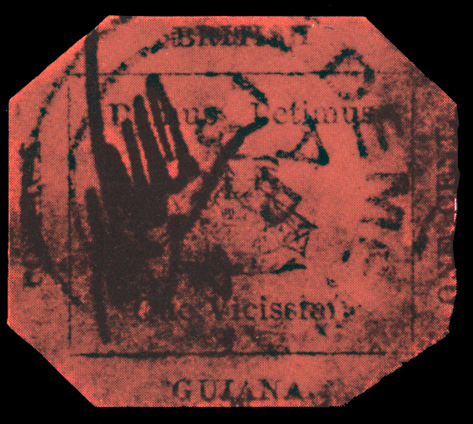 It is
imperforate, printed in black on magenta paper, and it features a sailing ship
along with the colony's Latin motto "Damus Petimus Que Vicissim"
(We give and expect in return) in the middle. Four thin lines frame the ship.
The stamp's country of issue and value in small black upper case lettering in
turn surround the frame.
It is
imperforate, printed in black on magenta paper, and it features a sailing ship
along with the colony's Latin motto "Damus Petimus Que Vicissim"
(We give and expect in return) in the middle. Four thin lines frame the ship.
The stamp's country of issue and value in small black upper case lettering in
turn surround the frame.
 Background
The
1c magenta was part of a series of three definitive stamps issued in that year
and was intended for use on local newspapers. The other two stamps, a 4c
magenta and 4c blue, were intended for postage.
The
issue came through mischance. An anticipated delivery of stamps never arrived
by ship in 1856, so the local postmaster, E.T.E. Dalton, authorised a printer,
Joseph Baum and William Dallas, who were the publishers of the Official
Gazette newspaper in Georgetown, to print out an emergency issue of three
stamps.
Description and history
Only
one copy of the 1c stamp is known to exist. It is in used condition and has
been cut in an octagonal shape. A signature, in accordance to
It
was discovered in 1873, by 12-year-old Scottish schoolboy Vernon Vaughan in the
Guyanese town of
Controversies
At
one point, it was suggested that the 1c stamp was merely a "doctored"
copy of the magenta 4c stamp of the 1856 series, a stamp very similar to the 1c
stamp in appearance. These claims were disproven.
In
the 1920s a rumor developed that a second copy of the stamp had been
discovered, and that the then owner of the stamp, Arthur Hind, had quietly
purchased this second copy and destroyed it. The rumor has not been
substantiated.
In
Popular culture
- The
- The stamp was sought after in the 1952 Carl
Barks comic "The Gilded Man", in which Donald Duck,
the philatelist, said it was "worth more than fifty thousand
dollars!"
Christmas stamp
From Wikipedia, the free encyclopedia
Many
nations of the world issue Christmas stamps, postage stamps with a
Christmas theme and intended for use on seasonal mail such as Christmas cards.
These stamps are regular postage stamps, unlike Christmas seals, and are valid
for postage year-round. They usually go on sale some time between early October
and early December, and are printed in considerable quantities.
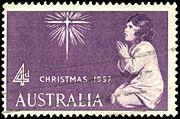
 History
It
is a matter of some debate as to which is the first Christmas stamp. The
Canadian map stamp of
1898
bears an inscription "XMAS 1898", but it was actually issued to mark
the inauguration of the
Imperial Penny Postage rate. The
Christmas connection has long been reported to have been the
result of quick thinking; William Mulock
was proposing that it be issued on 9 November,
to "honor
the Prince" (meaning the Prince of
Wales), but when Queen
displeased manner, Mulock realized the danger,
and answered "Why, the Prince of Peace, ma'am".
In
1937,
The
next Christmas stamps did not appear until 1951, when Cuba issued designs with
poinsettias and bells, followed by Haiti (1954), Luxembourg and Spain (1955),
then Australia, Korea, and Liechtenstein (1957). In cases such as
By
the 1990s, approximately 160 postal administrations were issuing Christmas
stamps, mostly on an annual basis. Islamic countries constitute the largest
group of non-participants, although the Palestinian Authority has issued
Christmas stamps since 1995.
Designs
Although
some tropical islands produce large-format Christmas stamps primarily intended
for sale to stamp collectors, for the rest of the world, Christmas stamps are
"working stamps" that will be used in large numbers to send greeting
cards and postcards. Accordingly, the stamps tend to be normal-sized, and
offered in one or a few denominations, for instance to cover differing domestic
and international rates.
The
choice of designs is highly variable, ranging from an overtly religious image
of the Nativity, to secular images of Christmas trees, wreaths, Santa Claus,
and so forth. A country may maintain a unified theme for several years, then
change it drastically, in some cases seemingly to follow "fashion
moves" by other countries. For instance, during the 1970s many countries
issued Christmas stamps featuring children's drawings, with the young artist
identified by name and age.
The
choice of secular or religious designs is frequently a bone of contention;
church leaders often see secular designs as diluting the meaning of the
holiday, while postal officials fear that overly religious designs could lead
their secular customers to avoid the stamps, leaving millions unsold, and even
expose the postal administration to charges that they are violating laws prohibiting
the promotion of a particular religion.
In
the
Usage
The
usual usage of Christmas stamps is to quickly apply them to a stack of
Christmas cards to go out. In the age of email, Christmas stamps may represent
some individuals' largest remaining use of stamps in a year, and it is not
unusual to see "leftovers" appear on regular mail during the first
months of the new year, Except in Australia where Christmas stamps are only
valid during the holiday season and cannot be used for regular mail, but only
Christmas cards. This is because the Australian Christmas stamp is valued 5c
lower than regular postage stamps.
Collecting
Christmas
is a popular theme for topical collecting. Because of the quantities printed,
almost all Christmas stamps are easy to come by and of negligible cost.
Collecting challenges would be to get covers with apropos postal markings, such
as a postmark on Christmas day (not all post offices get the day off), from a
location such as North Pole, Alaska, North Pole, New York, Santa Claus,
Indiana, or Christmas Island, or slogan postmarks with a Christmas theme.
The
Christmas Philatelic Club was formed in 1969 by Christmas stamp collectors, and
has issued its bimonthly journal, the Yule Log since that time. A number
of collectors treat Christmas collecting as a subcategory of religion on
stamps.
Other holiday stamps
In
The
Commemorative stamp
From Wikipedia, the free encyclopedia
A
commemorative stamp is a postage stamp issued to honor or commemorate a
place, event or person. Most postal services of the world issue several of
these each year, often holding first day of issue ceremonies at locations
connected with the subjects. Commemorative stamps are usually used alongside
ordinary or regular-issue stamps of the time, although in some cases their use
has been obligatory.
There
are several candidates for the title of first commemorative. A 17-cent stamp
issued in 1860 by
The
first undoubtedly commemorative stamps were issued by New South Wales in 1888
to mark its 100th anniversary; the six types all include the inscription
"ONE HUNDRED YEARS". Commemoratives followed in 1891 for Hong Kong
and
The
appearance of commemoratives caused a backlash among some stamp collectors, who
balked at the prospect of laying out ever-larger sums to acquire the stamps of
the world, and they formed the Society for the Suppression of Speculative Stamps
around 1894 to blacklist what they deemed to be excessive stamps. However, it
had very little effect, and today the early commemoratives are prized by
collectors.
Today,
commemorative stamp collection remains one of the most popular collection
hobbies in the world.
Definitive stamp
From Wikipedia, the free encyclopedia
A
definitive stamp is a postage stamp that is part of a regular issue of a
country's stamps available for sale by the postal service for a prolonged
period of time. The term is used in contrast with a "provisional
stamp", one that is issued for a temporary period until regular stamps are
available, or a "commemorative stamp", a stamp "issued to honor
a person or mark a special event" available only for a limited time.
Commonly
a definitive issue or series includes stamps in a range of denominations
sufficient to cover many or all postal rates usefully. (An "issue"
generally means a set that is put on sale all at the same time, while a
"series" is spread out over several years, but the terms are not
precise.)
The
range of values varies by era and country, but the focus is on coverage; the
values should be sufficient to make up all possible charges using as few stamps
as possible. Generally the smallest value will be the smallest unit of currency,
or smallest fractional postal rate; for instance, the 1954
The in-between values are usually chosen to "make change"
efficiently, for instance 1, 2, 5, 10, 20,
Definitives
are the workhorse stamps of a country, and as such, they tend to be small, with
designs reflecting local culture and history. The definitives of poorer
countries will often be very plain and cheaply printed, unlike the large and
decorative commemoratives, which are almost pure profit if bought by foreign
collectors and never used for postage.
Since
postal administrations know that stamp collectors want to own every stamp of a
definitive series, and a complete series can be quite expensive, there is
always the temptation to make some extra money by issuing new definitive sets
as well as including stamps with very high face values in a set. Collectors'
organizations have recommended that administrations only bring out new
definitive issues no more often than every five years, and most administrations
of the world follow this policy. An exception would be the death of a monarch,
necessitating a new definitive series for the new ruler. Sometimes merely the
portrait is changed, and the outer design (known as the frame) remains the same
throughout several issues.
Since
definitive series are issued over a period of time and are reprinted to meet
postal demand, they often contain more variation than is typically found in
stamps that have a single print run. Switching printing methods and
experimenting with phosphors is a common source of variation in modern stamps,
while differences in watermarks and perforation are also prevalent, especially
in older stamps. Many philatelists study these differences as part of their
hobby and try to collect all the varieties of each stamp. Some varieties are
particularly rare and can be more valuable than others of the same stamp that
may look the same to the casual observer. One notable example of this variation
is the Machin stamps of the
Special
stamps, such as the Christmas stamps issued annually by various countries, are
sometimes regarded as definitives because they are not commemoratives, but they
typically only include a limited range of denominations relating specifically
to the mail seen on the occasion for which they are issued.
Holiday stamp
From Wikipedia, the free encyclopedia
Christmas stamp
Many
nations in the world issue Christmas stamps intended for use on holiday mail.
Cinco de Mayo
United States & Mexico
In
Easter
Eid stamp
United States
The
U.S. Postal Service issued a 34 cent stamp on the 1 Sep 2001 at the annual Islamic Society of
North America's convention in
Hanukkah stamp
United
States & Israel
The
U.S. Postal Service issued a 32 cent stamp on October
22, 1996 as a joint issue with
The
Israeli stamp employs the same multi-colored menorah design, by American Hannah
Smotrich, a graduate of the Yale School of Art.
In
2004, the
Independence Day stamps
Many
countries issue stamps to celebrate their Independence Day or Republic Day.
Kwanzaa stamp
Kwanzaa
is a non-religious African-American festival which synthesizes and reinvents
traditional African "first fruits" celebrations. The U.S. Postal
Service issued the first 32 cent stamp designed by self-taught artist Synthia
Saint James for Kwanzaa in October 22, 1997.[7]
This design was revalued three times to 33-cent, 34-cent and 37-cent in 1999,
2001 and 2002, respectively. A total of 133 million Kwanzaa stamps were
produced in 1997.[8] A second Kwanzaa stamp, a 37-cent self adhesive
value, was introduced on October 16, 2004 with
a new design by Daniel Minter that was intended to convey "balanced
formality with a celebratory, festive mood." This stamp has been reissued;
the 2007 value was 41 cents.
Rosh
Hashanah
Saint Valentine's Day stamp
Several
countries have issued love stamps for Saint Valentine's Day, such as; Belgium,
France, Sweden, Norway and Denmark.[11] Collectors will often try to
collect covers from romantically named towns. Perhaps the most well known,
servicing more than 200,000 each year around Valentine's Day, is
Ireland
In
1985 An Post, the Irish Post Office, started issuing Love stamps for use on
Saint Valentine's Day cards. The first pair of stamps issued depicted clouds
and balloon (22p value) and hearts and flowers (26p value). An Post continues
to issue new designs each year.
United States
The
U.S. Postal Service has issued Love stamps for Saint Valentine's Day annually
since the 1973 issue designed by Robert Indiana. The first issue was an 8 cents
stamp with a printing production of 320 million stamps.
Chinese New Year
Several
nations issue postage stamps to mark the Chinese New Year (or Lunar New Year).
Typically appearing in January and February, issuing countries have included
The
stamps usually depict the animal sign of that year, consisting of the sequence:
rat, ox, tiger, rabbit, dragon, snake, horse, goat, monkey, rooster, dog, pig.
The designs may be part of a set, or individually-designed; for instance, since
1992 the
- Republic of
- People's Republic of
Most
of these stamps consist of first day covers, commemorative sheets and multiple
country brochures.
Invert error
From Wikipedia, the free encyclopedia
In
philately, an invert error occurs when part of a postage stamp is printed
upside-down. Inverts are perhaps the most spectacular of a postage stamp
errors, not only because of the striking visual appearance, but because they
are almost always quite rare, and highly valued by stamp collectors.
Invert
errors, or "inverts" for short, most commonly arise when producing
multi-colored stamps via multiple passes through the printing press. It is all
too easy for a printing plant worker to insert a half-finished sheet the wrong
way around, resulting in the inverts. Such an error being so obvious, nearly
all misprinted sheets are caught and destroyed before they leave the plant, and
still more are caught during distribution or at the post office before being
sold.
A
much less common situation is for the invert to be embedded into the printing
plate or stone, most famously the Inverted Swan of early
An
invert may be characterized as an "inverted center" or "inverted
frame" when the underlying paper is watermarked or otherwise carries a
basic orientation. It is possible for a single-color stamp to be inverted
relative to watermark, but this is called an "inverted watermark"
rather than an "inverted stamp". Depending on the positioning of
stamps within their sheet, the invert may be perfectly centered (as with the
Inverted Jenny), or offset.
Not
all inverts are spectacular. The Dag Hammarskjöld invert of 1962 consists only
of a misprinted yellow layer, and it is not immediately clear that the white
area is not a deliberate element of the design. Early Danish posthorn issues
have an ornate frame that is almost perfectly symmetrical, and an inverted
frame can only be detected by minute examination.
Overprints
may also be inverted. Many of these are common, since the expedient nature of
many overprints means that the production process is not so carefully
controlled.
Rare
inverts often have significant monetary worth. Inverted Jennies have long sold
for over 100,000USD apiece, and the St. Lawrence Seaway inverts of
Inverted Jenny
From Wikipedia, the free encyclopedia
The
Inverted Jenny (or Jenny Invert) is a
 Background
During
the 1910s, the United States Post Office had made a number of experimental
trials of carrying mail by air, and decided to inaugurate regular service on
May 15, 1918, flying between
The
job of designing and printing the new stamp was carried out in a great rush;
engraving only began on May 4, and stamp printing on May 10 (a Friday), in
sheets of 100 (contrary to the usual practice of printing 400 at a time and
cutting into 100-stamp panes). Since the stamp was printed in two colors, each
sheet had to be fed through the printing press twice, an error-prone process
that had resulted in invert errors in stamps of 1869 and 1901, and at least three
misprinted sheets were found during the production process and were destroyed.
It is believed that only one misprinted sheet of 100 stamps got through
unnoticed, and stamp collectors have spent the ensuing years trying to find
them all.
Initial
deliveries went to post offices on Monday, May 13. Aware of the potential for
inverts, a number of collectors went to their local post offices to buy the new
stamps and keep an eye out for errors. Collector W. T. Robey was one of those;
he had written to a friend on May 10 mentioning that "it would pay to be
on the lookout for inverts". On May 14, Robey went to the post office to
buy the new stamps, and as he wrote later, when the clerk brought out a sheet
of inverts, "my heart stood still". He paid for the sheet, and asked
to see more, but the remainder of the sheets were normal.
Additional
details of the day's events are not entirely certain—Robey gave three different
accounts later—but he began to contact both stamp dealers and journalists, to
tell them of his find. After a week that included visits from postal inspectors
and the hiding of the sheet, Robey sold the sheet to noted
Klein
advised Green that the stamps would be worth more separately than as a single
sheet, and Green went along; the sheet was broken into a block of eight,
several blocks of four, with the remainder sold as individuals. Green kept a
number of the inverts, including one that was placed in a locket for his wife.
This locket was offered for sale for the first time ever by the Siegel Auction
Galleries Rarity Sale, held on May 18, 2002. It did not sell in the auction,
but the philatelic press reported that a Private Treaty sale was arranged later
for an unknown price.A center-line block catalogs for $600,000.

In
late October 2005 the unique plate number block of four stamps was purchased by
a then anonymous buyer for $2,970,000. The purchaser was revealed to be
2006
Find
In
November 2006, election workers in
In
a review of a digital photograph of this stamp, Peter Mastrangelo, director of
the Pennsylvania-based American Philatelic Society said "It is our
opinion, from what we've seen, that this stamp is questionable, and we are of
the opinion at this point that it appears to be a reproduction". He
said an in-person review was needed to be sure, but that all indications are
that the stamp is a counterfeit. "The perforations on top and bottom do
not match our reference copies." Mastrangelo said. "The colors
of the blue ink are consistent with the counterfeit."
On
November 13, 2006, an elderly
On
December 4, 2006, it was confirmed that this stamp used on the ballot was a
counterfeit. Inside the Broward County Elections Office in
This
story recalls a plot point from the 1985 movie version of Brewster’s
Millions, in which a man named Brewster (played by Richard Pryor) was
challenged to spend thirty million dollars in thirty days without having
anything to show for it (i.e. without accumulating assets). One of the many
things he did in his attempt was to use an Inverted Jenny to mail a post card.
In popular culture
In
The Simpsons fifth season's first episode, "Homer's Barbershop
Quartet", Homer Simpson, along with finding an original copy of the U.S. Constitution
and a Stradivarius violin both of which he throws away not knowing their value,
then comes across a full sheet of Inverted Jennys in the 5 cent box at a local
swap meet. He also throws it away saying "Airplane's upside down!".
The
play
Local post
From Wikipedia, the free encyclopedia
A
local post is a mail service that operates only within a limited
geographical area, typically a city or a single transportation route.
Historically, some local posts have been operated by governments, while others,
known as private local posts have been for-profit companies. Today, many
stamp collectors operate hobbyists' local posts, issuing their own
postal "stamps" for other collectors but rarely carrying any mail.
Official
local posts
Government
local posts go back to at least 1680, when the Penny Post was established in
From
1840 onwards, when postage stamps were first introduced, special stamps were
often issued; for instance the cantons of Switzerland issued stamps for use
within a canton, and inscribed them "Poste-Local" or
"Orts-Post". The Russian
Rural
Private local posts
Many
countries have had private local posts at one time or another. Usually these
operated with the acquiescence of the government, and at other time in competition.
Types of local posts included intra-city systems, transcontinental delivery
(such as the Pony Express), and riverboat routes.
Many
of these existed for only short periods, and little is known of their
operations. Some of their stamps are among the great rarities of philately.
An
example of a private modern day local post currently in operation is Hawai'i
Post.
The
world renowned philatelist, the late Herman Herst Jr., is considered the father
of the modern
Private
local posts typically issue their own stamps, which can become collectors'
items. These stamps are typically canceled with special cancellations, and
their first day of issue can be thus commemorated.
In
1844, Lysander Spooner founded the American Letter Mail Company, competing with
the legal monopoly of the United States Post Office (USPO) (now the United
States Postal Service {USPS}) in violation of the Private Express Statutes. It
succeeded in delivering mail for lower prices, but the U.S. Government
challenged Spooner with legal measures, eventually forcing him to cease
operations in 1851.
In
1968, Thomas M. Murray (1927 - 2003) founded the Independent Postal System of
America (IPSA) as a nation-wide commercial carrier of Third and Fourth Class
Mail, in direct competition with the United States Post Office
(USPO), now the United States Postal Service (USPS). But in 1971, when the
company entered the First Class delivery business, they endured a number of
lawsuits brought against them, which finally led to the company's collapse in
the mid 1970's. The company issued a number of stamps during the years of its
operation, including commemoratives for Lyndon B. Johnson, Rev. Dr. Martin
Luther King, Jr. and Charles Lindbergh before the USPS did.
Hobbyists' local posts
Today's
Local Posters (also known as phiLOPOlists) issue their local post
"stamps", and issue a variety of commemorative "stamps"
covering a wide range of events or personal interests, of subjects that are not
normally issued by their own countrys postal service.
In
some cases these modern day local posts have issued stamp subjects before their
own country issued the same subject. The Free State Local Post issued an Audie
Murphy stamp long before the U.S. Postal Service issued one of the same
subject. The Ascension AAF Local Post, located on the
This
sort of local post is effectively a "home-brewed" postal system , and
the typical hobbyist carries little, if any, mail (though some do carry mail
over a short distance for themselves or a few people).
The
Local Post Collectors' Society, established in 1972, coordinates communication
among local posters. The LPCS issues a regular Bulletin "The Poster"
to its members around the world, relating stories of local posts, showing new
issues and other related items.
Perfin
From Wikipedia, the free encyclopedia
A
perfin (a contraction of 'PERForated INitials'), also called SPIFS
(a contraction of 'Stamps Perforated by Initials of Firms and Societies'), is a
pattern of tiny holes punched through a postage stamp. Organizations used
perforating machines to make perforations forming letters or designs in postage
stamps they purchased, often in bulk, with the purpose of discouraging
pilferage. The size and number of perfin holes, and sometimes the design
permitted, is usually regulated by law or postal regulation in the relevant
country.
Officially
prepared perfins
A
number of countries perforated stamps as a means to denote official mail. For
example in 1906 the
Collecting perfins
Formerly
considered damaged and not worth collecting, perforated postage stamps are now
highly sought by specialist stamp collectors. It is often difficult to identify
the originating uses of individual perfins because there are usually no
identifying features, e.g., Kodak used a simple K as their perfin, but on its
own a stamp perforated K could have been used by several other users. A K
perfin still affixed to a cover that has some company identifying feature, like
the company name, address, or even a postmark or cancellation of a known town
where the company had offices, enhances such a perfin.
Perfinned postal orders
British
postal orders were perfinned by special machines as part of paying out on bets
in the football pools. These postal orders turn up from time to time, but they
are very sought after by postal order collectors.
Other uses
Perfins
are widely used in orienteering, to mark control cards as proof that the
orienteer has visited each control point.
Postage
stamps and postal history of Malaysia
History
All
states in
Malaysian Definitive Stamps
Orchid
and Bird Definitives
During
1963
Butterfly
Definitives
There
were seven values for each state and eight high values inscribed '
Colour
separation proofs for each individual colour were printed for each value, and
the colours combined in a process that eventually produced a full colour proof.
These proofs were produced, initially, in small units, four or so and later as
full sheets. This printing took place to ensure that all colours printed
correctly when combined and also registered correctly. The more common sheet
proofs can be easily identified from the smaller units as the latter have white
borders. The stamps printed as sheets had a design that allowed for 'bleeding'
between each stamp, printing over the perforations. Each value had two separate
black colours, the first was applied as detail for the butterfly and the stamp
value, being common for all States. and the second for the State name, Rulers
portrait and/or State coat of arms, this being the 'customising' colour for the
base stamps.
In
addition to sheet stamps, two values, 10 cents and 15 cents, were produced as
coil stamps for use in vending machines in several locations throughout
During
1978, unannounced reprints for some state values were issued printed in
photogravure by Harrison & Sons, also in the
The
only proofs that have appeared to date are single full colour proofs on Harrison
& Sons presentation cards, all values existing. It is considered that only
two each of these cards would have been produced, one for the printers record
and one for the Malaysian Post Office in
Malaysian Commemorative Stamps
In
1982,
Sports
stamps
Treskilling Yellow
From Wikipedia, the free encyclopedia
The
"Treskilling" Yellow, or 3 skilling banco error of color
(Swedish: Gul treskilling banco, Gul=yellow), is a postage stamp of
In
1855,
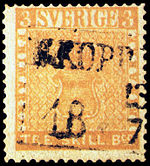 Somehow,
this error went entirely unnoticed at the time, and by 1858 the currency was
changed. The skilling stamps were replaced by new stamps denominated in öre. In
Somehow,
this error went entirely unnoticed at the time, and by 1858 the currency was
changed. The skilling stamps were replaced by new stamps denominated in öre. In
 After
changing hands several times, Sigmund Friedl sold it to Philipp von Ferrary in
1894, who had at that time the largest known stamp
collection in the world, and paid the breathtaking sum of 4,000 gulden. As time
passed, and no other "yellows" surfaced despite energetic searching,
it became clear that the stamp was not only rare, but quite possibly the only
surviving example.
After
changing hands several times, Sigmund Friedl sold it to Philipp von Ferrary in
1894, who had at that time the largest known stamp
collection in the world, and paid the breathtaking sum of 4,000 gulden. As time
passed, and no other "yellows" surfaced despite energetic searching,
it became clear that the stamp was not only rare, but quite possibly the only
surviving example.
When
Ferrary's collection was auctioned in the 1920s, Swedish Baron Eric
Leijonhufvud acquired the Yellow, then Claes A. Tamm bought it in 1926 for
£1,500 (GBP) in order to complete his collection of
In
the 1970s, the
In
1984 the stamp made headlines when it was sold by David Feldman for 977,500
Swiss francs. A 1990 sale realized over one million US dollars, then in 1996 it
sold again for 2,500,000 Swiss francs. Each successive sale has produced a
world record price for a postage stamp.
Z Grill
From Wikipedia, the free encyclopedia
The
Benjamin Franklin Z Grill, or simply Z Grill, is a 1-cent postage
stamp issued by the United States Postal Service in 1868 depicting Benjamin
Franklin. While stamps of this design were the common 1-cent stamps of the
1860s, the Z Grill is distinguished by having the so-called "Z"
variety of a grill pressed into the stamp. The 1-cent Z Grill is generally
considered the rarest and most valuable of all
The
purpose of the grill was to permit the canceling ink to be better absorbed into
the stamp paper, thus preventing reuse of stamps by washing out the
cancellation marks. The use of grills was not found to be practical and they
were soon discontinued.
There
are currently only two known 1-cent 1868 Z-Grills. One is owned by the New York
Public Library as part of the Benjamin Miller Collection. This leaves only a
single 1-cent 1868 Z-Grill in private hands.
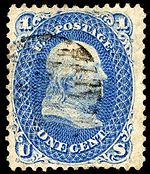 This 1868 1
cent "Z-Grill" stamp sold for $935,000 in 1998 to Mystic Stamp
Company, a stamp dealer. Siegel Auctions auctioned the stamp as part of the
Robert Zoellner collection. Zachary Sundman, the eleven-year-old son of Mystic
Stamp Company President Donald Sundman, was the individual responsible for
wielding the paddle and doing the actual bidding.
This 1868 1
cent "Z-Grill" stamp sold for $935,000 in 1998 to Mystic Stamp
Company, a stamp dealer. Siegel Auctions auctioned the stamp as part of the
Robert Zoellner collection. Zachary Sundman, the eleven-year-old son of Mystic
Stamp Company President Donald Sundman, was the individual responsible for
wielding the paddle and doing the actual bidding.
Later,
in late October 2005, Sundman traded this Z Grill to financier Bill Gross for a
block of four Inverted Jenny stamps worth nearly $3 million. By completing this
trade Gross became the owner of the only complete collection of
Both
the Z Grills were on display at the
Gronchi Rosa
From Wikipedia, the free encyclopedia
The
Gronchi Rosa is a rare Italian postage stamp design error. It was part
of a 1961 issue for the voyage of president Giovanni Gronchi to three South
American countries.
The
205 liras rosa was intended for the stopover in
Inverted Head 4 Annas
From Wikipedia, the free encyclopedia
The
Inverted Head Four Annas of


The
Four Annas Stamps
The
Four Annas stamps were lithographed by the Survey Office in
The Inverted Head Four Annas
Among
these First Printing stamps, at least three sheets with the red frames had been
inadvertently placed in the press backwards, head to foot. Hence, the heads
appear to be upside down, although in actuality the red frames were inverted.
The
surviving examples of this error are low in number. E. A. Smythies states,
"Details and illustrations of all the known copies are given in that
interesting publication, Stamps of Fame, by L. N. and M. Williams."
All of these are postally used. Only two (or three) are known cut square;
another 20 or so are cut to shape (that is, in an octagonal shape). One from
the collection of the Earl of Crawford was exhibited in the World Philatelic
Exhibition in
Discovery of the Error
This
error was not found before the stamps were issued, of course, and it seems to
have been not discovered for many years after. None of the 1870s publications
mentions the Inverted Head Four Annas. The 1891 reprints provide the first
conclusive evidence that the error was known, but E. A. Smythies said the error
was first noticed during a meeting of the Philatelic Society of London in
Collections
Three
cut to shape examples of the Inverted Head Four Annas repose in the Tapling
Collection at the British Museum, London, including two (positions 3 and 4 on
the printed sheet) on piece, showing that the error was created by an incorrect
sheet placement rather than by a careless die transfer. One carefully cut to
shape is found in the Royal Collection, position 5 on the sheet. The Government
of India Collection, in
Forgeries
Dangerous
forgeries have been made by chemically erasing the upright head or the frame
and then printing over it. These can be detected using "black light"
and other techniques. One of these fakes appeared in the Masson sale, and one
or two in the Ferrary auctions. Some clever forgeries purport to show an
inverted head with different head dies, which are obvious, and crude forgeries
are plentiful.
Uganda
From Wikipedia, the free encyclopedia
The
Uganda Cowries, also known as the Uganda Missionaries, were the
first adhesive postage stamps of
The
values of the stamps varied, but all were denominated in cowries (monetary
seashells), at 200 cowries per rupee or 12 1/2 cowries = 1d. The design was
simple, showing just the initials of the jurisdiction and a number for the
denomination. The paper used was extremely thin. The stamps have been forged.
Only a small number of the genuine stamps seem to have survived. Pen initialed,
surcharged values exist; of these Robson Lowe commented, "All are rare. We
do not recall selling a copy in over 25 years."
This
postal service of
Military
Forces assumed the operation of the mails in June, 1896. The Uganda
Missionaries were then followed by a typeset issue from a printing press in
November, 1896, after the British Foreign Office had gained control of the
government. A recess printed issue from De
Scinde Dawk
From Wikipedia, the free encyclopedia
Scinde
Dawk
was a very old postal system of runners that served the Indus Valley of Sindh,
an area of present-day
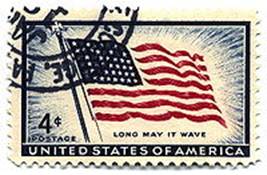

Origins
The
Dawk, or Dak, was a very old postal system of runners. The runners were paid
according to their
distance of travel and the weight of their
letters. This was a local
inadequate for the military and commercial
needs of the British East India Company after their conquest
of
Sindh.
Reform of the postal
system
Sir
Bartle Frere of the East India Company became the Chief Commissioner of Sindh
in 1850. Following the English example set by Rowland Hill, Frere improved upon
the postal system of Sindh by introducing a cheap and uniform rate for postage,
independent of distance travelled. In 1851 the runners were replaced with an
efficient system using horses and camels, following routes through Scinde
province, generally along the valley of the
The stamps
Stamps
were required for the prepayment of postage, a basic feature of the new system.
These stamps bore the Merchants' Mark of the British East India Company in a
design embossed on wafers of red sealing wax impressed on paper. Because they
cracked and disintegrated, they were soon replaced by a colourless design
embossed on white paper which was hard to see in a dim light. The last stamps
were a blue embossing on white paper. All of these had a value of only one-half
anna each, but today they rank among the rare classics of philately.
Forgeries
Forgeries
of these rare stamps are plentiful. The most easily detected fakes are not
embossed on paper. Other crude fakes show a misalignment of the second letter
'A' of ANNA with the 'K' of DAWK; and in other fakes the '1/2' is not separated
from the central heartshaped emblem.
Later Developments
After
the Scinde Dawk, Colonel Forbes of Calcutta Mint came up with an essay for a
postage stamp depicting a lion and palm tree. This, and several other essays,
were never printed because Forbes could not ensure an adequate supply with the
limited machinery at hand. Soon after, new, lithographed stamps printed by the
Survey Office appeared in several denominations valid for use throughout
The
British East India Company's posts are important, because the "Great
Company" held sway over so much of the world's commerce in those days,
extending across Asia and
Postage
stamps and postal history of Great
Britain
The
postal history of
Early
history
The
story begins in the 12th century with King Henry I of
Henry
VIII created the Royal Mail in 1516, appointing Brian Tuke as "Master of
the Postes", while
In
1661, Charles II made Henry Bishop the first Postmaster General (PMG). In
answer to customer complaints about delayed letters, Bishop introduced the
Bishop mark, a small circle with month and day inside, applied at
Note
on British currency
The
unit of currency is the pound sterling. Its symbol is £ which represents the
Latin word for pound, libra. Until February 1971, it was divided into
twenty shillings (20s. or 20/-) the / derives from the old long s. both symbols
stand for its Latin name solidus. Each shilling was divided into twelve
pence 12d. The d represents denarius, the Latin word for a ten as
piece. Since 1971, the pound remains but it is divided into a hundred of what
were for a few years, called "new pence". Now they are
"pence" for which the symbol is p. Thus, ignoring inflation, 2.4d. =
1p and 1/- = 5p.
Postage stamps
The
Great Post Office Reform of 1839 and 1840 was championed by Rowland Hill as a
way to reverse the steady financial losses of the Post Office. Hill convinced
Parliament to adopt a flat 4d per 1/2 oz (£1.18/kg) rate regardless of
distance, which went into effect 5 December 1839.
This was immediately successful, and on 10
January 1840 the Uniform Penny Post started, charging only 1d for
prepaid letters and 2d if the fee was collected from the recipient. Fixed rates
meant that it was practical to avoid handling money to send a letter by using
an "adhesive label", and accordingly, on May 6, the Penny Black
became the world's first postage stamp in use.
The
stamp was originally for use only within the United Kingdom of Great Britain
and
It
soon became obvious that black was a not a good choice for stamp colour, since
any cancellation marks were hard to see, and from 1841 onward, the stamps were
printed in a brick-red colour. The Penny Reds continued in use for decades.
Victorian era
The
Victorian age saw an explosion of experimentation. The inefficiency of using
scissors to cut stamps from the sheet inspired trials with rouletting (the
Archer Roulette), and then with perforation, which became standard practice in
Surface-printed
stamps first appeared in the form of a fourpenny stamp in 1855, printed by De
A
5 shilling (abbreviated as 5/- or as 5s.) (£0.25) stamp first appeared in 1867,
followed by 10 shilling (£0.50) and
Meanwhile,
the age of the Penny Reds had come to an end along with the Perkins Bacon printing
contract. The new low values were also surface-printed; first was a penny stamp
coloured Venetian red in a square frame, issued in 1880. However, the passage
of the Customs and Inland Revenue Act of 1881 necessitated new stamps valid
also as revenue stamps, and so the Penny Lilac was issued in that year,
inscribed "POSTAGE AND INLAND REVENUE". This stamp remained the
standard letter stamp for the remainder of
1883
and 1884 saw experimentation with stamps using fugitive inks. These were rather
plain designs, low values in lilac and high values in green, because those were
the only colours available. They succeeded in their purpose - relatively few of
the stamps survived usage, their colours fading away when soaked from the
envelope - but they were not liked by the public.
The
last major issue of
Early 20th century
When
Edward VII succeeded to the throne, new stamps became necessary. The approach
was very conservative however; most of the Jubilee frames were reused, and the
image of the King was still a single profile. Edward's reign being short, there
were no major changes of design, but the use of chalk-surfaced paper was
introduced. (This type of paper can be detected by rubbing the surface with
silver, which leaves a black mark.)
By
contrast, the stamps of King George V were innovative from the very first. The
first issue made was of the halfpenny and penny values, which were in the same
colours as used for the previous reign. Although the main design feature
remained the same, (a central ellipse for the portrait, an ornamental frame,
value tablet at the base and a crown at the top), a three quarter portrait was
used for the first time. Subsequent designs reverted to the standard profile
however.
Abdication and war
A
set of four stamps was issued in 1936 for Edward VIII before he abdicated.
George VI's coronation was marked with a commemorative; part of an omnibus
issue included every colony in the Empire. New definitives featured a profile
of the king on a solid colour background, precursors of the Machins three
decades later. (See below)
The
century of the postage was celebrated in 1940 with a set of six depicting
Victoria and George VI side-by-side. By the following year, wartime exigencies
affected stamp printing, with the 1937 stamps being printed with less ink,
resulting in significantly lighter shades. Post-war issues included
commemoratives for the return of peace, the Silver Jubilee and the 1948 Summer
Olympics in 1948, and the 75th anniversary of the UPU, in 1949.
In
1950 the colours of all the low values were changed. 1951 saw a new series of
high values (2s 6d, 5s, 10s, £1), and two commemoratives for the Festival of
Britain.
Modern era
When
Elizabeth II succeeded her father in 1952, new stamps were needed. The result
was a collection of variations on a theme that came to be known as the Wilding
issues, based on a portrait of Queen Elizabeth II by photographer Dorothy
Wilding.
Wildings
were used until 1967, when the Machin issues were introduced. The Machin design
is very simple, a profile of the Queen on a solid colour background, and very
popular, still being the standard British stamp as of 2009. They have been
printed in scores of different colours; in addition, decimalisation required
new denominations, and there have technical improvements in the printing
process, resulting in literally hundreds of varieties known to specialists.
The monarchy and trends in
design of British stamps
Up
to the 1950s British commemorative stamps were few and far between; most of the
stamps were definitive issues where the portrait of the reigning monarch was
the dominant element. Even after commemorative stamps began to appear more
often during the 1950s and early 1960s, the monarch's effigy was prominent,
usually taking up a quarter to a third of the stamp's design, which limited
flexibility and creativity. The turnaround came about in 1965-66, when then
Postmaster General Tony Benn pushed for the use of a small silhouette of the
Queen, based on the Machin profile, and this has become the standard design
ever since. When the monarch's portrait is part of the stamp's main design (as
for example in the case of issues commemorating the Queen's birthday), then the
silhouette is not needed and does not appear. (An example of an exception to
this rule occurred in 2000 when a souvenir sheet issued in commemoration of the
Queen Mother's 100th birthday included a stamp with a photograph of the Queen and
the silhouette.)
Another
trend is the growing use of stamps to commemorate events related to the present
Royal Family. Up to Queen Elizabeth II's accession in 1952 the only
commemorative stamps to have been issued related to royal events were for King
George V's silver jubilee in 1935, King George VI's coronation in 1937, and a 1948
issue to commemorate George VI's 25th wedding anniversary. Since 1952, however,
stamps have been issued not only to commemorate the Queen's silver and golden
jubilees, as well as the 40th anniversary of her accession (in 1977, 1992 and
2002), her coronation in 1953, and her silver, gold and diamond wedding
anniversaries (in 1972, 1997 and 2007), but also to commemorate the 25th and
50th anniversaries of her coronation (in 1978 and 2003); her 60th and 80th
birthdays (in 1986 and 2006); the weddings of her sons and daughter (Anne's in
1973, Charles' two weddings in 1981 and 2005, Andrew's in 1986, and Edward's in
1999; Anne's second wedding in 1992 was not commemorated); her mother's 80th,
90th and 100th birthdays (in 1980, 1990 and 2000); the Prince of Wales'
investiture and its 25th anniversary (1969, 1994); and Prince William of Wales'
21st birthday in
With
regard to previous monarchs, stamps were issued in 1987 to mark the 150th
anniversary of Queen
Regional Issues
Main article: Regional
postage in
Beginning
in 1958, regional issues were introduced in the Channel Islands, the Isle of
Man,
Hawaiian Missionaries
From Wikipedia, the free encyclopedia
The
Hawaiian Missionaries are the first postage stamps of the
Background
In
the early 19th century, mail to and from
Issuance
The
stamps went on sale October 1,
The
design was very simple, consisting only of a central numeral of the
denomination framed by a standard printer's ornament, with the denomination
repeated in words at the bottom. The top line read "Hawaiian /
Postage" for the 2- and 5-cent values, but "H.I. & U.S. / Postage"
for the 13-cent value, reflecting its unusual role of paying two different
countries' postage. A thin line surrounded by a thicker line framed the stamp
as a whole. All stamps were printed in the same shade of blue on pelure paper,
an extremely thin tissue-like paper prone to tearing; 90% of known Missionaries
are damaged in some way.
Although
the stamps were in regular use until as late as 1856, of the four values issued
only about 200 have survived (Scott Trepel's census in the Siegel catalog lists
197, but see below), of which 28 are unused, and 32 are on cover.
The
2-cent is the rarest of the Hawaiian Missionaries, with 15 copies recorded.
When Maurice Burrus sold his 2-cent Missionary in 1921 the price was
USD$15,000; when Alfred Caspary sold the same stamp in 1963 the price was
$41,000, the highest value ever paid for any stamp at that time (even more than
the British Guiana 1c magenta and "Post Office" Mauritius Blue Penny
and Red Penny rarities). An astonishing lore surrounds this stamp: in 1892, one
of its earlier owners, Gaston Leroux, was murdered for it by an envious fellow
philatelist, Hector Giroux.
The Dawson
The
most valuable of all Missionary items is a cover sent to
The
So
soon as Steam or other mail packets under the flag of either of the contracting
parties, shall have commenced running between their respective ports of entry,
the contracting parties agree to receive at the post offices of those ports all
mailable matter, and to forward it as directed, the destination being to [some]
regular post office of either country, charging thereupon the regular postal
rate as established by law in the territories of either party receiving said
mailable matter, in addition to the original postage of the office whence the
mail [was] sent.
On
September 9, 1850,
The Grinnell Missionaries
In
1920, 43 additional Missionaries appeared on the philatelic market. They came
from a Charles Shattuck, whose mother had apparently corresponded with a
missionary family in
They
have been studied on a number of occasions since then, but opinion remains
divided. In 1922, experts testified that the Grinnells had been produced by
photogravure and not by handset moveable type, but in the 1980s Keith Cordrey
showed that they were probably typeset, and the Royal Philatelic Society London
agreed. Further analysis showed that the ink and paper were consistent with
1850s types. Even so, the Royal Philatelic Society declared the stamps to be
counterfeit, and is preparing a book detailing their findings.
Aerophilately
From Wikipedia, the free encyclopedia
Aerophilately is the
branch of philately that specializes in the study of airmail. Philatelists have
observed the development of mail transport by air from its beginning, and all
aspects of airmail service have been extensively studied and documented by
specialists.
Scope
The
scope of aerophilately includes:
- airmail postage stamps, both official and
unofficial (see list of
- other types of labels (such as airmail
etiquettes)
- postal documents transmitted by air
- postal markings related to air transport
- rates and routes, particularly first flights and
other "special" flights
- mail recovered from aircraft accidents and other
incidents (crash covers)
While
most of the study of airmail assumes transport by fixed-wing aircraft, the
fields of balloon mail, dirigible mail, zeppelin mail, missile mail, and rocket
mail are active subspecialties. Astrophilately, the study of mail in space, is
a related area.
Organizations
International
Federation of Aerophilatelic Societies, (FISA), is the umbrella organization
for aerophilately though aerophilatelists have formed a number of organizations
around the world; many of them put out a variety of specialized publications.
- FISA
- Air Mail Society of
- American Air Mail Society
- British Air Mail Society
- The Canadian Aerophilatelic Society
- Irish Airmail Society
Franking
From Wikipedia, the free encyclopedia
Franking is also the
passing of franking credits to shareholders in countries that have dividend
imputation to reduce or eliminate double taxation of company profits.
For the town in Upper
Austria, see
Franking (or "franks")
are any and all devices or markings such as postage stamps (including printed
and/or embossed on postal stationery), printed or stamped impressions, codings,
labels, manuscript writings (including "privilege" signatures),
and/or any other authorized form of markings affixed or applied to mails to
qualify them to be postally serviced.
Franking
types and methods
While
all affixed postage stamps and other markings applied to mail to qualify it for
postal service are franking (or "franks"), not all types and methods
are used to frank all types or classes of mails. Although there are differences
in the manner that the postal systems of the 191 nations that belong to the
Universal Postal Union (UPU) apply and regulate the way their mails are
franked, most mails fall under one (and sometimes more) of the following four
major types and/or methods of franking. The UPU co-ordinates the application of
the regulations of postal systems of its member nations, including as they
relate to franking, to permit the servicing and exchange of international
mails. Prior to the establishment of the UPU in 1874, international mails
sometimes bore mixed franking (the application of franking of more than one
country) before the world's postal services universally agreed to deliver international
mails bearing only the franking of the country of origin.
"Postage"
franking is the physical
application and presence of postage stamps, or any other markings recognized
and accepted by the postal system or systems providing service, which indicate
the payment of sufficient fees for the class of service which the item of mail
is to be or had been afforded. Prior to the introduction to the first postage
stamp in 1840 (the British "Penny Black"), pre-paid franking was
applied exclusively by a manuscript or handstamped "Paid" marking and
the amount of the fee collected.
In addition to postage
stamps, postal franking can be in the form of printed or stamped impressions
made in an authorized format and applied directly by a franking machine,
postage meter, computer generated franking labels or other similar methods
("Postage Evidencing Systems"), any form of preprinted "postage
paid" notice authorized by a postal service permit ("Indicia"),
or any other marking method accepted by the postal service and specified
by its regulations, as proof of the prepayment of the appropriate fees. Postal
franking also includes "Postage Due" stamps or markings affixed by a
postal service which designate any amount of insufficient or omitted postage
fees to be collected on delivery.
"Privilege"
franking is a personally pen
signed or printed facsimile signature of a person with a "franking privilege" such as
certain government officials (especially legislators) and others designated by
law or Postal Regulations. In the
- "Official Business"
franking is any frank
printed on or affixed to mails which are designated as being for official
business of national governments (i.e. governments which also have postal
authority) and thus qualify for postal service without any additional paid
franking. In Commonwealth countries the printed frank reads "Official
Paid" and is used by government departments on postmarks, stationery,
adhesive labels, official stamps, and handstruck or machine stamps.
In the United States such
mails are sent using postal stationery or address labels that include a
"Penalty" frank ("Penalty For Private Use To Avoid Payment of
Postage $300") printed on the piece of mail, and/or is franked with
Penalty Mail Stamps (PMS) of appropriate value.
Such mails are generally serviced as First Class Mail (or equivalent)
unless otherwise designated (such as "bulk" mailings).
"Business Reply
Mail" (BRM) franking is a preprinted
frank with a Permit number which
authorizes items so marked to be posted as First Class Mail with the
authorizing postal service without advance payment by the person posting the
item. (International Reply Mail may specify Air Mail as the class of service.)
Postage fees for BRM are paid by the permit holder upon its delivery to the
specified address authorized by the permit and preprinted on the item of
business reply mail. Governments also use BRM to permit replies associated with
official business purposes,
Each
of the world's several hundred national postal administrations establish and
regulate the specific methods and standards of franking as they apply to
domestic operations within their own postal systems. Any and all conflicts that
might arise affecting the franking of mails serviced by multiple
administrations which result from differences in these various postal
regulations and/or practices are mediated by the Universal Postal Union, a
specialized agency of the United Nations, as the organization which sets the
rules and technical standards for international mail exchanges.
Franking privilege
A
franking privilege, typically granted to certain elected officials by a
government, is the privilege to send mail over the signature of an authorized
person as the only frank required to be afforded postal service. Use of the
franking privilege is not absolute, however, but generally limited to official
business, constituent bulk mails, and other uses as prescribed by law. A
primary example of this type of limited privileged franking is the
"Congressional Frank" afforded to Members of Congress in the
A
six-member bipartisan Commission on Congressional Mailing Standards,
colloquially known as the "Franking Commission," is responsible for
oversight and regulation of the franking privilege in the Congress. Among the
Commission's responsibilities is to establish the "Official Mail
Allowance" for each Member based proportionally on the number of
constituents they serve. Certain other persons are also accorded the privilege
such as Members-elect and former Presidents and their spouse or widow as well.
A President who is convicted in the Senate as a result of an impeachment trial
would not have a franking privilege after being forced to leave office. The sitting President does not have personal
franking privileges but the Vice President, who is also President of the
Senate, does.
In
Canada, the monarch, the Governor General, members of the Canadian Senate,
members of the House of Commons, Clerk of House of Commons, Parliamentary
Librarian, Associate Parliamentary Librarian, officers of parliament and Senate
Ethics Officer all have franking privilege and mails sent to or from these
people are sent free of charge.
In
History
A
limited form of franking privilege originated in the British Parliament in
1660, with the passage of an act authorizing the formation of the General Post
Office. In the 19th century, as use of the post office increased significantly
in
In
the
The
phrase franking is derived from the Latin word "francus" meaning
free. Another use of that term is speaking "frankly", i.e.
"freely".
Because
Benjamin Franklin was an early United States Postmaster General, satirist Richard
Armour referred to free congressional mailings as the "
Postal stationery
From Wikipedia, the free encyclopedia
A
piece of postal stationery is a stationery item, such as an envelope,
letter sheet, post card, lettercard, aérogramme or newspaper wrapper, with an
imprinted stamp.
The
preprinted stamp, or 'indicium', is usually at the rate required for a
particular postal service, e.g., at the postcard rate for postcards, the
domestic letter rate for letter sheets and envelopes, the registered letter
rate for registered envelopes, etc. In general, postal stationery is handled
similarly to postage stamps; sold from post offices either at the face value of
the printed postage or with a surcharge to cover the additional cost of the stationery.
The
envelope form may also be called a stamped envelope. In the
The
postal services of some countries also offer a form of letter sheet called an
aérogramme consisting of a blank sheet of paper with folding instructions and
adhesive flaps that becomes its own envelope, and carries prepaid postage at
either the international airmail letter rate or at a special lower aerogramme
rate. Enclosures are not permitted in aerogrammes.
The
first official postal stationery were the 1838
embossed letter sheets of
In
emergency situations, postal stationery has been produced by handstamping
envelopes with modified cancelling devices; many of the rare Confederate
postmasters' provisionals are of this form. Postal stationery can also be
overprinted publicly, or by a private overprint.
Many
country-specific stamp catalogs include postal stationery in their listings and
there are many books devoted to the postal stationery of individual countries,
however, the principal encyclopaedic work is the nineteen volume Higgins &
Gage World Postal Stationery Catalog.
Pen cancel
From Wikipedia, the free encyclopedia
In
philately, a pen cancel is a cancellation of a postage stamp by the use
of a pen, marker or crayon.
Usage
In
the early days of stamps, cancellation with a pen was common. Today stamps are
almost always cancelled with an inked handstamp or a machine cancel as this is quicker
to apply. Pen cancels are still sometimes seen today when a postal official
needs to cancel stamps missed by the automatic cancelling machine.
There
are no fixed terms for the different types of pen cancels but a cancel in the
form of two crossed lines has been referred to as an X cancel. Pen
cancels may also take the form of notations by the canceller, the city in which
the item was posted or the initials of the local postmaster.
A
pen cancel may indicate fiscal (revenue) use, however, in the early days of
stamps a pen cancel was sometimes used because no handstamp was available, for
instance in
Values
A
used stamp with a pen cancel is usually worth much less than a stamp cancelled
using a handstamp or machine. In particular, the additional information from
the handstamp is lost and the pen cancel may indicate fiscal (revenue) rather
than postal use. Pen cancelling is a common method of cancelling stamps used
fiscally. Stamps marked valid for both postage and revenue use are
usually worth less when fiscally used.
Tampering
Some
people have attempted to remove pen cancels from used stamps in order to turn
them into more valuable unused stamps.
Stamp hinge
From Wikipedia, the free encyclopedia
Stamp
hinges
are small, folded, rectangular pieces of paper coated with a mild gum. They are
used by stamp collectors to affix postage stamps onto the pages of a stamp
album. The short end is moistened and affixed to the stamp, the long end is
likewise affixed to the page. The hinge keeps the stamp on the page while still
allowing it to be lifted to examine the back (for instance to see the watermark
or expert marks).
The
best stamp hinges are also designed to be "peelable", meaning that
the stamp may be removed from the page, and the hinge from the stamp, without
any damage to either. Not all makes of hinge have this property, and the backs
of many stamps have "hinge remnants", where the hinge has torn away
rather than letting go of the stamp. This is especially common for mint stamps,
where the stamp's own gum adheres tightly to the hinge. Some old stamps may
actually have multiple hinge remnants layered on top of each other. Conversely,
careless removal of a hinge may take away a layer of the stamp's paper,
resulting in a type of stamp thin known as a "hinge thin".
Even
with the use of peelable hinges and care taken to minimize the moisture used,
the hinge will leave a visible disturbance in the gum of an unused stamp. While
this was formerly a matter of indifference, since about the middle of the 20th
century many collectors have come to prefer "unhinged stamps" showing
no trace of hinging. In some cases, the price differential is 2-to-1 or more,
resulting in the quip that the "gum on the back of a stamp is the most
valuable substance in the world". Collectors preferring unhinged stamps
typically use pocket-like or sleeve-like stamp mounts.
Since
the time that unhinged stamps became popular, considerable numbers of old stamps
with intact gum have appeared on the market, raising suspicion that many of
these have been regummed; some experts have asserted that there are no stamps
surviving from the 19th century that have not been hinged.
Nevertheless,
stamp hinges remain popular as a mounting method.
Postage stamp gum
From Wikipedia, the free encyclopedia
In
philately, gum is the substance applied to the back of a postage stamp
to enable it to adhere to a letter or other mailed item. The term is generic,
and applies both to traditional types such as gum arabic and to synthetic
modern formulations.
History
The
use of gum was part of the original proposal by Rowland Hill, and has been
universal from the beginning. There have been a number of stamp types that were
issued ungummed, typically due to emergency situations when gum was not
available, such as
Originally,
gumming took place after printing and before perforation, usually because the
paper had to be damp for printing to work well, but in modern times most stamp
printing is done dry on pregummed paper. There have been a couple of historical
instances where stamps were regummed after being perforated, but these were
unusual situations.
On
early issues, gum was applied by hand, using a brush or roller, but in 1880 De
The
greatest manufacturing problem of the gumming process is its tendency to make
the stamps curl, due to the different reaction of paper and gum to varying
moisture levels. In the most extreme cases, the stamp will spontaneously roll
up into a small tube. Various schemes have been tried, but the problem persists
to this day. In Swiss stamps of the 1930s, Courvoisier used a gum-breaking
machine that pressed a pattern of small squares into the gum, resulting in
so-called grilled gum. Another scheme has been to slice the gum with
knives after it has been applied. In some cases the gum solves the problem
itself by becoming "crackly" when it dries.
The
appearance of the gum varies with the type and method of application, and may
range from nearly invisible to dark brown globs. Types of gum used on stamps include:
- dextrin, produced by heating starch
- gum arabic or acacia gum, derived from the
acacia plant
- glue, from gelatin, rarely seen on stamps
- polyvinyl alcohol (PVA)
In
recent years, the use of self-adhesive stamps has become widespread. The first
use was by
Philately
For
collectors, gum is mostly a problem. It is rarely of use in differentiating
between common and rare stamps, and being on the back of the stamp it is not
usually visible. Nevertheless, many collectors of unused stamps want copies
that are "mint" or "post office fresh", which means that
the gum must be pristine and intact, and they will pay a premium for these.
While not so much of a problem for modern issues, the traditional way of
mounting stamps in an album was with the use of stamp hinges, and some experts
claim that very few unused stamps from the 19th century have not been hinged at
some point in their existence. This means that old mint stamps are inevitably
under suspicion of having been regummed, and a subfield of forensic philately
is the detection of regummed stamps.
Postage
stamps and postal history of Germany
From Wikipedia, the free encyclopedia
This
is a survey of the postage stamps and postal history of
Metzger
Post
The
Metzger Post is credited to be perhaps the first international post of the
Middle Ages The guild of butchers (German: Metzger) organized courier mail
services with horses; when the mail arrived they used a horn to announce it and
thus created a commonly recognized emblem for postal services. The Metzger Post
was established in the twelfth century and survived until 1637, when Thurn and
Taxis's monopoly took over.
Thurn and Taxis
In
1497, on behalf of Emperor Maximilian I of the
Thurn
and Taxis lost its monopoly when Napoleon granted the Rhine Confederation the
right to conduct postal services. The agency continued to operate and even
issued some stamps (v.i.) but when
German states
Main articles: Postage stamps
and postal history of Baden, Postage stamps and postal history of Bergedorf,
Postage stamps and postal history of Hamburg, Postal history of Heligoland,
Postage stamps and postal history of Lübeck, Postage stamps and postal history
of Mecklenburg, and Postage stamps and postal history of the North German
Confederation
Prior
to the German unification of 1871, individual German states and entities
started to release their own stamps,
Imperial Germany
Reichspost
The
Deutsche Reichspost started officially on May 4, 1871 using initially
stamps of the North German Confederation until it issued its first stamps on January 1, 1872. Heinrich von Stephan, inventor of the postcard
and founder of the Universal Postal Union, was the first Postmaster-General.
The most common stamps of the Reichspost were the
German
colonies
Stamps
were issued by the German authorities for all colonies:German South West
Africa, German New Guinea,
German
offices abroad
Imperial
German
WWI occupations
During
world war I, German authorities issued stamps in occupied countries, namely
Weimar Republic
Reichspost
The
Reichspost continued to function as a governmental entity after
Plebiscite
areas
After
the Treaty of Versailles a number of areas underwent plebiscites in 1920 to
determine their future fate. These areas briefly issued stamps: Allenstein and
Marienwerder, Schleswig, and
Danzig
After
the Treaty of Versailles the Free City of Danzig was established as an
independent entity in 1920. At first German stamps were still used, after a
while overprinted with "
Memel territory
After
the Treaty of Versailles, the
Saar
After
the Treaty of Versailles the Saar territory was administered by the
"Third Reich",
1933-1945
Reichspost
During
the "Third Reich" the Reichspost continued to function as a monopoly
of the government under the auspices of the Reichspostministerium, and Nazi
propaganda took hold and influenced stamp design and policy. The Hitler head
stamp became the stamp for common usage, and a large number of semipostal
stamps were issued. In the last year before the end of the war the stamp
inscription "Deutsches Reich" was changed to "Grossdeutsches
Reich" (Greater German Empire). Field post stamps were issued for the
military forces starting in 1942. The world's first postal code system was
introduced on July 25, 1941 with a two-digit number system. This system was
initially used for the packet service and later applied to all mail deliveries.
Sudeten/Bohemia and Moravia
After
the
German
WWII occupations
During
the course of WWII German authorities issues stamps in Albania, Alsace, Belgium,
Channel Islands, Estland, parts of France, Kotor, Kurland, Latvia, Lithuania,
Luxemburg, Macedonia, Montenegro, Poland (General Government), parts of Russia,
Serbia, Slovenia, Ukraine, Zante, and Zara.
Divided Germany
Local
issues
In
the process of the collapse of Nazi Germany, mail services became disrupted or
ceased. Various communities established services locally during the void often
using defaced Hitler stamps.
Allied
occupation
With
the occupation of
Deutsche
Bundespost Berlin
Deutsche
Post of the GDR
With
the formation of the German Democratic Republic (GDR) the Deutsche Post of
the GDR service was established as the governmental agency to provide mail
services. Its first stamp was released on October
9, 1949. The production of these often beautiful stamps was prolific,
about 3,000 different stamps were produced during the life of the existence of
the DP, relatively low, however, was the number of semipostals. Stamps were to
some degree used to gain currency abroad, that is some stamps were not produced
for circulation but sold directly to stamp dealers. Also, for some sets a
specific stamp was produced at an intentionally low number - called a
"Sperrwert" (lit. blocked stamp value, or stamp with limited release)
- to artificially increase the value and sell it for more money to stamp
dealers. With the 1990 reunification, the Deutsche Post became part of the
’’Deutsche Bundespost’’.
Deutsche
Bundespost
When
the Federal Republic of Germany was formed the Deutsche Bundespost
(German federal post office) became the governmental agency with the monopoly
for postal services; the name was adopted in 1950, prior it was called
"Deutsche Post". The issue of the FRG was released on September 7, 1949(Scott #665-666). In 1961 the
two-digit postal code was replaced with a four-digit code, this was replaced
after the reunification. By the time of the reunification about 1,400 different
stamps had been issued. The process of converting the governmental agency into
a public company was initiated in 1989 by separating postal services from post
bank and communication services.
After the unification 1990
Deutsche
Post AG
With
the German reunification, the Bundespost with the incorporated Deutsche
Post of the GDR provided postal services for the whole territory of the
Federal Republic, and German stamps regardless of origin were postally valid
until their date of expiration: for the stamps of the GDR Mi # 1004-3343 this
was October 1, 1990, and for GDR Mi 3344-3365 December 12, 1991, the latter was
the same date for the expiration of the West Berlin stamps Mi #326-879. By
Postage
stamps and postal history of Russia
From Wikipedia, the free encyclopedia
This a survey of the postage stamps and
postal history of
Early
postal history
Records
mention a system of messengers in the 10th century. Early letters were carried
in the form of a roll, with a wax or lead seal; the earliest known of these
seals dates from 1079, and mentions a governor Ratibor of Tmutarakan. The
earliest surviving cover was sent in 1391 from
By
the 16th century, the postal system included 1,600 locations, and mail took 3
days to travel from
The
earliest known Russian postmark dates from July 1765; it is a single line
reading "ST.PETERSBOVRG" (in Latin letters), but the first official
recommendation to use postmarks did not come until 1781.
Postal
stationery made its first appearance in 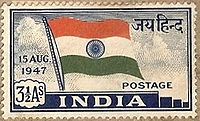 December 1, 1848.
Local
postal systems used stamps referred to as Zemstvos, from the term for local
governments begun under Alexander II in 1864.
 Postage stamps
The
postage stamp idea had already swept much of the world when, in September 1856,
the Russian authorities decided to follow suit. The first stamps went on sale 10 December 1857, but were not valid for use
until 1 January 1858. The first value was
a 10-kopeck to be used for letters weighing up to one lot (about
A
5k stamp for local postage was introduced in 1863, and in the following year a
new common design, with the arms in an oval, was introduced for 1k, 3k, and 5k
values. These were used to make up complicated rates for international mail,
which had previously required cash payments at the post office. After 1866 the
stamps were printed on laid paper watermarked with a pattern of wavy lines and
"EZGB" in Cyrillic. The "grain" of the laid paper was
usually horizontal, but for a minority of each value the grain is vertical.
In
September 1865, the Shlisselburg district became the first of the zemstvo
offices to issue stamps; the system was officially organized by a decree of 27 August 1870.
In
1874,
The
coat of arms design was changed in 1875, and used for 2k and 8k values, and a
7k in 1879. The 7k was also printed on revenue stamp paper watermarked with a
hexagon pattern; these are quite rare.
A
new issue of 14 December 1883 featured an
updated design, lower values printed in a single color, and new high values -
14k, 35k, and 70k. January 1884 saw the introduction of 3.50-ruble and 7-ruble
stamps, physically much larger than existing stamps.
In
1889 the designs were changed again, this time to introduce thunderbolts across
the posthorns underneath the double-headed eagle, and in printings after 1902
the usual grain of the paper was changed to be vertical.
At
the end of 1904
In
Revolution
The
period of the Russian Revolution is complicated philatelically; post offices
across the country were thrown on their own devices, and a number of the
factions and breakaway republics issued new kinds of stamps, although in some
cases they seem to have been as much for publicity purposes, few genuine uses
having been recorded.
Entities
issuing their own stamps include:
- Army of the Northwest
- Batum
- Far Eastern Republic
- Transcaucasian SFSR
In
1917 the Provisional Government reprinted the old Tsarist designs, but sold
them imperforate. The first stamps of the
The
next stamps appeared in 1921, after inflation had taken hold. The set's values
range from 1 to 1,000 rubles. By the next year these stamps were being
surcharged in various ways, with face values of up to 100,000 rubles.
A
currency reform in 1922 that exchanged money at a 10,000-to-1 rate enabled new
stamps in the 5r to 200r range, including a set marking the 5th anniversary of
the October Revolution, Tsarist stamps surcharged with a five-pointed star
containing a hammer and sickle. Stamps with portraits of a worker, peasant and
soldier also appeared this year; variations on these portrait designs would
continue to be issued throughout the 1920s.
Finnish occupation of Aunus
At
1919–1921 there was Aunus expedition where a group of Finnish volunteers
occupied parts of
Postage
stamps and postal history of China
From Wikipedia, the free encyclopedia
The
story of the postage stamps and postal history of

 Imperial
China
Regular
government postal service is known from the Zhou Dynasty in the 1st millennium
BC. During the
Yuan
Dynasty under Kublai Khan in the 12th century,
Örtöö system. Marco Polo
reported that there were 10,000 post stages during that time. In addition,
private
letters were carried by the Min Hsin Chu, a
system of letter guilds (hongs). Later the 1727 Treaty of
Kyakhta
with
A
policy of isolation was forcibly ended in the 19th century by the Opium War and
the subsequent opening
of
treaty ports; several nations opened foreign post offices from 1844 on. This
expanded to involve dozens
of
cities, mostly on the coast, along the
Initially,
all mail to foreign destinations went through
Through
the first half of 1897, new stamps were unavailable, and so the existing stock
was surcharged in cents, with several variants distinguished by philatelists.
Revenue stamps were surcharged as well.
The
first new stamps, inscribed "IMPERIAL CHINESE POST" went on sale 16 August 1897. The twelve values, ranging from
1/2c to $5, were lithographed in
In
1898, these were superseded by similar designs produced by engraving in
The
first commemorative stamps of
Revolution and republic
The 1910s
The
revolution of 1911 resulted in overprints on the imperial stamps in 1912; at
Foochow to indicate that the post office was effectively a neutral area
available to both sides, and at Nanking and
The
first new designs of the Republic were two commemorative sets of 12 each, the
first set depicting Sun Yat-sen and second Yuan Shikai, both issued on 14 December, 1912.
The
definitives of the "Junk issue" went on sale 5 May 1913, and continued in use into the 1930s.
The low values featured a junk, while values from 15c to 50c showed a farmer
reaping rice, while the dollar values depicted the three-part gateway to the
Hall of Classics in
The 1920s
The 1930s
New
definitives in 1931 depicted Sun Yat-sen. These stamps, along with the Martyrs
issue of 1932 honoring six martyrs of the Kuomintang, would see much
overprinting in the next several years. 1931 also saw the invasion of Manchuria
by the Japanese and the formation of
Japanese occupation
Postwar
Adoption of a gold yuan
standard delayed inflation only for a short time. This $1000 stamp was issued
in early 1949.
The
end of the conflict brought little respite to the Nationalist government, which
continued to struggle with Communist forces. But they were able to issue
commemoratives to remember President Lin Sen, who had died in 1943, to mark the
October inauguration of Chiang, and to celebrate the Allied victory.
Inflation
had been creating a need for ever-higher values throughout 1945, but in 1946
things went out of control; stocks of stamps, some dating back to 1931, were
surcharged with values up to $2000, and a new design (still featuring a
portrait of Sun Yat-sen) went up to $5000.
1947
saw a number of commemorative issues, and further inflation, a Sun Yat-sen with
plum blossoms issue reaching $50,000 that year, then surpassed in 1948 with
reissues topping out with a $5,000,000 stamp.
In
On
1 May 1949, the government took a desperate
step, which was to print undenominated stamps, sold at the daily rate of the
yuan. They then adopted a silver yuan standard, and overprinted still more
stamps as well as reissuing the Sun Yat-sen design valued in 1-500 cents. By
August, the deteriorating political situation had caught up with the postal
system, and the Nationalists' last issues on the mainland were two of a planned
series of pictorial designs denominated in silver yuan.
Postage
stamps and postal history of Korea
From Wikipedia, the free encyclopedia
This
is a survey of the postage stamps and postal history of
Long
a closed kingdom,
The
next series of stamps did not appear until 1895, and consisted of four values:
5, 10, 25, and 50 poon, all of the same design featuring a yin yang symbol.
They were overprinted "Tae Han" in 1897, and surcharged to 1 poon in
1900.
A
currency change in 1900, to rin, cheun, and weun, necessitated new stamps, and
accordingly a series of 13 was issued, with values ranging from 2 rin to 2
weun. While all the designs have a common theme of the yin yang symbol, the
frames are different for each value, and the three highest values are printed
in two colors each. In 1902 five of these were surcharged using black
handstamps.

the reign of Emperor Gojong. The orange
stamp depicted the emperor's crown.
The
last stamps of the Empire were another series of 13 issued in 1903, with all
stamps of a
common depicting a falcon.
In
1905,
stamps. This state of affairs continued
until early 1946. On 1 February 1946, the
administration in
designs commemorating liberation from
stamps from 12 March 1946.
Postage
stamps and postal history of the United States
From Wikipedia, the free encyclopedia
This
is a survey of the postage stamps and postal history of the
Early
postal history
In
the American colonies, informal independently-run postal routes began in
Officially-sanctioned
mail service began in 1692 when King William III granted to an English nobleman
a delivery "patent" that included the exclusive right to establish
and collect a formal postal tax on official documents of all kinds. (Years
later, taxation implemented through the mandatory purchase of stamps was an
issue that helped to spark the American Revolution.) The tax was repealed a
year later, and very few were ever actually used in the thirteen colonies, but
they saw service in


The
introduction of postage stamps in the
A
few months after founding the City Despatch Post, Greig sold it to the U.S.
Government and the post became known as the "United States City Despatch
Post." The government began operation of this local post on August 16,
1842 under an Act of Congress of some years earlier which had authorized such
local delivery.
The
Act of Congress of March 3, 1845, (effective July 1, 1845), established uniform
(and reduced) postal rates throughout the nation, with a uniform rate of five
cents for distances under
First stamps
Congress
finally provided for the issuance of stamps by passing an act on March 3, 1847,
and the Postmaster-General immediately let a contract to the
The
5 cent stamp paid for a letter weighing less than
The
stamps were an immediate success; about 3,700,000 of the 5¢ and about 865,000
of the 10¢ were sold, and enough of those have survived to ensure a ready
supply for collectors, although the demand is such that a very fine 5¢ sells
for around US$500 as of 2003, and the 10¢ in very fine condition sells for
around $1,400 in used form. Unused stamps are much scarcer, fetching around
$6,000 and $28,000 respectively, if in very fine condition. One can pay as
little as 5 to 10% of these figures if the stamps are in poor condition.
The
post office had become so efficient by 1851 that Congress was able to reduce
the common rate to three cents (which remained unchanged for over a century),
necessitating a new issue of stamps. Values included a 1¢ profile of
1857
saw the introduction of perforation, and in 1860 24¢, 30¢, and 90¢ values (with
still more images of Washington and Franklin) were issued for the first time.
Civil War
The
outbreak of the American Civil War threw the postal system into turmoil. On
April 13, 1861 (the day after the firing on Fort Sumter) John H. Reagan,
postmaster-general of the Confederate States of America, ordered local
postmasters to return their US stamps to Washington DC (although it is unlikely
that many did so), while in May the Union decided to withdraw and invalidate
all existing US stamps, and to issue new stamps. Confederate post offices were
left without legitimate stamps for several months, and while many reverted to
the old system of cash payment at the post office, over one hundred post
offices across the South came up with their own provisional issues. Many of
these are quite rare, with only single examples surviving of some types.
Eventually the Confederate government issued its own stamps; see stamps and
postal history of the Confederate States.
In
the North, the new stamp designs became available in August, and old stamps
were accepted in exchange until the end of the year. The whole process was very
confusing to the public, and there are number of covers from 1862 and later
with 1857 stamps and bearing the marking "OLD STAMPS NOT RECOGNIZED".
The
1861 stamps had in common the letters "U S" in their design. The
original issue included 1¢, 3¢, 5¢, 10¢, 12¢, 24¢, 30¢, and 90¢ stamps. Several
are superficially similar to their earlier counterparts, differing primarily in
the design of the frame.
A
2¢ stamp in black featuring Andrew Jackson was issued in 1863 and is now known
to collectors as the "Black Jack". A black 15¢ stamp depicting the
recently-assassinated Abraham Lincoln was issued in 1866, and is generally
considered part of the same series. Although it was not officially described as
such, and the 15¢ value was chosen to cover newly-established fee for
registered letters, many philatelists consider this to be the first memorial
stamp ever issued.
The
war greatly increased the amount of mail in the North; ultimately about
1,750,000,000 copies of the 3¢ stamp were printed, and a great many have
survived to the present day, typically selling for 2-3 dollars apiece. Most are
rose-colored; pink versions are much rarer and quite expensive, especially the
"pigeon blood pink" which goes for $3,000 and up.
Grills
During
the 1860s, the postal authorities became concerned about postage stamp reuse.
Although there is little evidence that this occurred frequently, many post
offices had never received any cancelling devices. Instead, they improvised a
canceling process by scribbling on the stamp with an ink pen ("pen
cancellation"), or whittling designs in pieces of cork, sometimes very
creatively ("fancy cancels"), to mark the stamps. However, since
poor-quality ink could be washed from the stamp, this method would only have
been moderately successful. A number of inventors patented various ideas to
attempt to solve the problem.
The
Post Office eventually adopted the grill, a device consisting of a pattern of
tiny pyramidal bumps that would emboss the stamp, breaking up the fibers so
that the ink would soak in more deeply, and thus be harder to clean off. While
the patent survives (No. 70,147), much of the actual process of grilling was
not well-documented, and there has been considerable research trying to
recreate what happened and when. Study of the stamps shows that there were ten
types in use, distinguished by size and shape (philatelists have labelled them
with letters A-I and Z), and that the practice started some time in 1867 and
was abandoned around
1869
In
1868 the Post Office contracted with the National Bank Note Company to produce
new stamps with a variety of designs. These came out in 1869, and were notable
for the variety of their subjects; the 2¢ depicted a Pony Express rider, the 3¢
a locomotive, the 12¢ the steamship
Other
innovations included the first use of two-color printing on
Bank Notes
The
stamps of the 1870s and 1880s are collectively known as the "Bank
Notes" because they were produced by the Continental Bank Note Company, the
National Bank Note Company, then the American Bank Note Company. After the 1869
fiasco, the new Postmaster-General decided to base a series of stamps on the
"heads, in profile, of distinguished deceased Americans" using
"marble busts of acknowledged excellence" as models. The various
subjects included both presidents and other notables, such as Henry Clay and
Oliver Hazard Perry. National first printed these, then in 1873 Continental
received the contract—and the plates that National used. Continental added
secret marks to the plates of the lower values, distinguishing them from the
previous issues. The American Bank Note Company acquired Continental in 1879,
and took over the contract printing similar designs on softer papers and with
some color changes.
Columbian Issue
The
World Columbian Exposition of 1893 commemorated the 400th anniversary of the
landing of Christopher Columbus in the
Bureau issues
Also
during 1893, the Bureau of Engraving and Printing competed for the stamp
printing contract, and won it on the first try. The stamps of the 1894 series
were generally similar to those of 1890, but with triangles in the upper
corners. In 1895 counterfeits of the 2¢ value were discovered, which prompted
the BEP to begin issuing stamps printed on watermarked paper for the first time
in
Turn of the century
In
1898, the Trans-Mississippi Exposition opened in
Another
high spot in stamp design came with the definitive series of 1902, although
some of the philatelic press criticized the florid designs.
The Washington-Franklin era
1908
saw the beginning of the long-running Washington-Franklin series of stamps.
Although there were just two basic designs, a profile of Washington and one of
This
era started to see the regular issue of individual commemorative stamps instead
of the large sets of the 1890s, at a rate of about one or two stamps each year.
The 1920s and 1930s
The
stamps of the 1920s were dominated by the Series of 1922, the first new design
of stamps to appear in a generation. The lower values depicted various
Presidents, with the 5c particularly intended as a memorial of the
recently-deceased Theodore Roosevelt, while the higher values included an
"American Indian" (Hollow Horn Bear), the Statue of Liberty, Golden
Gate (sans bridge, which had yet to be built), Niagara Falls, a buffalo,
the Lincoln Memorial and so forth. Stamp printing was switching from a flat
plate press to a rotary press while these stamps were in use, and most come in
two perforations as a result; 11 for flat plate, and 11x10.5 for rotary.
The
1920s saw a number of 150th anniversaries connected with the American
Revolutionary War, and a number of stamps were issued in connection with those.
These included the first
In
1929, theft problems in the
The
German zeppelins were of much interest during this period, and in 1930 the
Department issued special stamps to be used on the Pan-American flight of Graf
Zeppelin.
Although
the stamps are today highly prized by collectors as masterpieces of the
engraver's art, in 1930 the recent stock market crash meant that few were able
to afford these stamps (the $4.55 value for the set represented a week's food
allowance for a family of four). Less than 10% of the 1,000,000 of each
denomination issued were sold and the remainders were incinerated (the stamps
were only available for sale to the public from April 19, 1930 to June 30, 1930).
It is estimated that less than 8 percent of the stamps produced survive today
and they remain the smallest
In
1933, Franklin D. Roosevelt became President. He was notable not only as an
avid collector in his own right (with a collection estimated at around 1
million stamps), but also for taking an interest in the stamp issues of the
Department; many designs of the 1930s were inspired or altered according to his
advice.
Prexies
The
famous Presidential Issue, known as "Prexies" for short, came out in
1938. The series featured all 29
Post-World War II
The
post-World War II stamp program followed a consistent pattern for many years; a
steady stream of commemoratives issued as single stamps priced at the
first-class letter rate. Beginning in 1948, the Congress of the
The
The
3¢ rate for first-class had been unchanged since 1933, but by 1958 there were
no more efficiency gains to keep the lid on prices, and the rate went to 4¢,
beginning a steady series of rate increases that reached 42¢ as of May 12, 2008.
The
Prominent Americans series superseded the "Liberties" in the 1960s,
and were themselves replaced by the
In
1971 the Post Office was reorganized, becoming the United States Postal Service
(USPS). However, it is still heavily regulated, with, for instance, the CSAC
continuing to decide which commemorative stamps to issue.
Modern U.S.
The
first self-adhesive stamp was a Christmas issue of 1974. It was not considered
successful, and the surviving stamps, though not rare, are all gradually
becoming discolored due to the adhesive used. Self-adhesives were not issued
again until 1989, gradually becoming so popular that as of 2004, only a handful of
types are offered with the traditional gum (now affectionately called
"manual stamps" by postal employees.)
The
Great Americans series and the Transportation coils began appearing in 1980 and
1981, respectively. The transportation coils were used steadily for some 20
years, while Great Americans still appear regularly as of 2004.
The
increasing use of email and other technologies during the 1990s led to a
decline in the amount of first-class mail, while bulk mail increased. A large
variety of commemorative stamps continue to appear, but more and more of them
just go to collectors, while the stamps of the average person's daily mail are
nondenominated types issued specifically for businesses.
On
April 12, 2007, the Forever stamp went on sale for 41 cents, and is good for
mailing one-ounce First-Class letters anytime in the future — regardless of
price changes. The postage on such letters is currently 44 cents (as of May 11, 2009).
Postage
stamps and postal history of Italy
From Wikipedia, the free encyclopedia
Since
Pre-unification
The
Cavallini ("little horses") of
In
1850, Count Camillo Cavour drafted a report to the Piedmont Chamber of Deputies
proposing postal reform along the lines of that which had been adopted in
several European states, and including postage stamps, for which a new word - francobollo
- was coined. The reform became law in November, and went into effect 1 January 1851.
After
some casting around for expertise in the newfangled art of stamp printing, the
government settled on the house of Françoise Matraire in
 Other states
in
Other states
in


Matraire's
stamps were reprinted several times, and those printed after 17 March 1861 are
normally considered the first stamps of
The
stamps were perforated beginning in 1862, and starting on 1 January 1863 uniform postal rates went into
effect. In 1862 Count Ambjörn Sparre won the stamp contract, but his designs were
not liked, and he seemed unable to produce the stamps. In danger of running out
of stamps altogether, at the end of 1862 the Italian government once again
turned to Matraire, who quickly produced a 15c value by lithography.
Sparre's
contract was cancelled in March 1863, and a new contract let to the British
printer De
Humbert I
Humbert
succeeded his father in 1878, which necessitated a new issue of stamps. First
appearing on 15 August, 1879, they were the first stamps of the kingdom to be
entirely designed, engraved, and printed by Italians. Since considerable stocks
of Victor Emmanuel stamps were left over and finances were poor, the old stamps
continued in use for some years, and some values of Humbert's stamps were
little-used during his reign.
The
new series incorporated rates and colors mandated by the Universal Postal
Union.
Victor Emmanuel III
The
world's first official airmail stamps were issued in 1917 when Poste italiane
overprinted their existing special delivery stamps.
Imperial era
Modern stamps
In
2007, the issue of an Italian stamp featuring the Croatian city of
Postage stamps and postal history of India
From Wikipedia, the free encyclopedia
For
the states with their own stamps, see Stamps and postal history of Indian
states.
For
India Post, see Indian Postal Service.
This is a survey of the postage stamps and postal history of
The postal systems in

 Postal history
of India
Postal history
of India
The Post in ancient and medieval India
The history of
In ancient times the kings, emperors, rulers, zamindars or the feudal
lords protected their land through the intelligence services of specially
trained police or military agencies and courier services to convey and obtain
information through runners, messengers and even through pigeons. The chief of
the secret service, known as the postmaster, maintained the lines of
communication ... The people used to send letters to [their] distant relatives
through their friends or neighbors.
For centuries it was rare for messages to be carried by any means other
than a relay of runners on foot. A runner ran from one village or relay post to
the next, carrying the letters on a pole with a sharp point. His was a
dangerous occupation: the relay of postal runners worked throughout the day and
night, vulnerable to attacks by bandits and wild animals. These mail runners
were used chiefly by the rulers, for purposes of information and wartime news.
They were subsequently used by merchants for trade purpose. It was much later
that mail runners came to be in use for the carriage of private mail.
The postal history of
The Arab influence of the Caliphate came about with the conquest of
The first Sultan of Delhi, Qutb-ud-din Aybak (Persian: قطب الدین ایبک)
was Sultan for only four years, 1206 - 1210, but he founded the Mamluk Dynasty
and created a messenger post system. This was expanded into the dak chowkis,
a horse and foot runner service, by Alauddin Khilji in 1296. Sher Shah Suri
(1541-1545) replaced runners with horses for conveyance of messages along the
northern high road, today known as the Grand Trunk Road, which he constructed
between Bengal and Sindh over an ancient trade route at the base of the
In the South of India, in 1672 Raja Chuk Deo of
Posts and the East
India Company
The East India Company took constructive steps to improve the existing
systems in
The postmarks applied on these letters are very rare and are named
'Indian Bishop Marks' after Col Henry Bishop, the Post Master General in
After 1793, when Cornwallis introduced the Regulation of the Permanent
Settlement, the financial responsibility for maintaining the official posts
rested with the zamindars. Alongside these, private dawk mail systems sprang up
for the commercial conveyance of messages using hired runners. Also, the East
India Company created its own infrastructure for the expansion and
administration of military and commercial power. The runners were paid
according to the distance they travelled and the weight of their letters.
The Post Office Act XVII of 1837 provided that the
Governor-General of India in Council had the exclusive right of conveying
letters by post for hire within the territories of the East India Company. The
mails were available to certain officials without charge, which became a
controversial privilege as the years passed. On this basis the Indian Post
Office was established on October 1, 1837.
The
Scinde District Dawk
The use of the Scinde Dawk adhesive stamps to signify the prepayment of
postage began on 1 July
The new stamps were embossed individually onto paper or a wax wafer. The
shape was circular, with "SCINDE DISTRICT DAWK" around the rim and
the British East India Company's Merchant's Mark as the central emblem. The
paper was either white or greyish white. The blue stamp was printed onto the
paper by the die during the embossing, while the wax version was embossed on a
red sealing wax wafer on paper; but all had the same value of 1/2 anna. They
were used until October 1854, and then officially suppressed. These are quite
scarce today, with valuations from US$700 to $10,000 for postally used
examples; the unused red stamp is valued at £65,000.00 by Stanley Gibbons
(basis 2006).
The Reforms of 1854 and the First Issues
The first stamps valid for postage throughout
1/2 anna, 1 anna, 2 annas, and 4 annas. Featuring a youthful profile of Queen
These stamps were issued following a Commission of Inquiry which had
carefully studied the postal systems of Europe and
The urgent European mails were carried overland via
The East India Company already had attempted a 1/2 anna vermilion stamp
in April, 1854, known as the "9 1/2 arches essay". This could not be
produced in quantity because it required an expensive vermilion pigment not
readily available from
A new set of stamps, with Queen
The Reforms of 1866 and the Provisionals
The volume of mail moved by the postal system increased relentlessly,
doubling between 1854 and 1866, then doubling again by 1871. The Post Office
Act XIV introduced reforms by May 1, 1866 to correct some of the more apparent
postal system deficiencies and abuses. Postal service efficiencies also were
introduced. In 1863 new lower rates were set for "steamer" mail to
New regulations removed the special postal privileges which had been
enjoyed by officials of the East India Company. Stamps for official use were
prepared and carefully accounted for to combat the abuse of privileges by
Company officials. In 1854 Spain had printed special stamps for official
communications, but in 1866 India was the first country to adopt the simple
expedient of overprinting 'Service' on postage stamps and 'Service Postage' on
revenue stamps. This innovation became widely adopted by other countries in
later years.
Shortages developed, so these stamps also had to be improvised. Some of
the "Service Postage" overprinted rarities of this year resulted from
the sudden changes in postal regulations. New designs for the 4 annas and
"6 annas
Another four new designs appeared, one at a time, between 1874 and 1876.
A complete new set of stamps was issued in 1882 for the Empire of India
that had been proclaimed five years earlier, in 1877. The designs consisted of
the usual
Twentieth
century
High values -- 2, 3 and 5 rupees -- were introduced in 1895. Other
existing designs were reprinted in new colors in 1900 .
In
The 1911 stamps of King George V were more florid in their design. It is
reported that George V, a philatelist, personally approved these designs. In
The first pictorial stamps appeared in 1931. The set of six, showing the
fortress of Purana Qila,
The stamps issued in 1937 depicted various forms of mail transports,
with King George VI's effigy appearing on the higher values. A new issue in
1941, constrained by the austerity of World War II, consisted of rather plain
designs using minimal amounts of ink and paper. As Indian Post Offices annually
required some billions of stamps for postage, as a measure of economy the large
pictorial stamps were immediately withdrawn and smaller stamps were issued.
Even this did not ease the paper situation and it was thought desirable to
reduce the size even more.
A victory issue in 1946 was followed in November, 1947 by a first
Dominion issue, whose three stamps were the first to depict the Ashoka Pillar
and the new flag of
Postage stamps were generally issued separately from the revenue stamps.
However in 1906, the set of King Edward VII stamps were issued in two values,
half anna and one anna with the caption "INDIA POSTAGE &
REVENUE". The George V Series (1911 to 1933) added two more values, two
annas and four annas to the Postage & Revenue stamps. These dual-purpose
issues were an exception and generally the two types were issued separately.
Postal history of Indian
states
The Convention States are those which had postal conventions (or
agreements) with the Post Office of India to provide postal services within
their territories. The adhesive stamps and postal stationery of British India
were overprinted for use within each
Reference:
Charles Stewart-Wilson, British Indian Adhesive Stamps (Queen's Head)
Surcharged for Native States, rev. ed. with B.G. Jones (1904)
The Feudatory States maintained their own postal services within
their territories and issued stamps with their own designs. Many of the stamps
were imperforate and without gum, as issued. Many varieties of type, paper,
inks and dies are not listed in the standard catalogs. The stamps of each
Both Faridkot and Jind, as feudatory states, issued their own stamps
before they joined the Postal Convention. Faridkot joined on January 1, 1887.
Jind joined in July, 1885; its stamps from the feudatory period became invalid
for postage, but they continued to be used for revenue purposes.
India
The possibility of printing postage stamps and other security items in
The printing of stamps began in 1925; the first stamps being the
definitive series of George V, printed using typography from the same plates
used earlier in England by De
The new technique of photogravure printing was installed in 1952. The
October 1952 series of six values on the theme of Saints and Poets were the
first to be so produced. However, these were not the first photogravure stamps
of
Postal
History of Independent India
The First Stamp of Independent India was issued on the 21st of
November, 1947. It depicts the Indian Flag with the patriots' slogan, Jai Hind
(Long Live India), on the top right hand corner. It was valued at three and
one-half annas.
A memorial to Mahatma Gandhi was issued 15 August 1948 on the first
anniversary of
Definitives included a technology and development theme in
The old inscription of "INDIA POSTAGE" was replaced in 1962
with "भारत
The Indian Postal Service
today
Today the Indian Postal Service serves the public from 155,000 post
offices.
Gandhi, Nehru and other historic personalities continued on the postal
issues coming from the country since
National Philatelic Museum
The National Philatelic Museum of India was inaugurated on 6 July
The museum has been extensively renovated in 2009 and now includes more
exhibits, a philatelic bureau and other postal objects such as beautiful
Victorian post boxes.
First
stamp auction in London
Organised by John Walter Scott, the noted American dealer,
on 18th March 1872. He had two years previously organised the first stamp
auction in
The
sale in
The
next auction was held on 11 August 1873 at Sotheby's which was followed by a
lapse of some fifteen years before regular auctions began.
First stamp dealer
M.Jeanne
Baptiste Philippe Constant Moens (1833-1908) started collecting stamps at the
age of 15 and commenced trading in stamps and became the world's first stamp
dealer in 1852. He is known simply as J.B. Moens and traded under that name.
In
1862 he published the "Manuel du Collectionneur de timbre-poste", and
followed this up in February 1863 with the philatelic journal, "Le
Timbre-Poste", which ran without missing an issue for 38 years.
Moens
died in
Brief History of Stamp Auctions in America
By Robert A. Doyle, CAI,
ISA, CES, CAGA
What
do you call a person that pays thousands of dollars for an 1845 sticky one-inch
piece of paper having a price of five cents on it? The answer is a philatelist, better known as
a stamp collector. The smiling person
that dropped the hammer on that rare and expensive postal lot is known as the
auctioneer.
The
auctioning of stamps does not date as far back as auctions of books, pictures,
wine, clapboard or furs. But, it does have it’s own
rich history. Although the first stamp show was in
One
of the reasons that stamp collecting started much later then other commodities
and collectibles is that the first gummed stamp was not printed until 1845.
When you think about it, at the time of the first stamp auction, the oldest stamp that could
be collected was just 25 years old.
The
most costly and desirable stamps are not necessarily the prettiest, just like
the rarest and highest priced books for bibliophiles are not easy or enjoyable
to read. Stamp collecting is based on scarcity and mistakes. A particular stamp
might not be of historical significance but do to misalignment in the printing
process it might fetch 10 times what an historical commemorative stamp would
bring. Collectors are searching for the “freaks” and oddities. In some cases
cancelled stamps are worth more then uncancelled examples.
It
is universally agreed that the first commemorative stamp in
But,
what about the post-civil war period Abraham Lincoln stamp, certainly this
predates 1876? Yes the
The
stamp trading capital of the world was
“The
idea of cornering the market on postage stamps seems at a first glance about as
impossible as cornering hot air in the halls of Congress” according to author
Bellamy Partridge in his book “Going, Going, Gone!” Nonetheless, attempts have been made. As an
example it happened with the 1922 one-cent green stamp. For seven years they
were on sale at face value by the government Philatelic Agency. It was 1929
when the government had exhausted their stock that it became known that a
handful of speculators had quietly bought up a large quantity. They cautiously
inched the prices up and then, according to Partridge, “suddenly the owners put
on the screws and jumped the price to one dollar and in some cases even more.
At this price the investors unloaded, selling at three or four hundred dollars
a sheet stamps that had cost them only four dollars at the government price.”
The
stamp auctions
were popular because the buyers had a say in the construction of the price. In
general, all stamp auctions were
cataloged – encouraging absentee and “mail” bids. Inspections were prior to the
auction and the lots were sold by catalog number. Auctions were frequently held
during the week and in the middle of the day with a start time of 2PM. Typically, descriptions were guaranteed to be accurate or
the successful bidder could return the lot for a full refund if done in a
timely manner. The auctioneer’s presentation was hardly a “chant” sometimes the
bidders submitted their bids orally. The crowds were usually less then 100
people. The auctioneer did not handle the stamps. The profile of a mid-20th
century stamp collector was a male over fifty years of age. The pace of the auction was brisk.
Perhaps
one of the best references and examples of a stamp auction can be gleaned from the
auction catalog of the Arthur Hind Collection. The major collection of Arthur
Hind was sold at unreserved auction
at the Waldorf Astoria Hotel on
Mr.
Hind commenced his collection about 1891 when residing at Clark Mills, near
In
The
Hind collection was so large that the first auction was to take place in
The
first auction catalog boasted 1653
lots described on 103 pages with a separate book of photographs of key lots.
The auctioneer was Walter S. Scott. According to the terms all lots had to be
inspected in
In
my personal collection I have a copy of the 1933 Hind auction catalog, prices realized and several newspaper articles
about the auction. According to an article written by Philip Ward, Jr. on
December 27,
Ward
explains that he had the opportunity to purchase the entire collection on behalf
of some serious collectors back in May of 1929. He made the trip to
Evidently,
the appraisers had their work cut out for them. On page 7 of the original
catalog there is a “Note”. The Note provides an explanation for how values were
set on each lot in the catalog. The estimates were based on “the prices paid by
Arthur Hind, less big reductions to allow for depreciation.”
A
review of the sale prices proved Ward right. Even though the estimates were
reduced, the actual sale prices were coming in below estimate. Lot 16 an 1845 5
cent black on buff Alexandria, VA stamp (one of four known) estimated at
$10,000 sold for $4,000. Many stamps fell
well below 50% of estimate.
The
highlight of the auction was written
up in the
Until
I started researching this subject I did not realize that the Confederacy
issued their own stamps as they did currency. Hind had a fantastic collection
of Confederate stamps. The first lot in
the Confederate States section of the catalog was Lot
Stamp auctions are as popular today as
they were back in 1933. Some collectors are looking for commemoratives,
airmails, covers or the stamps of a particular country or continent. Others are
in hopes of finding the rarities and “freaks”. These finds are not impossible.
To quote Partridge from “Gojng, Going, Gone!”, “One of the most famous finds in
our country (
Today:
A search of “stamp
auctions” on Google, October 17th, 2002, captured 6,140 listings. A search of the word “stamps” on ebay
produced 21,531 listings. The American Philatelic Society that was established
in 1886 now has a website. The London
Stamp Exchange that was established 5 years later in 1891 also has a website.
As
an auctioneer I am gaining respect for those little sticky pieces of ephemera
that frequently cross the auction
block. In Hind’s sight they can be very valuable.
Auction
From Wikipedia, the free encyclopedia
An auction is a process of buying and selling goods or services
by offering them up for bid, taking bids, and then selling the item to the
winning bidder. In economic theory, an auction may refer to any mechanism or
set of trading rules for exchange.
There are several variations on the basic auction form, including time
limits, minimum or maximum limits on bid prices, and special rules for
determining the winning bidder(s) and sale price(s). Participants in an auction
may or may not know the identities or actions of other participants. Depending
on the auction, bidders may participate in person or remotely through a variety
of means, including telephone and the internet. The seller usually pays a
commission to the auctioneer or auction company based on a percentage of the
final sale price.
History of the auction
The word "auction" is derived from the Latin augēre,
which means "to increase" or "augment".
For most of history, auctions have been a relatively uncommon way to negotiate
the exchange of goods and commodities. In practice, both haggling and sale by
set-price have been significantly more common. Indeed, prior to the seventeenth
century the few auctions that were held were sporadic and infrequent.
Nonetheless, auctions have a long history, having been recorded as early
as 500 B.C. According to Herodotus, in
During the
The Romans also used auctions to liquidate the assets of debtors whose
property had been confiscated. For example, Marcus Aurelius sold household
furniture to pay off debts, the sales lasting for months. One of the most
significant historical auctions occurred in the year
From the end of the Roman Empire to the eighteenth century auctions lost
favor in Europe, while they had never been widespread in Asia.
In some parts of
The oldest auction house in world is Stockholm Auction House (Stockholms
Auktionsverk). It was established in
During the end of the 18th century, soon after the French
Revolution, auctions came to be held in taverns and coffeehouses to sell art.
Such auctions were held daily, and catalogs were printed to announce available
items. Such Auction catalogs are frequently printed and distributed before
auctions of rare or collectible items. In some cases these catalogs were
elaborate works of art themselves, containing considerable detail about the
items being auctioned.
Sotheby's, now the world's second-largest auction house, held its first auction
in 1744. Christie's, now the world's largest auction house, was established
around 1766. Other early auction houses that are still in operation include
Dorotheum (1707), Bonhams (1793), Phillips de Pury & Company (1796),
Freeman's (1805) and Lyon & Turnbull (1826).
During the American civil war goods seized by armies were sold at
auction by the Colonel of the division. Thus, some of today's auctioneers in
the
The development of the internet, however, has led to a significant rise
in the use of auctions as auctioneers can solicit bids via the internet from a
wide range of buyers in a much wider range of commodities than was previously
practical.
Types of auction
Primary
types of auction
- English auction, also known as an open
ascending price auction. This type of auction is arguably the most
common form of auction in use today. Participants bid openly against one
another, with each subsequent bid higher than the previous bid. An
auctioneer may announce prices, bidders may call out their bids themselves
(or have a proxy call out a bid on their behalf), or bids may be submitted
electronically with the highest current bid publicly displayed. In some
cases a maximum bid might be left with the auctioneer, who may bid on
behalf of the bidder according to the bidder's instructions. The auction
ends when no participant is willing to bid further, at which point the
highest bidder pays their bid. Alternatively, if the seller has set a
minimum sale price in advance (the 'reserve' price) and the final bid does
not reach that price the item remains unsold. Sometimes the auctioneer
sets a minimum amount by which the next bid must exceed the current
highest bid. The most significant distinguishing factor of this auction
type is that the current highest bid is always available to potential
bidders. The English auction is commonly used for selling goods, most
prominently antiques and artwork, but also secondhand goods and real
estate. At least two bidders are required.
- Dutch auction also known as an open
descending price auction. In the traditional Dutch auction the
auctioneer begins with a high asking price which is lowered until some
participant is willing to accept the auctioneer's price. The winning
participant pays the last announced price. The Dutch auction is named for
its best known example, the Dutch tulip auctions. ("Dutch
auction" is also sometimes used to describe online auctions where
several identical goods are sold simultaneously to an equal number of high
bidders.) In addition to cut flower sales in the
- Sealed first-price auction, also known as a first-price
sealed-bid auction (FPSB). In this type of auction all bidders
simultaneously submit sealed bids so that no bidder knows the bid of any
other participant. The highest bidder pays the price they submitted. This
type of auction is distinct from the English auction, in that bidders can
only submit one bid each. Furthermore, as bidders cannot see the bids of
other participants they cannot adjust their own bids accordingly. This
kind of bid produces the same outcome as Dutch auction Sealed first-price auctions are commonly used in
tendering, particularly for government contracts and auctions for mining
leases.
- Vickrey auction, also known as a sealed-bid
second-price auction. This is identical to the sealed first-price
auction except that the winning bidder pays the second highest bid rather
than their own. This is very similar to the proxy bidding system used by
eBay, where the winner pays the second highest bid plus a bidding
increment (e.g., 10%). Although extremely important in auction theory, in
practice Vickrey auctions are rarely used.
Secondary types of auction
- All-pay auction is an auction in
which all bidders must pay their bids regardless of whether they win. The
highest bidder wins the item. All-pay auctions are primarily of academic
interest, and may be used to model lobbying/bribery (bids are political contributions)
or competitions such as a running race.
- Buyout auction is an auction with
a set price (the 'buyout' price) that any bidder can accept at any time
during the auction, thereby immediately ending the auction and winning the
item. If no bidder chooses to utilize the buyout option before the end of
bidding the highest bidder wins and pays their bid. Buyout options can be
either temporary or permanent. In a temporary buyout auction
the option to buy out the auction is no longer available after the first
bid is placed. In a permanent buyout auction the buyout option remains
available throughout the entire auction until the close of bidding. The
buyout price can either remain the same throughout the entire auction, or
vary throughout according to preset rules or simply at the whim of the
seller.
- Combinatorial auction is any auction for
the simultaneous sale of more than one item where bidders can place bids
on an "all-or-nothing" basis on "packages" rather than
just individual items. That is, a bidder can specify that he or she will
pay for items A and B, but only if he or she gets both.[23]
In combinatorial auctions determining the winning bidder can be a complex
process where even the bidder with the highest individual bid is not
guaranteed to win. For example, in an auction with four items (W, X, Y and
Z), if Bidder A offers $50 for items W & Y, Bidder B offers $30 for
items W & X, Bidder C offers $5 for items X & Z and Bidder D
offers $30 for items Y & Z, the winners will be Bidders B & D
while Bidder A misses out because the combined bids of Bidders B
& D is higher ($60) than for Bidders A and C ($55).
- Lloyd's syndicate auction.
- No-reserve auction (NR), also known as
an absolute auction, is an auction in which the item for sale will be
sold regardless of price. From the seller's perspective, advertising an
auction as having no reserve price can be desirable because it potentially
attracts a greater number of bidders due to the possibility of a bargain.
If more bidders attend the auction a higher price might ultimately be
achieved because of heightened competition from bidders. This contrasts
with a reserve auction, where the item for sale may not be sold if
the final bid is not high enough to satisfy the seller. In practice, an
auction advertised as "absolute" or "no-reserve" may
nonetheless still not sell to the highest bidder on the day, for example,
if the seller withdraws the item from the auction or extends the auction
period indefinitely, although these practices may be restricted by law in
some jurisdictions or under the terms of sale available from the
auctioneer.
- Reserve auction is an auction where
the item for sale may not be sold if the final bid is not high enough to
satisfy the seller - that is, the seller reserves the right to
accept or reject the highest bid. In these cases a set 'reserve' price
known to the auctioneer, but not necessarily to the bidders, may have been
set in advance below which the item may not be sold. A reserve auction is
safer for the seller than a no-reserve auction as they are not required to
accept a low bid, but this could potentially result in a lower final price
than might otherwise be the case if this means that less interest is
generated in the sale.
- Reverse auction is a type of
auction in which the role of the buyer and seller are reversed, with the
primary objective to drive purchase prices downward. In an ordinary
auction (also known as forward auction), buyers compete to obtain a good
or service. In a reverse auction, sellers compete to provide a good or
service by offering progressively lower quotes until no supplier is
willing to make a lower bid.
- Silent auction is a variant of an
English auction where bids are written on a sheet of paper. At the
predetermined end of the auction the highest listed bidder wins the item.
This auction is often used in charity events, with many items auctioned
simultaneously with a common finish time. The auction is
"silent" in that there is no auctioneer, the bidders writing
their bids on a bidding sheet often left on a table near the item. Other
variations of this type of auction may include sealed bids. The highest
bidder pays the price he or she submitted.
- Top-Up Auction is a variation on
the all-pay auction, primarily used for charity events. Bidders must pay the
difference between their bid and the next lowest bid, whether they win or
not. Only the winning bidder does not have to pay the "top-up"
fee, but does have to pay for the item.
- Walrasian auction or Walrasian
tâtonnement is an auction in which the auctioneer takes bids from both
buyers and sellers in a market of multiple goods.[30] The
auctioneer progressively either raises or drops the current proposed price
depending on the bids of both buyers and sellers, the auction concluding
when supply and demand exactly balance. As a high price tends to dampen
demand while a low price tends to increase demand, in theory there is a
particular price point somewhere in the middle where supply and demand
will match.
Time requirements
Each type of auction has its specific qualities such as pricing accuracy
and time required for preparing and conducting the auction. The number of
simultaneous bidders is of critical importance. Open bidding during an extended
period of time with many bidders will result in a final bid that is very close
to the true market value. Where there are few bidders and each bidder is
allowed only one bid, time is saved, but the winning bid may not reflect the
true market value with any degree of accuracy. Of special interest and
importance during the actual auction is the time elapsed from the moment that
the first bid is revealed to the moment that the final (winning) bid has become
a binding agreement.
|
|
Auctions: characterization
Auctions can differ in the number of participants:
- In a supply (or reverse)
auction, m sellers offer a good that a buyer requests
- In a demand auction, n
buyers bid for a good being sold
- In a double auction n
buyers bid to buy goods from m sellers
Prices are bid (or offered) by buyers and asked by sellers.
Auctions may also differ by the procedure for bidding (or asking, as the case
may be):
- In an open auction
participants may repeatedly bid and are aware of each other's previous
bids.
- In a closed auction
buyers and/or sellers submit sealed bids
Auctions may differ as to the price at which the item is sold, whether
the first (best) price, the second price, the first unique price or some
other. Auctions may set a reservation price which is the least/maximum
acceptable price for which a good may be sold/bought.
Without modification, auction generally refers to an open, demand
auction, with or without a reservation price (or reserve), with
the item sold to the highest bidder.
Common uses for auctions
Auctions are publicly and privately seen in several contexts and almost
anything can be sold at auction. Some typical auction arenas include the following:
- the antique business, where
besides being an opportunity for trade they also serve as social occasions
and entertainment
- in the sale of collectibles
such as stamps, coins, classic cars, fine art, and luxury real estate
- the wine auction business,
where serious collectors can gain access to rare bottles and mature
vintages, not typically available through retail channels
- in the sale of all types
of real property including residential and commercial real estate, farms,
vacant lots and land.
- for the sale of
consumer second-hand goods of all kinds, particularly farm (equipment) and
house clearances and online auctions.
- sale of industrial
machinery, both surplus or through insolvency.
- in commodities auctions, like
the fish wholesale auctions
- in livestock auctions where
sheep, cattle, pigs and other livestock are sold
- in wool auctions where
international agents purchase lots of wool
- Thoroughbred horses, where
yearling horses and other bloodstock are auctioned.
- in legal contexts
where forced auctions occur, as when one's farm or house is sold at
auction on the courthouse steps.
- travel tickets. One
example is
Although less publicly visible, the most economically important auctions
are the commodities auctions in which the bidders are businesses even up to
corporation level. Examples
of this type of auction include:
- sales of businesses
- spectrum auctions, in which
companies purchase licenses to use portions of the electromagnetic
spectrum for communications (e.g., mobile phone networks)
- private electronic markets
using combinatorial auction techniques to continuously sell commodities
(coal, iron ore, grain, water...) to a pre-qualified group of buyers
(based on price and non-price factors)
- timber auctions, in which
companies purchase licenses to log on government land
- timber allocation auctions, in
which companies purchase timber directly from the
- electricity auctions, in which
large-scale generators and consumers of electricity bid on generating
contracts
- environmental auctions, in
which companies bid for licenses to avoid being required to decrease their
environmental impact
- debt auctions, in which
governments sell debt instruments, such as bonds, to investors. The
auction is usually sealed and the uniform price paid by the investors is
typically the best non-winning bid. In most cases, investors can also
place so called non-competitive bids, which indicates an interest
to purchase the debt instrument at the resulting price, whatever it may be
- auto auctions, in which
car dealers purchase used vehicles to retail to the public.
Bidding
strategy
Bid shading is placing a bid which is below the bidder's actual value
for the item. Such a strategy risks losing the auction, but has the possibility
of winning at a low price. Bid shading can also be a strategy to avoid the
Winner's curse.
Chandelier Bidding
A practice, especially by high-end art auctioneers, of raising false
bids at crucial times in the bidding process in order to create the appearance
of greater demand or to extend bidding momentum for a work on offer. To call
out these nonexistent bids, auctioneers might fix their gaze at a point in the
auction room that is difficult for the audience to pin down.
In the
Collusion
Whenever bidders at an auction are aware of the identity of the other
bidders there is a risk that they will form a "ring" and thus
manipulate the auction result, a practice known as collusion. By agreeing to
bid only against outsiders, never against members of the "ring",
competition becomes weaker, which may dramatically affect the final price
level. After the end of the official auction an unofficial auction will take
place among the "ring" members. The difference in price between the
two auctions will then be split among the members.
On the opposite side, the owner of the object being auctioned may
increase competition by taking part in the bidding himself (but drop out of the
bidding just before the final bid). In
In an English auction a dummy bid is a bid made by a dummy bidder acting
in collusion with the auctioneer or vendor, designed to deceive genuine bidders
into paying more. In a First price auction a dummy bid is an unfavourable bid
designed so as not to become the winning bid. (The bidder does not want to win
this auction, but he wants to make sure that he will be invited to the next
auction).
In
In
Suggested
opening bid (SOB)
There will usually be some kind of (rough) estimate as to what the
object will fetch. In an ascending open auction it is considered important that
there should be at least a 50 percent increase in the bids from start to
finish. To accomplish this the auctioneer must start
the auction by announcing a Suggested Opening Bid, SOB, that is low enough to
be immediately accepted by one of the bidders. Once there is an Opening Bid
there will quickly be several other higher bids submitted. Experienced
auctioneers will often select an SOB that is about 45 percent of the (lowest)
estimate. Thus there is a certain margin of safety to ensure that there will
indeed be a lively auction with many bids submitted. Several observations indicate, that the lower the SOB, the higher the final
winning bid will be. This is due to the increase in number of bidders attracted
by the low SOB. When 50 bidders compete with each other the winning bid will be
about twice as high as when only two bidders compete. Sometimes with English
auction there will be more than 50 bidders.
A Chi-square distribution shows many low bids but few high bids. Bids
"show up together"; without several low bids there will not be any
high bids.
Another approach to choosing a SOB: The auctioneer may achieve good
success by asking the expected final sales price for the item, as this method
suggests to the buyer the amount of the item's particular value. For instance,
say an auctioneer is about to sell a $1,000 car at a sale. Instead of asking
$100, hoping to entice wide interest (for who wouldn't want a $1,000 car for
$100?), the auctioneer may still suggest the opening bid of $1,000; although
the first bidder may finally begin bidding at a mere $100, the final bid may more
likely approach $1,000.
Robert A. Siegel
From Wikipedia, the free
encyclopedia
Robert A. Siegel (1913-1993), of
Philatelic auctions
Siegel held his first philatelic auction in
In 1964 he conducted his first Rarity Sale. Subsequent Rarity Sale
auctions sold world-famous classic postage stamps, including selling -- on two
different occasions -- the unique and extremely rare British Guiana one cent on
magenta, for record prices.
Philatelic activity
Siegel remained active in the American Stamp Dealers Association and
served on its board for twelve years. As an expert on rarities, Siegel
supported the Philatelic Foundation with his advice and support.
Honors and awards
Siegel received the Mortimer Neinken Medal in 1987 and was named Man of
the Year by the American Stamp Dealers Association in 1990. He was named to the
American Philatelic Society Hall of Fame in 1994.
Robert P. Alexander
From Wikipedia, the free encyclopedia
Robert P. Alexander (1904-1985), of
Collecting interests
Although his collecting interests covered the entire scope of stamps and
postal history of
Philatelic
activity
Alexander wrote articles on specific aspects and postal issues of
Japanese philately. He was a founder of the International Society for
Japanese Philately in 1946 and once served as its president during his
forty years with the society. He was also editor and contributor to Japanese
Philately from 1950 to 1955.
Honors and awards
Robert Alexander was inducted into the American Philatelic Society Hall of
Fame in 1986.
Stanley Bryan
From Wikipedia, the free encyclopedia
Collecting interests
Ashbrook was primarily interested in classic
Philatelic activity
Ashbrook is most known for his famous two-volume book entitled “The
United States One Cent Stamp of 1851-
Ashbrook published the “Ashbrook Special Service” as a private
subscriber series and also contributed to another subscriber series entitled
“Bulletins of the Research Group.”
Honors and awards
Stanley Ashbrook received numerous honors and awards for his philatelic
research and subsequent publications. These include, the first-issued Luff
Award, the Crawford Medal, and signed the Roll of Distinguished Philatelists in
1950. He is currently listed in the APS Hall of Fame.
Legacy
His philatelic estate, which included classic American postage stamps,
postal history, unpublished notes, and other material
was sold in 1958 at auction by the firm of H. R. Harmer.
Leo August
From Wikipedia, the free encyclopedia
Leo August (1914 -1997), of
Dealer and publisher
In 1933 Leo and his brother Samuel, both stamp dealers, formed the
Washington Stamp Exchange in
Philatelic activity
The August brothers were very interesting in expanding the hobby of
collecting first day covers and helped found the American First Day Cover
Society in 1955 and supported it financially during its early years.
Leo was a benefactor to the Smithsonian Institution’s
Honors and awards
Leo received numerous honors for his work in the field of philately. He
was awarded the Luff Award in 1990 for outstanding contributions to philately,
and was named Man of the Year in 1997 by the American First Day Cover Society.
In 1998 he was named to the American Philatelic Society Hall of Fame.
Legacy
The Leo and Samuel August Memorial Award for best topical first day
cover exhibit is awarded on an annual basis by the
American First Day Cover Society. And, in his will, Leo provided a large
bequest to The American Philatelic Research Library.
Food
Stamps On-Line: A Review of State Government Food Stamp Websites
Virtually all states have made information regarding the Food Stamp Program,
including their applications, state policy manuals or regulations, and general
program information, available to the public via the World Wide Web. The
Center on Budget and Policy Priorities reviewed each state’s web pages to
determine what information and services they offer regarding the Food Stamp
Program.
This paper lists the addresses for each state’s food stamp web pages and
also provides an overview of the types of information and services that states
provide. Those interested in expanding the services provided on their
state’s web page may find the overview section helpful because it highlights
the various features states offer, such as benefit calculators or office
locators.
Overview of Findings
There is significant variation among states’ food stamp web pages and
their on-line services. Some states provide a simple description of the
program on their agency’s website. Others offer applications, benefit
calculators, pre-screening tools, detailed program
operation instructions for caseworkers, known as “policy manuals,” and copies
of program memorandums to eligibility workers that describe policy changes to
the program. By making all of these materials readily accessible to the
public, states can facilitate an improved understanding of the Food Stamp
Program.
How to Be a Stamp
Collector?
By Ryu Sanaga
Stamp collecting is one of the most popular hobbies of many Americans
and other cultures. Anyone can be a stamp collector. People of all ages may try
this hobby. One main reason why collector choose
stamps is that it is considered as one of the most affordable hobby. People may
collect coins, cars, tags, pins and many more but stamps are considered one of
the most inexpensive way of collecting.
Being a stamp collector is not a difficult task. There are many places
where you can get your own collection of stamps.
- Postage stamps used for airmail
may also be used. Stamp collectors compile them depending on the country
they came from.
- There are also sites and
message boards in the Internet that features stamp collecting. You may
even earn friends through these sites. People may also exchange stamps and
some make use of these sites to display their collections. Others even
consider selling their stamps thus making the hobby as their source of
income.
- Stamp collectors are very disciplined when it comes to taking care of their
stamps. That is because stamps are very fragile since they are made from
paper and other thin materials. It takes responsibility to become a stamp
collector.
- Stamp collectors are also
considered as artists on their own way. And if you think you are not
gifted with that talent, stamp collecting will help you discover the art
that is within you. Stamps come in various colors and images. Some of the
images may be considered an Art. Choosing from these many stamps will
enhance your artistic skills and will develop your creativity and
imagination.
- You should also have the
necessary supplies needed. If you are a beginner, the album is the first
accessory needed. This will compile and organize all the stamps that were
collected. The album will also ensure that the stamps will be safe from
dirt and moist.
- Stamp collecting may be
considered a skill to many. However, everyone can
be a stamp collector if they wish. It is an educational and informative
hobby that even kids will benefit from it. It does not only give fun and
knowledge but it is also a way to discover the artistic side of every
person.